


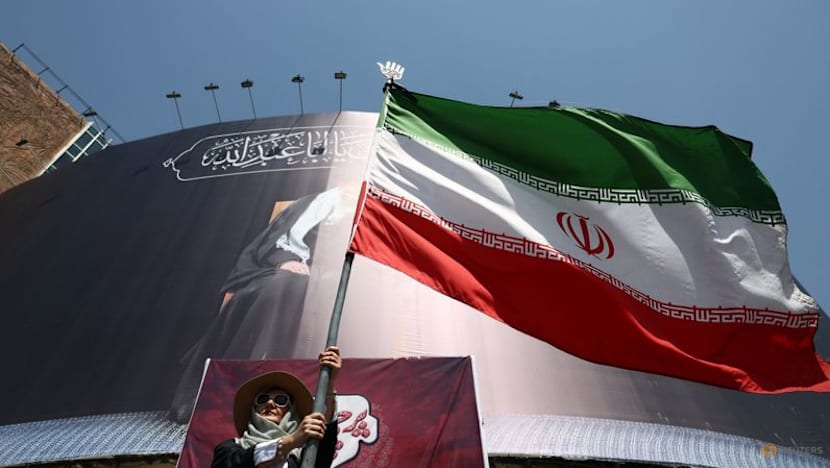
Iran fires back at Trump's threat to declare Hormuz a US territory
Summarized and contextualized by DistantNews.
At a glance
News
Sources not specified
Ongoing story
- Iran has responded to U.S. President Donald Trump's threat to declare the Strait of Hormuz a U.S. territory, stating it will remain Iranian.
- Trump claimed he would declare the strait U.S. territory after the U.S. defeats Iran, though a White House official later suggested he was joking.
- Attacks on vessels in the strait have continued, with the UAE blaming Iran for recent incidents, contributing to regional instability.
Iran has firmly rejected U.S. President Donald Trump's assertion that he would declare the Strait of Hormuz a U.S. territory, asserting that the vital energy waterway will remain under Iranian control. Trump, speaking at a rally, stated his intention to claim the strait after the U.S. defeats Iran, adding, "It's true." However, an unnamed White House official later reportedly clarified that Trump was joking, according to The Wall Street Journal.
The Strait of Hormuz has been Iranian, is Iranian, and will remain Iranian.
Iranian Deputy Foreign Minister Kazem Gharibabadi responded on X, declaring, "The Strait of Hormuz has been Iranian, is Iranian, and will remain Iranian." He emphasized that "This strait will only be closed and opened under Iran's command." This exchange highlights the ongoing tensions surrounding the crucial maritime chokepoint, which Iran had effectively closed at the start of the Middle East war in February.
This strait will only be closed and opened under Iran's command.
Despite diplomatic stalemates, attacks in the Strait of Hormuz persist, posing significant risks to regional shipping. The UAE's state-owned oil giant ADNOC reported an attack on one of its vessels, with Abu Dhabi's foreign ministry subsequently blaming Tehran and accusing Iran's Revolutionary Guards of "acts of piracy." These incidents, including earlier attacks on two ADNOC vessels, led to the collapse of an April ceasefire between the U.S. and Iran.
pretty soon I'll be declaring the Hormuz Strait a territory of the United States.
The closure of Hormuz, which previously handled about a fifth of global oil and LNG exports, has caused prices to surge, creating economic and political pressure. Iran seeks to control the strait and potentially charge tolls, a move fiercely opposed by the U.S. The situation is further complicated by Iran's Houthi allies in Yemen, who have imposed a similar maritime blockade on Saudi ports in the Red Sea, the kingdom's alternative maritime route.
It's true
DistantNews Editorial
Originally published by CNA. Summarized and contextualized by our editorial team with added local perspective. Read our editorial standards.
More Stories

From Our Blog

What Gets Lost (and Found) When News Is Translated

The Critical Role of Diaspora Media in Global News

What Travellers Should Know About Countries with Restricted Press

A Digital Nomad's Guide to Following Local News

How the Same Story Looks Different in Different Countries
