

Iran Launches First Missile Attack on Israel Amid Ceasefire; Oil Prices Surge
Translated from Vietnamese, summarized and contextualized by DistantNews.
At a glance
News
Sources not specified
Ongoing story
- Iran launched its first-ever missile attack on Israel amid a ceasefire, prompting Israeli warnings of a strong response.
- Israel reported intercepting all 11 Iranian missiles, with no reported casualties but some injuries during evacuations.
- The attack caused global oil prices to surge over 3% as markets reacted to renewed Middle East tensions, while Iran temporarily suspended flights at Tehran's international airport.
In a significant escalation, Iran launched its first-ever missile attack on Israel, defying an April 8 ceasefire agreement. Israel's military reported intercepting all 11 missiles fired from Iran, which triggered air raid sirens across northern and central Israel, including Haifa, Caesarea, and Hadera. While no casualties were reported from the missile impacts, some individuals sustained injuries during evacuations.
Our forces will strike the enemy hard as soon as they are given the green light.
Israeli military chief Eyal Zamir vowed a strong response against the aggressor once given the green light. Iran, however, framed the missile launch as a "warning" following an Israeli airstrike on the southern suburbs of Beirut. Tehran cautioned that any further escalation would result in a broader response targeting both American and Israeli interests in the region.
The attack immediately impacted global markets, with oil prices jumping over 3% in early trading. Brent crude rose to $96.15 per barrel, and U.S. WTI crude climbed to $93.48, reflecting heightened concerns over Middle East stability. In response to the escalating tensions, Iran's Mehr news agency reported that all incoming flights at Tehran's Imam Khomeini International Airport were temporarily suspended until further notice.
The missile launch was a 'warning' after Israel's airstrike on the southern suburbs of Beirut.
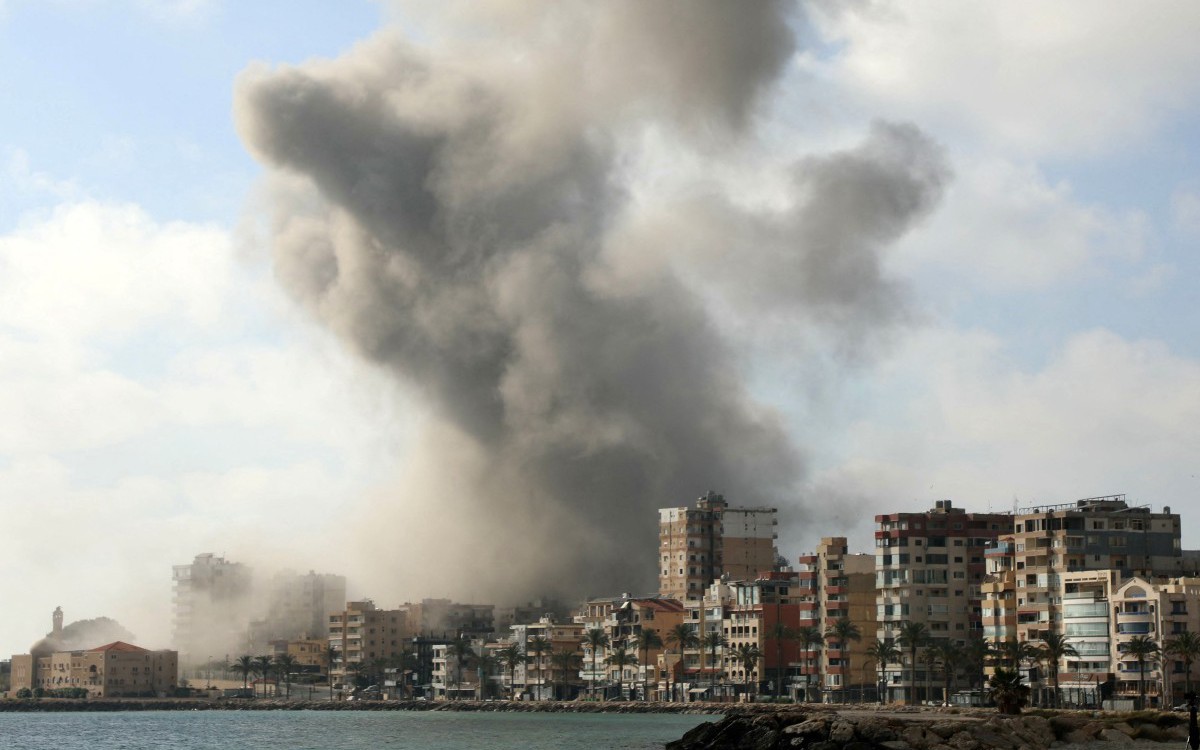
This incident follows an Israeli airstrike on what it described as a Hezbollah command center in Beirut, a group supported by Iran. Iranian Parliament Speaker Mohammad Bagher Ghalibaf warned that Israel's actions in Beirut and continued U.S. blockades would have consequences. The situation remains tense as the region braces for potential further retaliation.
Any further escalation will face a broader response targeting all American and Israeli targets in the region.
DistantNews Editorial
Originally published by Tuổi Trẻ in Vietnamese. Translated, summarized, and contextualized by our editorial team with added local perspective. Read our editorial standards.
More Stories
From Our Blog

What Gets Lost (and Found) When News Is Translated

The Critical Role of Diaspora Media in Global News

What Travellers Should Know About Countries with Restricted Press

A Digital Nomad's Guide to Following Local News

How the Same Story Looks Different in Different Countries
