



Iran Launches Fresh Attacks After Sixth Day of U.S. Strikes; Strait of Hormuz Shipping Halted
Translated from English, summarized and contextualized by DistantNews.
At a glance
News
Named sources
Ongoing story
- Iran launched new attacks on U.S. facilities in the Gulf, following a sixth consecutive night of U.S. strikes on Iranian military sites, escalating recent hostilities.
- The U.S. military stated its strikes aimed to degrade Iranian capabilities, hitting targets on Qeshm Island and near Bandar Abbas, while Iran claimed to have attacked U.S. facilities in Bahrain and Kuwait.
- The conflict has disrupted shipping in the Strait of Hormuz, increasing global energy prices, and Iran has threatened to involve its Houthi allies in closing the Bab al-Mandeb strait if U.S. attacks continue.
The volatile situation in the Persian Gulf intensified as Iran announced fresh attacks on U.S. facilities, directly responding to a sixth consecutive night of American strikes on Iranian military installations. This escalation marks a significant downturn from a recent truce, plunging the region back into a cycle of daily attacks and counterattacks.
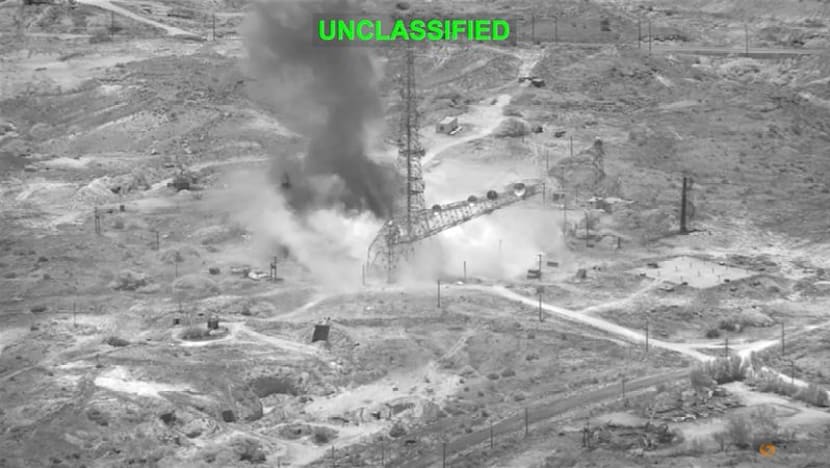
U.S. forces, including fighter jets, aerial drones, and warships, launched precision munitions that hit dozens of Iranian military targets such as coastal surveillance and air defense sites, military logistics infrastructure, and maritime capabilities.
The U.S. Central Command confirmed its continued strikes, stating the objective was to "further degrade Iranian military capabilities." These operations targeted sites on Qeshm Island and near Bandar Abbas, a critical hub for Iran's naval and Revolutionary Guards forces. In retaliation, Iran's military claimed responsibility for missile and drone strikes on U.S. facilities in Bahrain and Kuwait. Reports also emerged of explosions near Doha, Qatar, with a child reportedly injured by shrapnel.
Iranian media indicated that recent U.S. strikes impacted several bridges, a train station, and an airport in southeastern Iran, with state news agency IRNA reporting seven fatalities from strikes on bridges in Bandar Khamir. The accuracy of these reports remains unverified by Reuters.
Seven people were killed in U.S. attacks on bridges in Bandar Khamir, a port city in southern Iran.
This escalating conflict has once again severely disrupted maritime traffic through the Strait of Hormuz, a vital artery for global oil and gas transport, leading to a surge in international energy prices. Both Tehran and Washington have implemented blockades, with Iran resuming its control over the strait and the U.S. blockading Iranian ports. Adding another layer of threat, sources suggest Iran may direct its Houthi allies in Yemen to close the Bab al-Mandeb strait if U.S. infrastructure attacks persist.
Living with this fear that war could start again is very exhausting. You cannot live like this... Personally, I want diplomacy to prevail.
White House Press Secretary Karoline Leavitt stated that President Donald Trump would not tolerate these "acts of terrorism" in the strait and that Iran would face consequences, while also expressing openness to diplomacy. Iranian sources indicated their goal was to assert authority over the strait without derailing a previous memorandum of understanding. Meanwhile, residents within Iran expressed exhaustion and fear due to the renewed hostilities, with one government employee in Tehran stating, "Living with this fear that war could start again is very exhausting... Personally, I want diplomacy to prevail."
U.S. President Donald Trump would not 'sit by and allow these active acts of terrorism to take place in the strait without ensuring Iran pays consequences for that.'
DistantNews Editorial
Originally published by The Straits Times in English. Translated, summarized, and contextualized by our editorial team with added local perspective. Read our editorial standards.
More Stories


From Our Blog

What Gets Lost (and Found) When News Is Translated

The Critical Role of Diaspora Media in Global News

What Travellers Should Know About Countries with Restricted Press

A Digital Nomad's Guide to Following Local News

How the Same Story Looks Different in Different Countries
