


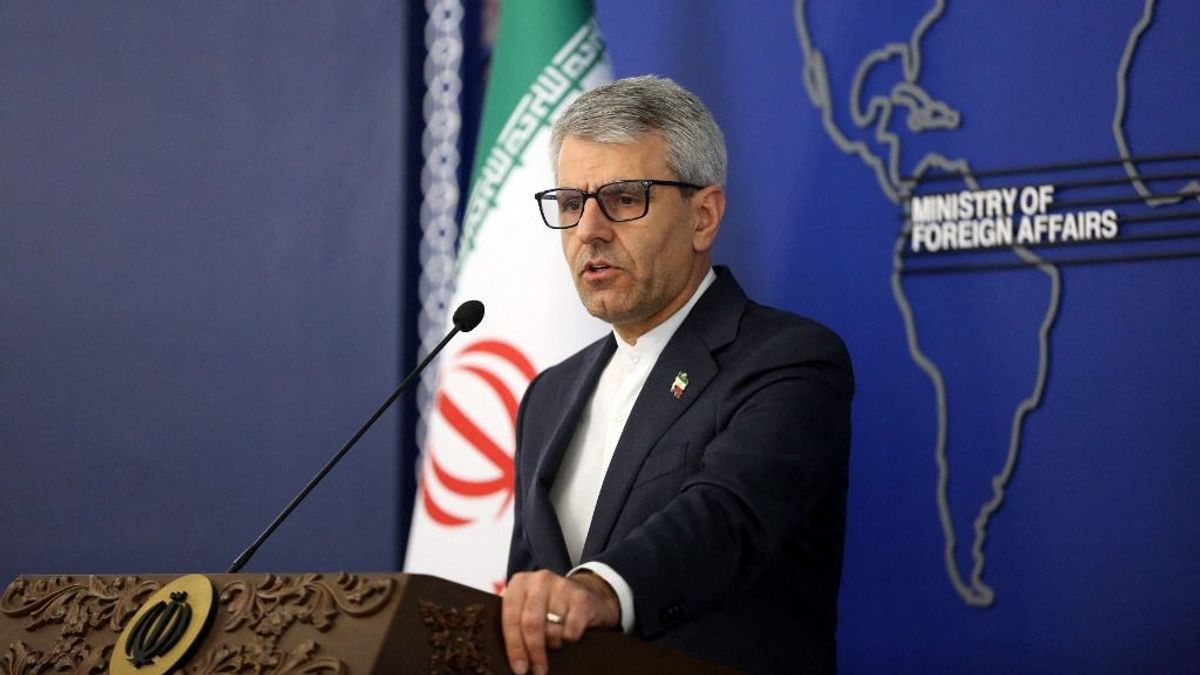
Iran Responds to Trump, Issues New Threat
Translated from Hungarian, summarized and contextualized by DistantNews.
TLDR
- Iran's Parliament Speaker Mohammad Bagher Ghalibaf issued a threat regarding the Strait of Hormuz.
- He stated that if the blockade continues, the Strait will not remain open, and passage will be subject to Iranian approval.
- This statement follows US President Donald Trump's announcement that he would not lift the blockade on Iranian ports.
From Tehran, the message is clear and unequivocal: Iran is prepared to retaliate against perceived American aggression, particularly concerning the blockade of its ports. Parliament Speaker Mohammad Bagher Ghalibaf's stern warning regarding the Strait of Hormuz underscores this resolve. His assertion that the vital waterway will only remain open under Iranian terms, and contingent on the lifting of the US blockade, signals a significant escalation in the ongoing tensions.
The US president made seven claims within an hour, all seven were lies.
This defiant stance directly challenges the recent announcement by US President Donald Trump, who indicated no intention to ease the pressure on Iran's maritime trade. Ghalibaf's threat, delivered with a nationalist fervor, frames the situation as a direct confrontation where Iran will not back down. The implication is that any continued attempts to isolate Iran economically will be met with forceful countermeasures, potentially disrupting global oil supplies.
If the blockade continues, the Strait of Hormuz will not remain open.
Iranian state media, like Magyar Nemzet, highlights these exchanges, framing them within a narrative of national resilience against foreign pressure. The focus is on Iran's sovereign right to control its waterways and defend its interests. The international community, particularly Western media, might view this as dangerous brinkmanship. However, from an Iranian perspective, it is presented as a necessary defense of national dignity and economic survival. The unique aspect here is how Iran leverages its strategic geographic position, using the Strait of Hormuz as a potent bargaining chip, a move that resonates deeply within the country as a demonstration of strength against a superpower.
Passage through the Strait will be according to routes determined by Iran and with Iran's permission.
DistantNews Editorial
Originally published by Magyar Nemzet in Hungarian. Translated, summarized, and contextualized by our editorial team with added local perspective. Read our editorial standards.
More Stories

From Our Blog

Countries Without a Free Press: What You Need to Know

What Press Freedom Means for the News You Read

What Gets Lost (and Found) When News Is Translated

The Critical Role of Diaspora Media in Global News

What Travellers Should Know About Countries with Restricted Press
