


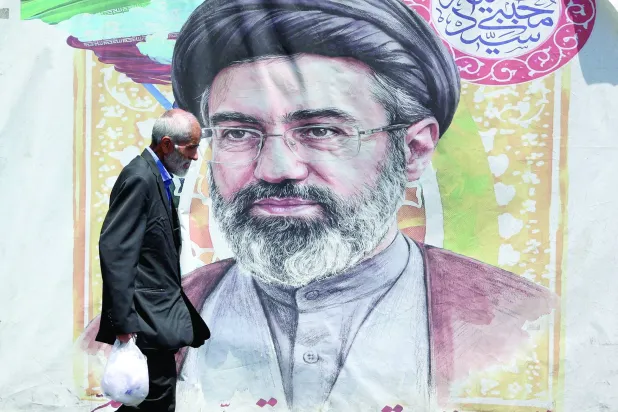
Iran's Economy Reels Under Intensified US Sanctions Amidst War
Translated from English and summarized by DistantNews. Read the original for the full story.
At a glance
News
From a news agency
Context piece
- Iranian leaders admit the war and intensified U.S. sanctions are taking a heavy toll on the economy, with foreign trade down 35% and annual inflation reaching 66%.
- The U.S. has warned countries to cut business ties with Iran or face secondary sanctions, though major partners like China and India have not yet been penalized.
- Despite economic hardship, some Iranian officials continue to threaten military retaliation against the U.S. and assert control over the Strait of Hormuz.
Iran's leadership is openly acknowledging the severe economic strain caused by the ongoing conflict and escalating U.S. sanctions. The nation's supreme leader has urged the government to address the hardships faced by citizens, while the president reported a significant 35% contraction in foreign trade directly attributed to American sanctions and a naval blockade of Iranian ports. These admissions come even as other officials issue threats of military retaliation against the United States.
There is the need to seriously address the chain of economic and livelihood challenges, such as inflation, unemployment, management of prices and the market for goods and services
The U.S. administration has intensified its financial pressure campaign, describing it as an "economic D-Day." Washington has warned international partners to sever business ties with Iran or face punitive secondary sanctions. While major Iranian trade partners such as China and India have so far been spared direct penalties, which could have wider repercussions for the global economy, U.S. Treasury officials have continued to impose sanctions on specific entities, including one based in Hong Kong and an individual linked to Iran's Bank Melli.
The economic toll on Iran is stark. Annual inflation hit a staggering 66% last month. Supreme Leader Mojtaba Khamenei, who has not been seen publicly since the February 28 attack that killed his father, former Supreme Leader Ali Khamenei, called for serious attention to "the chain of economic and livelihood challenges, such as inflation, unemployment, management of prices and the market for goods and services." President Masoud Pezeshkian echoed these concerns, stating that exports and imports have slumped nearly 35% due to the sanctions and blockade.
Iranian exports and imports slumped nearly 35% because of US sanctions and a naval blockade of Iranian ports.
Despite the economic pressures, Iran maintains its assertive stance regarding the Strait of Hormuz, a critical global energy waterway. Iranian officials have declared that the nation's navy controls the strait, highlighting its ability to disrupt global energy markets. Meanwhile, diplomatic efforts continue, with Qatari Prime Minister Sheikh Mohammed bin Abdulrahman Al Thani meeting with Iranian leaders to stress the importance of open shipping. These talks, described as "creative" by Iranian Foreign Minister Abbas Araghchi, follow a previous memorandum of understanding brokered by Qatar and Pakistan that led to a brief ceasefire before disagreements over the strait caused it to collapse.
talks with Al Thani as 'creative'
About this summary
Originally published by Asharq Al-Awsat in English. Translated, summarized, and contextualized automatically by DistantNews, with a note on how the source frames the story. Not individually reviewed before publishing. How this works.
More Stories


From Our Blog

What Gets Lost (and Found) When News Is Translated

The Critical Role of Diaspora Media in Global News

What Travellers Should Know About Countries with Restricted Press

A Digital Nomad's Guide to Following Local News

How the Same Story Looks Different in Different Countries
