


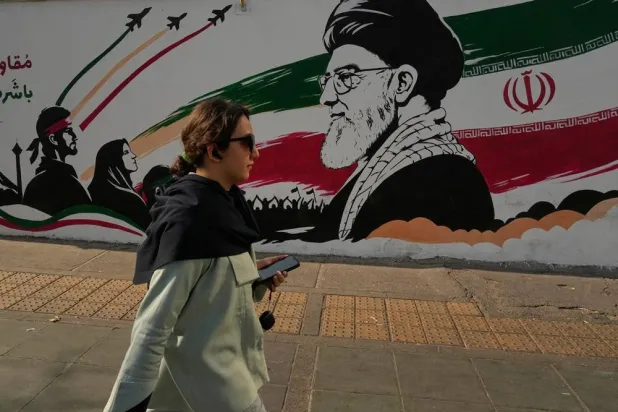
Iran’s Leaders Show a United Front Over the War but Are Divided Over What the Goal Is
Summarized and contextualized by DistantNews.
At a glance
News
Named sources
Ongoing story
- Iran's leaders present a united front on war strategy, emphasizing resilience against the US and its allies.
- However, internal divisions exist regarding the ultimate goal of the conflict, with hardliners seeking total victory and moderates pursuing a negotiated deal.
- The internal struggle reflects a contest for control over Iran's post-war future, with uncertainty surrounding the new supreme leader's stance.
Iran's leadership is projecting a unified stance on its war strategy, signaling a determination to withstand pressure from the United States and its allies. This outward show of resilience, however, masks significant internal disagreements about the ultimate objectives of the ongoing conflict. The divisions highlight a struggle for control over Iran's future trajectory.
On one side are the ultra-hardliners, associated with the "Paydari" movement, who advocate for complete victory and oppose any negotiations with the U.S. These ideologues seek to enforce strict control over society. Conversely, a more moderate camp, supporting President Masoud Pezeshkian and Parliament Speaker Mohammad Bagher Qalibaf, views military pressure as a means to achieve a negotiated settlement with the U.S. This group is also motivated by concerns over the war's economic impact and the need to adapt to social changes within Iran.
An adviser to Qalibaf, Mahdi Mohammadi, articulated this perspective on Telegram, stating, "Negotiation is a political tool and a complement to military action to force the enemy to a point of compulsion and extract real concessions." This internal rivalry is particularly notable given the uncertainty surrounding the position of the new supreme leader, Mojtaba Khamenei, who has reportedly been injured and remains in hiding, with both factions claiming his support.
The Supreme National Security Council recently backed a ceasefire deal with the U.S., with 12 out of 13 members approving it, including senior figures from the Revolutionary Guard and the military. Saeed Jalili, a prominent Paydari figure, is believed to be the sole dissenter. Despite this, the ceasefire has faltered amid continued strikes and Iran's push for control over the Strait of Hormuz. Frustration over unfulfilled financial promises, such as the release of frozen assets, has also contributed to the renewed tensions and the return of the American blockade.
Negotiation is a political tool and a complement to military action to force the enemy to a point of compulsion and extract real concessions.
DistantNews Editorial
Originally published by Asharq Al-Awsat. Summarized and contextualized by our editorial team with added local perspective. Read our editorial standards.
More Stories

From Our Blog

What Gets Lost (and Found) When News Is Translated

The Critical Role of Diaspora Media in Global News

What Travellers Should Know About Countries with Restricted Press

A Digital Nomad's Guide to Following Local News

How the Same Story Looks Different in Different Countries
