

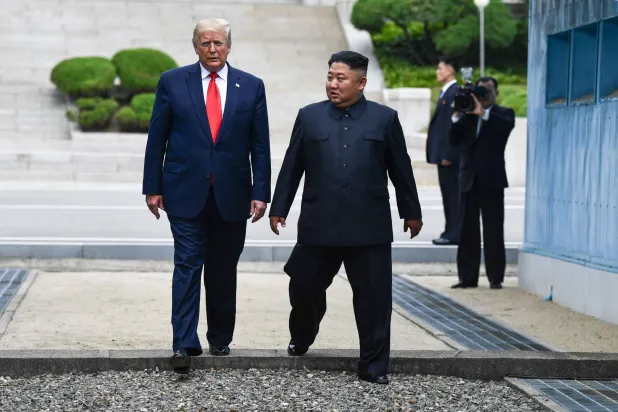

Iran's Revolutionary Guard Signals Potential Shift to Offensive War
Translated from English, summarized and contextualized by DistantNews.
At a glance
News
Named sources
Ongoing story
- A senior Iranian Revolutionary Guard Corps (IRGC) official warned of a potential shift from defensive to offensive military operations.
- Iran and its allied groups are reportedly preparing plans to broaden the conflict and increase costs for the U.S. and its allies.
- The IRGC is reorganizing its military structure and accelerating missile and drone production in preparation for a wider confrontation.
A senior official within Iran's Revolutionary Guard Corps (IRGC) has signaled a potential escalation in military posture, warning that Iran may transition from defensive to offensive operations. Yadollah Javani, the IRGC’s deputy for political affairs, stated that while Iran's actions have been defensive due to adversaries initiating conflict, future operations could become offensive. He indicated that new approaches would be adopted following recent directives, promising "strategic surprises" for Iran's adversaries.
Iran’s military actions had so far been defensive because its adversaries had started the war, but could become offensive in the future.
This warning coincides with reports that Tehran and its allied armed groups in Iraq, Yemen, and Lebanon are developing plans to expand the conflict. A senior Iranian official told Reuters that tensions in the Strait of Hormuz and the broader region would escalate if diplomacy with Washington fails. This official indicated Iran's decision to move to a "fully offensive" stance, suggesting the U.S. has a few weeks to implement a memorandum of understanding, as reliance on mediators is no longer seen as realistic.
Javani reiterated that resolving the conflict and reopening the Strait of Hormuz hinges on Washington fulfilling its commitments under the Islamabad memorandum. He emphasized that the waterway would not revert to its pre-war status. Discussions with Oman regarding a shipping corridor are focused on the period after hostilities definitively cease. Recent military appointments by Supreme Leader Mojtaba Khamenei are described as a restructuring to adapt Iran's defense doctrine to current conditions.
Tehran would escalate tensions in the Strait of Hormuz and the wider region if diplomacy with Washington failed.
Further indications of a strategic shift come from intercepted communications and intelligence cited by The Wall Street Journal. These suggest the IRGC has been collaborating with allies to expand the battlefield. Reports indicate that Tehran used a recent lull to reorganize its military and security apparatus, rebuild capabilities, and prepare for a broader confrontation. This preparation includes granting the IRGC greater influence over the regular military, restructuring command chains, enhancing counterintelligence, and boosting missile and drone production.
Iran had decided to shift from a defensive posture to a “fully offensive” one and had given the United States “a few weeks” to fully implement the memorandum of understanding.
DistantNews Editorial
Originally published by Asharq Al-Awsat in English. Translated, summarized, and contextualized by our editorial team with added local perspective. Read our editorial standards.
More Stories


From Our Blog

What Gets Lost (and Found) When News Is Translated

The Critical Role of Diaspora Media in Global News

What Travellers Should Know About Countries with Restricted Press

A Digital Nomad's Guide to Following Local News

How the Same Story Looks Different in Different Countries
