


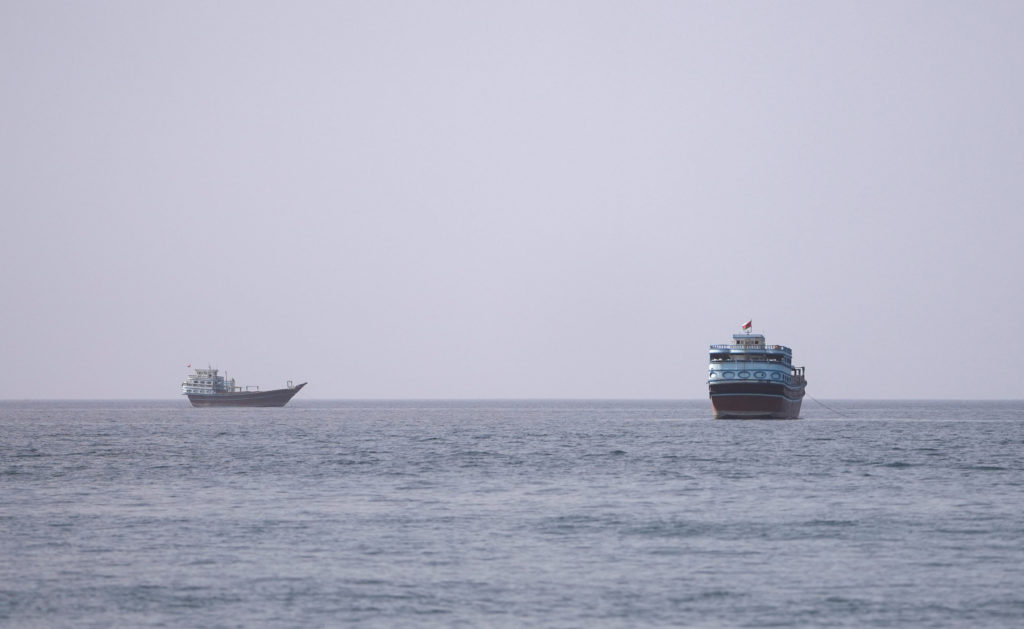
Iran's Strait of Hormuz islands become targets in U.S. campaign
Translated from English, summarized and contextualized by DistantNews.
At a glance
News
From a news agency
Context piece
- Three small Iranian-controlled islands at the entrance to the Strait of Hormuz have become targets in the expanding U.S. military campaign against Iran.
- The islands, seized by Iran from the UAE in 1971, are strategically vital for controlling the strait, through which a fifth of global oil and gas passes.
- U.S. strikes on Abu Musa and Greater Tunb islands have renewed speculation about their fate and Iran's control over the critical energy chokepoint.
The strategic islands of Abu Musa, Greater Tunb, and Lesser Tunb, located at the confluence of the Persian Gulf and the Strait of Hormuz, are once again in the spotlight as the U.S. military escalates its campaign against Iran. These islands, totaling about 10 square miles, were seized by Iran from the United Arab Emirates in 1971. They have since become a key Iranian military outpost, enabling significant control over the Strait of Hormuz, a vital waterway through which approximately one-fifth of the world's oil and natural gas is transported during peacetime.
Recent U.S. airstrikes have targeted Abu Musa and Greater Tunb, fueling speculation about the future of these disputed territories. The islands' strategic importance cannot be overstated; they lie along the deep-water shipping route crucial for vessels transiting between the Gulf and the strait. Abu Musa, the largest, hosts a village but primarily serves as a base for Iran's Revolutionary Guard, equipped with fast boats and missiles used to harass shipping, as well as air defense systems. Greater Tunb also functions as a military base, while Lesser Tunb has a purely military presence.
Control over these islands has been a long-standing point of contention among regional powers. Iran's seizure of them in 1971, under Shah Mohammad Reza Pahlavi, then a key U.S. ally, faced little opposition. Following the 1979 Islamic Revolution, Iran leveraged the islands during the 1980s "Tanker war," using them to monitor shipping and launch attacks on vessels. U.S. Navy escorts were necessary to protect oil tankers navigating the volatile region, with Iran estimated to have attacked over 160 ships during that conflict.
In the current conflict, over 50 attacks have targeted vessels and oil rigs in the region, according to coalition data. This includes U.S. actions against ships accused of attempting to breach its blockade on Iran. The recent U.S. strikes on Abu Musa and Greater Tunb are seen by some analysts as a prelude to a potential invasion. Columnist Isabel Oakeshott noted that the islands "act as a layered denial system to the most critical energy chokepoint in the world."
Together they act as a layered denial system to the most critical energy chokepoint in the world.
DistantNews Editorial
Originally published by PBS NewsHour in English. Translated, summarized, and contextualized by our editorial team with added local perspective. Read our editorial standards.
More Stories



From Our Blog

How the Same Story Looks Different in Different Countries

What Gets Lost (and Found) When News Is Translated

The Critical Role of Diaspora Media in Global News

What Travellers Should Know About Countries with Restricted Press

A Digital Nomad's Guide to Following Local News
