


Iran Says No Technical Meeting Expected with US in Coming Days
Summarized and contextualized by DistantNews.
At a glance
News
From a news agency
Context piece
- The Balkans are experiencing the impact of a record-breaking heatwave that has caused hundreds of excess deaths across Europe.
- Wildfires are a growing concern, with firefighters battling blazes in Croatia and Albania, while Serbia anticipates extreme temperatures.
- Scientists link the heatwave to human-caused climate change, noting it has disrupted power, damaged infrastructure, and overwhelmed healthcare systems.
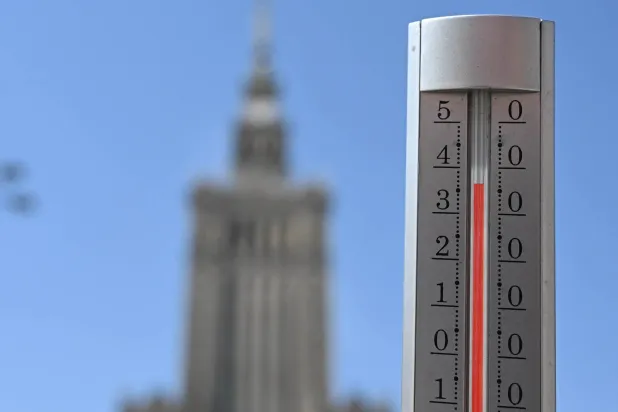
Europe continues to grapple with a severe heatwave, with the Balkans now feeling its significant impact. Record-breaking temperatures, which have already caused hundreds of excess deaths and disrupted daily life across the continent for over a week, are fueling growing concerns about the spread of wildfires. Authorities in Croatia are battling a blaze on the tourist island of Vis, while Albania has contained a wildfire near the southern village of Klos. Serbia's State Hydrometeorological Service has warned of temperatures reaching 39 degrees Celsius (102 degrees Fahrenheit).
Scientists attribute the current heatwave, which began on June 20, to human-caused climate change. They state that such extreme conditions, particularly the soaring night-time temperatures, are now 100 times more likely than they were two decades ago. The blistering heat has taken a heavy toll, disrupting power generation, damaging infrastructure, and overwhelming healthcare systems. France alone has reported 1,000 excess deaths during the heatwave, with public health officials warning the number is expected to rise, primarily affecting older individuals.
The areas affected look broadly the same as in the first wave, including France, Spain, Germany, Italy, Switzerland and to some extent Britain.
Looking ahead, the heat is forecast to build again from the start of next week in countries like France and Germany, which were severely affected in the initial wave. Italy's Meteorological Society president, Luca Mercalli, predicts temperatures will soar again from July 5-6 across France, Spain, Germany, Italy, Switzerland, and Britain. While extreme heat increases the risk of forest fires, Mercalli noted that localized rainstorms could mitigate this risk in some areas.
Tragic incidents related to the heat have also been reported. Two young boys from Bulgaria were found dead in a hot car in Cyprus, where temperatures are around 38 C. In Poland, which recorded a new high of 40.5 C on Sunday, two cyclists died during a marathon event near Warsaw. These incidents underscore the dangerous and far-reaching consequences of the ongoing extreme weather event.
With the extreme heat the risk of forest fires increases, but we are also seeing a lot of rainstorms, which obviously mitigates that risk.
DistantNews Editorial
Originally published by Asharq Al-Awsat. Summarized and contextualized by our editorial team with added local perspective. Read our editorial standards.
More Stories

From Our Blog

What Gets Lost (and Found) When News Is Translated

The Critical Role of Diaspora Media in Global News

What Travellers Should Know About Countries with Restricted Press

A Digital Nomad's Guide to Following Local News

How the Same Story Looks Different in Different Countries
