

Iran War Fuels Political Backlash, Inflation Debate in the US
Translated from English, summarized and contextualized by DistantNews.
At a glance
News
Named sources
Ongoing story
- Democrats blame President Trump's Iran policy and trade agenda for rising inflation and energy prices in the US.
- Inflation reached 4.2% in May, exceeding wage growth of 3.4%, eroding household finances.
- Critics argue the conflict in Iran, coupled with tariffs, is driving up costs for American consumers.
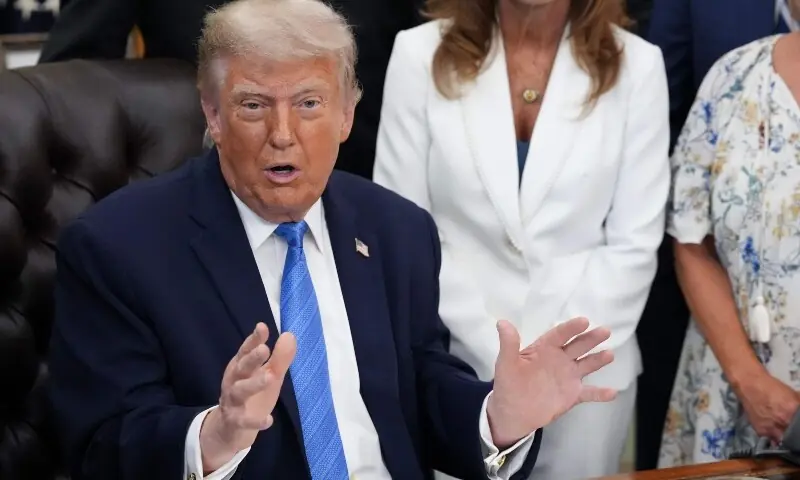
Democrats in Washington are increasingly blaming President Donald Trump's foreign policy and trade agenda for the nation's rising inflation and persistent energy price pressures. Recent economic figures show inflation at 4.2% in May, outpacing wage growth of 3.4% over the same period, sparking renewed concerns about eroding real incomes.
Another month of Trump’s illegal Iran war, another month of Trump’s tariffs, another month of Republican control of Congress. The result? A new all-time high for Trumpflation.
Senate Democratic leader Chuck Schumer sharply criticized the administration's economic and foreign policy. He linked "Trump's illegal Iran war" and "Trump's tariffs" to what he termed "Trumpflation," a new all-time high. He cited economist Heather Long, who warned that inflation is erasing all wage gains, leaving Americans financially squeezed.
Inflation is so high that it’s erasing all wage gains. Inflation: 4.2pc in May for the past year. Wage growth: 3.4pc in May for the past year. Americans are getting squeezed financially.
Senator Jeanne Shaheen echoed these criticisms, accusing President Trump of breaking campaign promises. She stated he promised no new wars and lower energy costs but instead initiated a "reckless war with Iran," which she claims has driven up gas prices and inflation. Shaheen asserted that Trump lied, and the American people are paying the price.
President Trump promised no new wars. He promised to lower your energy costs and tame inflation. Instead, he started a reckless war with Iran. He’s spiked gas prices. And inflation has soared month after month. He lied, and it’s the American people who are paying the price.
In the House, Democratic leader Hakeem Jeffries labeled the conflict a "reckless war of choice" and urged congressional action to end it. Analysts suggest the primary link between the conflict and U.S. inflation is through global energy markets, where supply disruption expectations can rapidly increase fuel costs for consumers. Experts warn that energy markets remain highly sensitive to geopolitical instability, with disruptions anywhere impacting U.S. prices. Wider regional instability involving Iran also risks complicating diplomatic efforts and sustaining long-term uncertainty in the Middle East, with indirect consequences for import-dependent economies like Pakistan through higher oil and transport costs.
It’s time for the Republican-controlled Senate to move our war powers resolution. So we can end this costly conflict immediately.
DistantNews Editorial
Originally published by Dawn in English. Translated, summarized, and contextualized by our editorial team with added local perspective. Read our editorial standards.
More Stories

From Our Blog

What Gets Lost (and Found) When News Is Translated

The Critical Role of Diaspora Media in Global News

What Travellers Should Know About Countries with Restricted Press

A Digital Nomad's Guide to Following Local News

How the Same Story Looks Different in Different Countries
