

Iran warns final agreement will not be signed if terms are not met
Summarized and contextualized by DistantNews.
At a glance
News
Official statement
Context piece
- Iran's foreign minister stated that a final nuclear deal will not be signed unless its provisions are met.
- An initial agreement would give the U.S. 60 days to fulfill its commitments, with the possibility of reverting to the previous situation if obligations are not met.
- Iran anticipates implementation challenges, citing a history of U.S. officials not fully adhering to agreements.
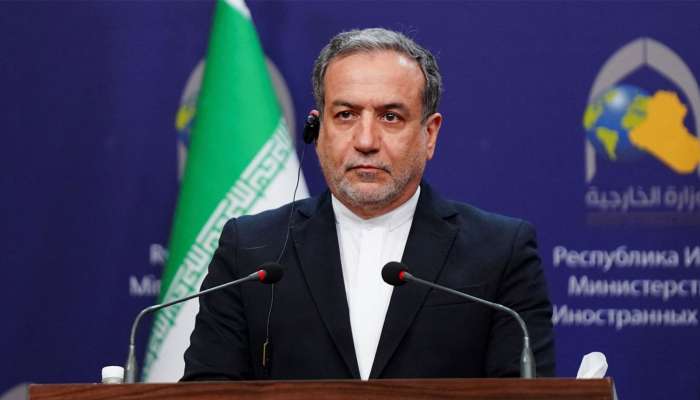
Iranian Foreign Minister Abbas Araghchi has declared that nuclear talks with the United States will not progress unless an interim agreement is implemented. He further warned that the final deal will be abandoned if its terms are not fulfilled.
If the provisions of the memorandum of understanding are not met, the final agreement will not be signed.
Speaking to Iran's state broadcaster, Islamic Republic of Iran Broadcasting (IRIB), Araghchi outlined that following an initial agreement, the U.S. would have a 60-day window to meet its commitments. He cautioned that the situation could revert to its prior state if these obligations are not satisfied. "If the provisions of the memorandum of understanding are not met, the final agreement will not be signed," IRIB quoted the minister.
Araghchi also noted that the decision on the agreement's text would be made collectively by Iran's Supreme National Security Council. If approved, the agreement would be signed remotely. He elaborated, "After signing the initial agreement, we give the U.S. 60 days to fulfill its duties. During this time, we may reach an understanding or extend the ceasefire; it is also possible that after 60 days, we will return to the previous situation."
After signing the initial agreement, we give the U.S. 60 days to fulfill its duties. During this time, we may reach an understanding or extend the ceasefire; it is also possible that after 60 days, we will return to the previous situation.
The foreign minister expressed skepticism regarding the U.S. commitment to the deal, anticipating implementation challenges. "Breaking promises is in the nature of U.S. statesmen; we must expect major obstacles in implementing the agreement," he stated. Araghchi asserted that Iran would remain vigilant against any loopholes that could allow for non-compliance by the U.S.
Breaking promises is in the nature of U.S. statesmen; we must expect major obstacles in implementing the agreement.
Araghchi concluded by emphasizing Iran's self-reliance for security, stating, "We do NOT rely on the Security Council, the United Nations, or trans-regional coalitions to guarantee our security. Our reliance is only on God, our people, and our own armed forces."
We do NOT rely on the Security Council, the United Nations, or trans-regional coalitions to guarantee our security. Our reliance is only on God, our people, and our own armed forces.
DistantNews Editorial
Originally published by Times of Oman. Summarized and contextualized by our editorial team with added local perspective. Read our editorial standards.
More Stories


From Our Blog

What Gets Lost (and Found) When News Is Translated

The Critical Role of Diaspora Media in Global News

What Travellers Should Know About Countries with Restricted Press

A Digital Nomad's Guide to Following Local News

How the Same Story Looks Different in Different Countries
