


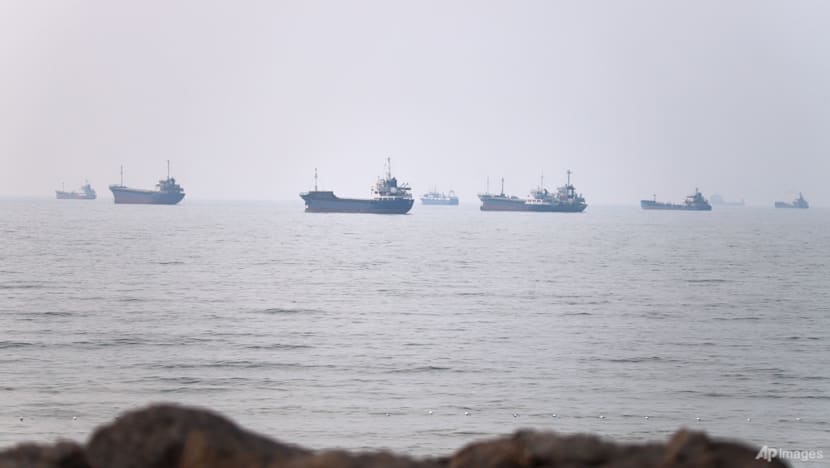
Iran warns oil tankers to use approved routes or face 'forceful response'
Translated from English, summarized and contextualized by DistantNews.
At a glance
News
Sources not specified
Ongoing story
- Iran's joint military command warned all oil tankers transiting the Strait of Hormuz to use approved routes or face a forceful response.
- The warning escalates tensions over the vital waterway, coming after US and Iranian diplomats met with mediators.
- Iran is also preparing for the funeral of its Supreme Leader Ayatollah Ali Khamenei, who was killed in the war.
Iran's military command issued a stern warning Thursday, stating that all oil tankers must adhere to approved routes in the Strait of Hormuz or face a "forceful response." This declaration ratchets up tensions over the crucial waterway for global energy supplies.
The statement from the Khatam al-Anbiya military command, as reported by Iranian state television, follows diplomatic meetings in Qatar between US and Iranian representatives. The situation is further complicated by Iran's imminent funeral for Supreme Leader Ayatollah Ali Khamenei, who died in the war's opening moments.
Any failure to comply, deviation from the designated route, or disregard for the navigation protocols of the Islamic Republic of Iran in the Strait of Hormuz will be met with an immediate and forceful response from the armed forces, endangering the security of the violating vessels.
While the exact trigger for the tanker warning remains unclear, it may be linked to a statement from the US military's Central Command. This statement highlighted a meeting with Middle Eastern officials in Bahrain, where leaders reaffirmed their commitment to the "free flow of commerce" through the strait. Iran views any such interference or deviation from its navigation protocols as a threat.
leaders underscored their shared commitment to the free flow of commerce through the strait.
"Any failure to comply, deviation from the designated route, or disregard for the navigation protocols of the Islamic Republic of Iran in the Strait of Hormuz will be met with an immediate and forceful response from the armed forces, endangering the security of the violating vessels," the Iranian statement declared. It also warned of a "rapid and decisive reaction" to any interference by US forces.
Earlier, Iran and the US had agreed to allow ships passage without charges for 60 days as part of an interim deal. However, Tehran's insistence on controlling routes and levying fees has been rejected by the US and many Gulf Arab states. Despite recent attacks, including Iranian strikes on two commercial vessels, ship traffic in the strait has shown resilience, with hundreds of vessels transiting weekly, according to Lloyd's List Intelligence.
seem to have been forgotten
DistantNews Editorial
Originally published by CNA in English. Translated, summarized, and contextualized by our editorial team with added local perspective. Read our editorial standards.
More Stories


From Our Blog

What Gets Lost (and Found) When News Is Translated

The Critical Role of Diaspora Media in Global News

What Travellers Should Know About Countries with Restricted Press

A Digital Nomad's Guide to Following Local News

How the Same Story Looks Different in Different Countries
