


Iran warns: peace deal is 'null' if Israel stays in Lebanon
Translated from Spanish, summarized and contextualized by DistantNews.
At a glance
News
Named sources
Context piece
- Iran warns that any peace agreement is void if Israel does not fully withdraw from Lebanon.
- The Iranian Foreign Ministry stated that Israel's continued presence would violate a memorandum of understanding with Washington.
- Tehran insists that a complete resolution must address all fronts of the conflict.
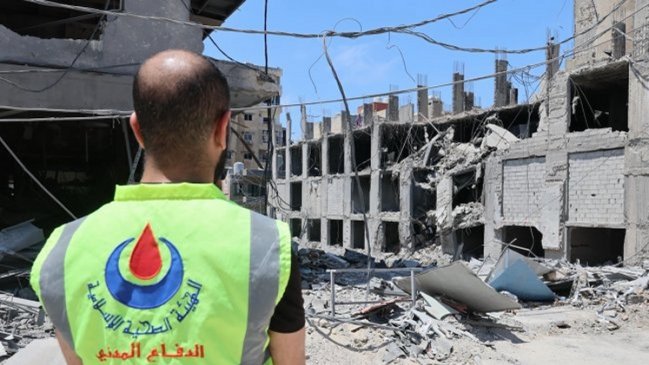
Iran has issued a stern warning, stating that any peace agreement would be considered null and void if Israel fails to completely withdraw from southern Lebanon. The Iranian Ministry of Foreign Affairs emphasized that Israel's continued military presence would constitute a violation of a memorandum of understanding previously reached between Tehran and Washington.
Ismail Bagaei, the spokesperson for the Iranian Foreign Ministry, explained in an interview with the Lebanese newspaper Al Akhbar that the agreement with Donald Trump's administration included commitments regarding Lebanon's sovereignty and territorial integrity. He asserted that the conflict remains essentially ongoing as long as the occupation persists.
While the occupation continues, it can be said that the war is still ongoing and has not ended in essence.
Bagaei reiterated Iran's initial stance during negotiations, insisting that the cessation of hostilities must encompass "all fronts and in full." When questioned about the possibility of Israel maintaining a military presence in a designated "security zone" within Lebanon post-agreement, Bagaei stated that such a scenario would breach the acquired commitments.
"In this case, the memorandum of understanding would be considered null," he affirmed. These declarations intensify the pressure on the White House, highlighting recent tensions between the US and Israel, which reportedly led Trump to describe Israeli Prime Minister and reelection candidate Benjamin Netanyahu as a "damn fool."
In this case, the memorandum of understanding would be considered null.
DistantNews Editorial
Originally published by Cooperativa in Spanish. Translated, summarized, and contextualized by our editorial team with added local perspective. Read our editorial standards.
More Stories


From Our Blog

What Gets Lost (and Found) When News Is Translated

The Critical Role of Diaspora Media in Global News

What Travellers Should Know About Countries with Restricted Press

A Digital Nomad's Guide to Following Local News

How the Same Story Looks Different in Different Countries
