


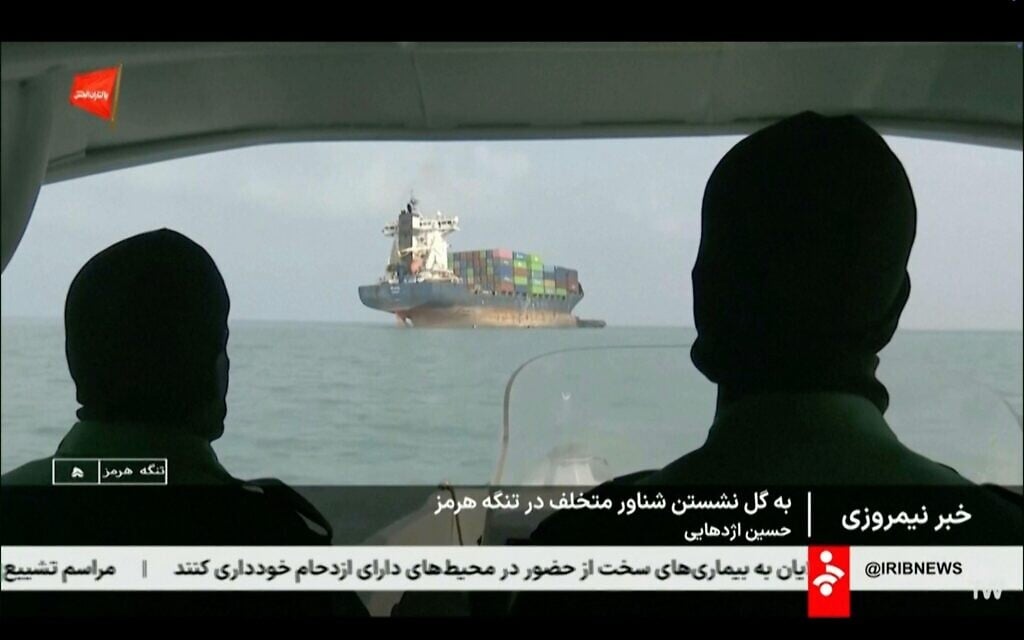
Iranian diplomat says country will ‘definitely’ collect Hormuz fees, defying US
Summarized and contextualized by DistantNews.
At a glance
News
Named sources
Context piece
- Iran's ambassador to China stated the country will charge fees for ships transiting the Strait of Hormuz, despite US objections.
- Friendly nations may receive special treatment under new arrangements for the waterway's security and passage.
- The US insists any deal will prohibit Iran from charging any fees, viewing the distinction between service fees and tolls as semantics.
Iran's ambassador to China has asserted that Iran will "definitely" collect fees from ships transiting the Strait of Hormuz, a move strongly opposed by the United States. Ambassador Abdolreza Rahmani Fazli indicated that "friendly" nations might receive preferential treatment under new security and passage arrangements for the vital waterway.
Fazli explained at the World Peace Forum in Beijing that Iran, as a nation whose territorial waters include the Strait, plans to charge "service fees" rather than "tolls." These new arrangements, developed in cooperation with Oman, aim to guarantee passage security, supervise vessel transit, and manage environmental consequences. The ambassador stressed that these measures are distinct from the initial 60-day agreement with the US that allowed commercial ships to transit the strait free of charge.
As a country where the Hormuz is part of its territorial waters, we will definitely charge service fees.
However, U.S. Secretary of State Marco Rubio countered that any final agreement will explicitly bar Iran from levying any fees. Rubio dismissed the distinction between service fees and tolls as mere semantics, highlighting the ongoing tension over the strait's control and access. The Strait of Hormuz, which normally facilitates one-fifth of the world's crude oil and liquefied natural gas, was previously blockaded by Iran during its war with the US and Israel, causing significant energy price hikes. Following a truce and peace talks, Iran lifted its blockade, but negotiations on a permanent settlement remain complex.
We will definitely consider special treatment for the countries that were friendly to us and specially stood by us during the hard times.
DistantNews Editorial
Originally published by Times of Israel. Summarized and contextualized by our editorial team with added local perspective. Read our editorial standards.
More Stories


From Our Blog

What Gets Lost (and Found) When News Is Translated

The Critical Role of Diaspora Media in Global News

What Travellers Should Know About Countries with Restricted Press

A Digital Nomad's Guide to Following Local News

How the Same Story Looks Different in Different Countries
