


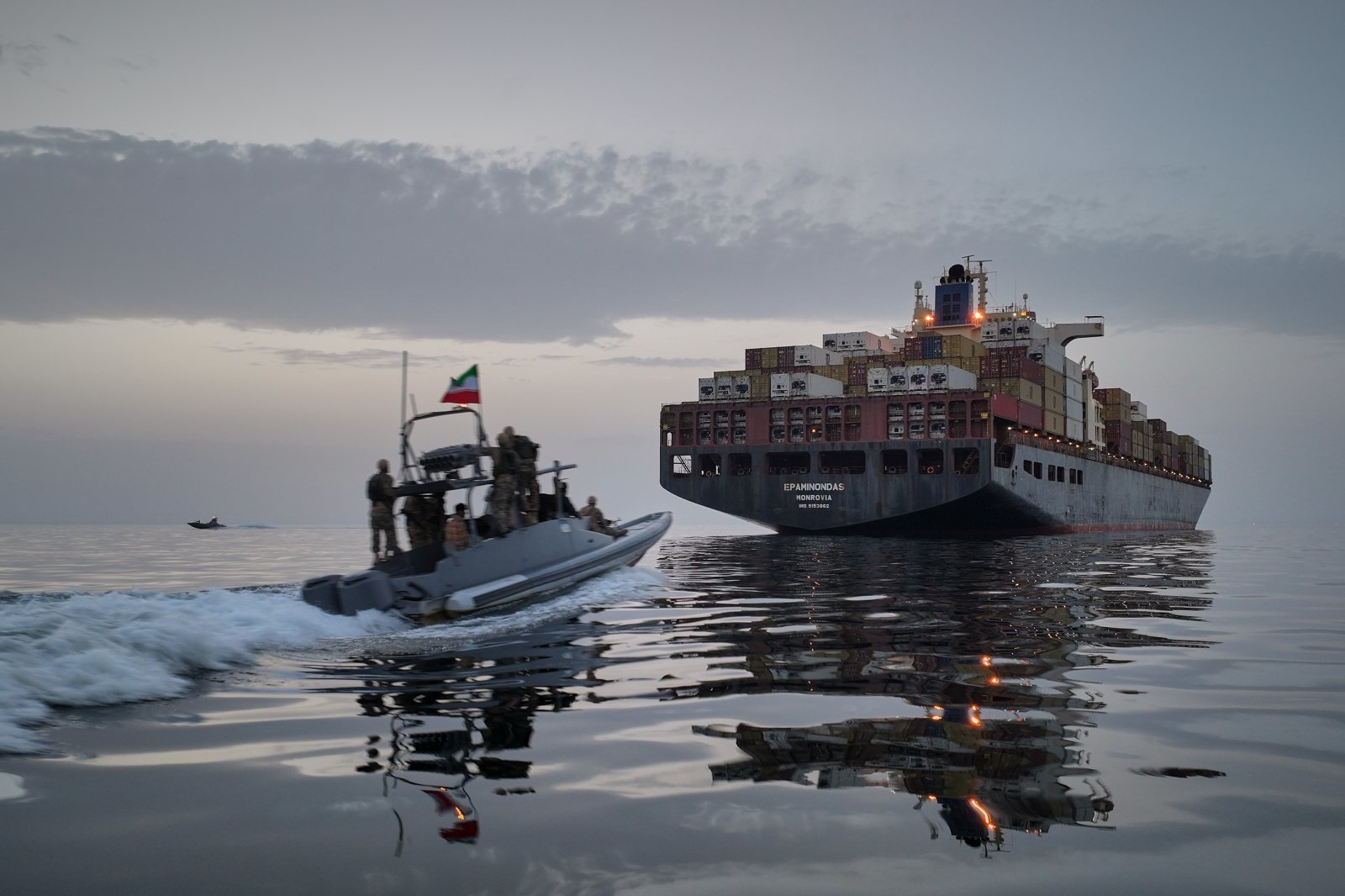
Iranian military warns US it will regret Hormuz strikes and threatens retaliation
Translated from Korean and summarized by DistantNews. Read the original for the full story.
At a glance
Newswire
From a news agency
Ongoing story
- The United States says it launched strikes against Islamic Revolutionary Guard Corps targets in Iran after alleged attacks on merchant ships and US troops near the Strait of Hormuz.
- Iranian officials threaten severe and painful retaliation, while Iranian media report explosions on Qeshm Island and in several southern cities.
- The reported strikes and warnings increase tensions around the strategic waterway.
Iran’s Islamic Revolutionary Guard Corps warned the United States that it would regret a new attack after explosions were reported around the Strait of Hormuz.
IRGC spokesman Hossein Mohebi wrote on X that “harsh punishment awaits the aggressors” and that the United States would regret its latest attack. Iran’s armed forces general staff and the Khatam al-Anbiya Central Headquarters also warned of retaliation.
Harsh punishment awaits the aggressors.
The semi-official Tasnim news agency said Iran would deliver a “painful and overwhelming blow” in response to US strikes in Sistan and Baluchestan province and Hormozgan province. Citing military sources, Tasnim said Iran’s response to the attack would be stronger than previous actions.
The United States will regret the new attack.
US Central Command said American forces began airstrikes against IRGC targets in Iran at noon Eastern time. It said the operation followed recent attempts by the IRGC to attack commercial vessels in the Strait of Hormuz and US service members deployed in the area.
Iranian state media reported explosions on Qeshm Island, in the southern port city of Bandar Abbas, and in the southeastern cities of Chabahar and Konarak. Several blasts were reported on Qeshm Island, with additional explosions detected in the direction of the Strait of Hormuz.
Painful and overwhelming blow
About this summary
Originally published by Dong-A Ilbo in Korean. Translated, summarized, and contextualized automatically by DistantNews, with a note on how the source frames the story. Not individually reviewed before publishing. How this works.
More Stories


From Our Blog

What Gets Lost (and Found) When News Is Translated

The Critical Role of Diaspora Media in Global News

What Travellers Should Know About Countries with Restricted Press

A Digital Nomad's Guide to Following Local News

How the Same Story Looks Different in Different Countries
