


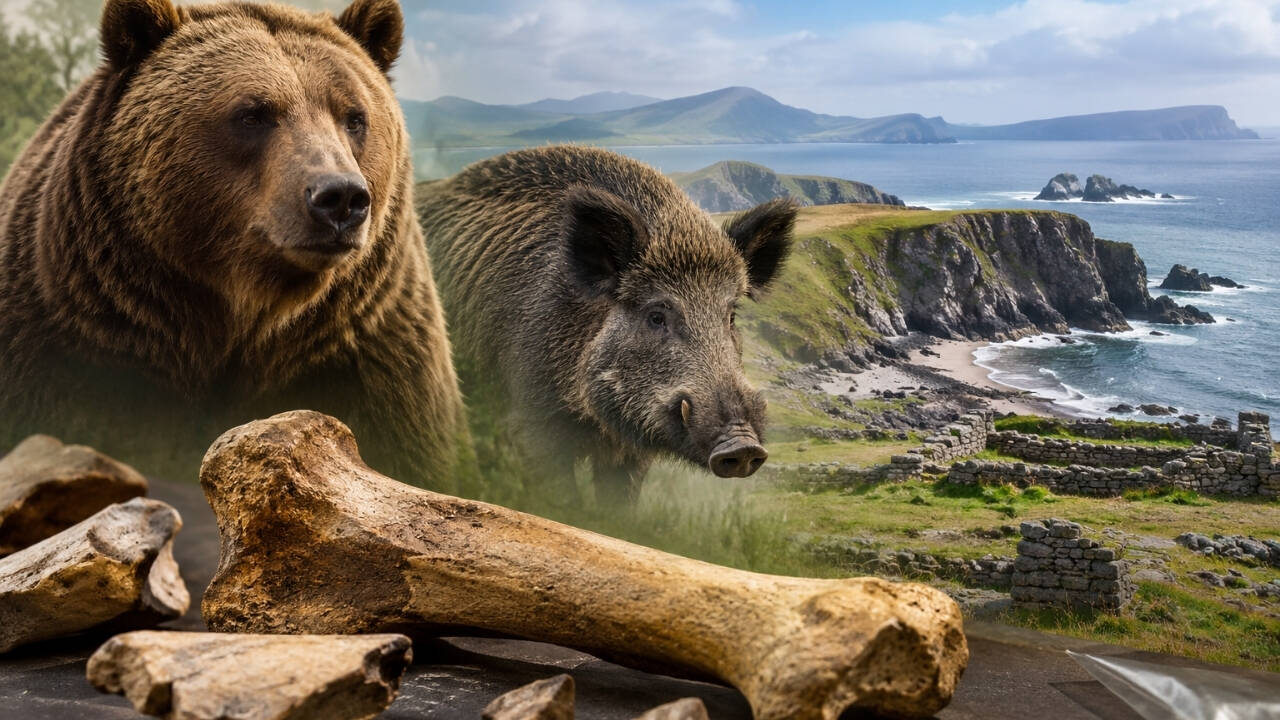
Irish 'Kerry Cow' Bones Identified as Bear and Wild Boar, Challenging Farming Theory
Translated from English, summarized and contextualized by DistantNews.
At a glance
News
Sources not specified
Context piece
- New research identified animal bones from Ireland's Ferriter's Cove as bear and wild boar, not cattle.
- This finding challenges the long-held theory that farming reached Ireland earlier than previously believed.
- Modern scientific techniques, like ZooMS, re-examined the bones, revealing new information about Ireland's transition from hunter-gatherer societies.
For over 30 years, animal bones unearthed at Ferriter's Cove in Ireland were considered key evidence of early farming on the island. These remains, informally known as the “Kerry cow” bones, were thought to be cattle and suggested contact between Ireland's hunter-gatherer communities and Neolithic farming societies elsewhere in Europe.
However, recent research by University College Dublin and University College Cork has overturned this long-standing interpretation. Using a modern technique called Zooarchaeology by Mass Spectrometry (ZooMS), scientists analyzed proteins in the ancient bone collagen. This method allowed for precise species identification, even from fragmented remains.
The analysis revealed that the bones were not from cattle but from a bear and a wild boar. This discovery removes a critical piece of evidence supporting the theory of early domestic animal arrival in Ireland. The findings underscore how advanced scientific methods can revise our understanding of archaeological discoveries made decades ago.
DistantNews Editorial
Originally published by Times of India in English. Translated, summarized, and contextualized by our editorial team with added local perspective. Read our editorial standards.
More Stories


From Our Blog

What Press Freedom Means for the News You Read

What Gets Lost (and Found) When News Is Translated

The Critical Role of Diaspora Media in Global News

What Travellers Should Know About Countries with Restricted Press

A Digital Nomad's Guide to Following Local News
