


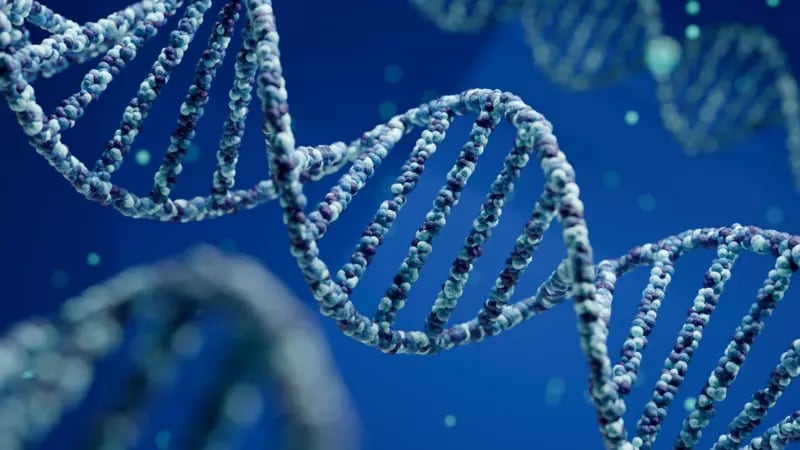
Is the sacred in our genes?
Translated from Spanish, summarized and contextualized by DistantNews.
At a glance
In-depth
Sources not specified
Context piece
- The article explores the origins and persistence of "the sacred" in human history, from early animism to modern monotheism.
- It discusses whether the human need for the sacred is innate or culturally developed, referencing thinkers like Pascal, Jung, Freud, and Dawkins.
- The piece examines biological and psychological perspectives on religiosity, suggesting it may be linked to cognitive mechanisms or a need for meaning.
The concept of "the sacred" encompasses beliefs about divinity, reverence, ritual practices, and moral codes, with human engagement dating back at least 50,000 years. Throughout history, Homo sapiens have sought to understand existence, death, and the world through belief in supernatural forces. Early manifestations included animism, where spirits were attributed to natural elements, often mediated by shamans.
Approximately 11,000 years ago, the development of agriculture and settled communities led to more structured religious forms, such as polytheism, where multiple gods governed different life aspects. Later, monotheistic religions centered on a single deity emerged. These forms, animism, polytheism, and monotheism, are not historical stages but coexisting belief systems today.
The article delves into the enduring presence of the sacred in human evolution, questioning whether the need for meaning, solace, or transcendence is innate or culturally conditioned. It references Blaise Pascal's notion of an "infinite abyss in the heart of man" that only God can fill, a concept echoed in the English phrase "God-shaped hole." Carl Jung suggested the idea of God is empirically present in all humans, while Romain Rolland proposed an innate religiosity termed the "oceanic feeling."
From a biological standpoint, E.O. Wilson posited that religiosity might be encoded in genes, without judging the veracity of beliefs. Conversely, Sigmund Freud viewed religion as a psychological construct, a projection of a protective father figure to mitigate existential anxiety and promise transcendence. Richard Dawkins, while rejecting the idea of a literal "divine void," acknowledges that religiosity can emerge as a byproduct of cognitive mechanisms.
DistantNews Editorial
Originally published by La Nación in Spanish. Translated, summarized, and contextualized by our editorial team with added local perspective. Read our editorial standards.
More Stories



From Our Blog

What Gets Lost (and Found) When News Is Translated

The Critical Role of Diaspora Media in Global News

What Travellers Should Know About Countries with Restricted Press

A Digital Nomad's Guide to Following Local News

How the Same Story Looks Different in Different Countries
