


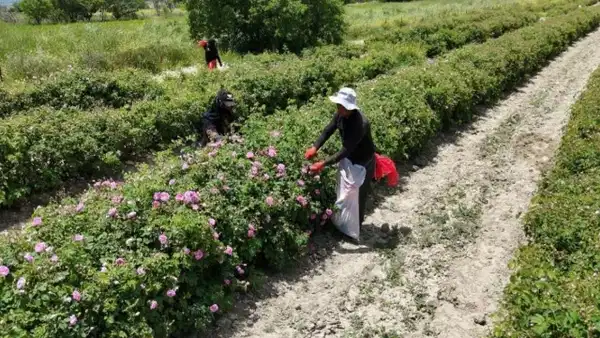
Isparta's Rose Oil Production Value Soars: 4 Tons of Roses Yield 1kg, Priced at $645,000/kg
Translated from Turkish, summarized and contextualized by DistantNews.
At a glance
News
Named sources
Context piece
- Isparta, a major global center for oilseed rose production, is currently harvesting its crop, which is crucial for rose oil extraction.
- Approximately 3 to 4 tons of rose petals are needed to produce just 1 kilogram of rose oil, a process requiring significant labor.
- This year's harvest is expected to yield around 13,000 tons, a significant increase from last year's production, which was impacted by frost.
Isparta, renowned as one of the world's premier centers for oilseed rose production, is in the midst of its annual harvest. The region contributes about 65% of the global output of rose flowers and rose oil, with harvested petals being processed on the same day to maintain their delicate quality.
This year, due to abundant rainfall, the yield is good.
The extraction of rose oil is a labor-intensive process. It takes an average of 3 to 4 tons of rose petals to yield just 1 kilogram of pure rose oil. This yield can fluctuate based on weather conditions; more petals are needed during dry periods, while wetter seasons can increase the yield. The harvested roses are processed quickly, often arriving at factories by midday.
This year's harvest is particularly promising, with an expected yield of approximately 13,000 tons. This marks a notable recovery from the previous year, which saw production hampered by frost, resulting in a 30-40% loss. Farmers like Mükerrem Çetin Kaya, who has been growing roses since 1986, report a good harvest this year due to ample rainfall. The harvest season typically lasts about 45-50 days, starting around May 1.
We are expecting a harvest of approximately 13,000 tons this year.
Beyond its use in high-end cosmetics, rose oil derived from Isparta's famed "pink treasure" is also utilized in food products like jams and Turkish delight. The region's rose cultivation is a vital economic activity, with the roses being transformed into various products including rose water, concrete (a rose extract), and a wide array of cosmetic items, underscoring the flower's multifaceted value.
Last year, we suffered losses of 30-40 percent due to frost.
DistantNews Editorial
Originally published by Cumhuriyet in Turkish. Translated, summarized, and contextualized by our editorial team with added local perspective. Read our editorial standards.
More Stories

From Our Blog

What Gets Lost (and Found) When News Is Translated

The Critical Role of Diaspora Media in Global News

What Travellers Should Know About Countries with Restricted Press

A Digital Nomad's Guide to Following Local News

How the Same Story Looks Different in Different Countries
