


Israel Defense Minister: Troops to Stay in Lebanon, Syria, Gaza 'Until Further Notice'
Translated from English, summarized and contextualized by DistantNews.
At a glance
News
From a news agency
New plan
- Israel's defense minister stated that Israeli forces will remain in security zones in Lebanon, Syria, and Gaza indefinitely.
- The minister cited the need to protect Israeli residents from "jihadist terrorists" as the reason for the continued presence.
- This declaration comes despite a recent US-sponsored framework agreement aimed at peace between Israel and Lebanon and the ongoing conflict with Hezbollah.
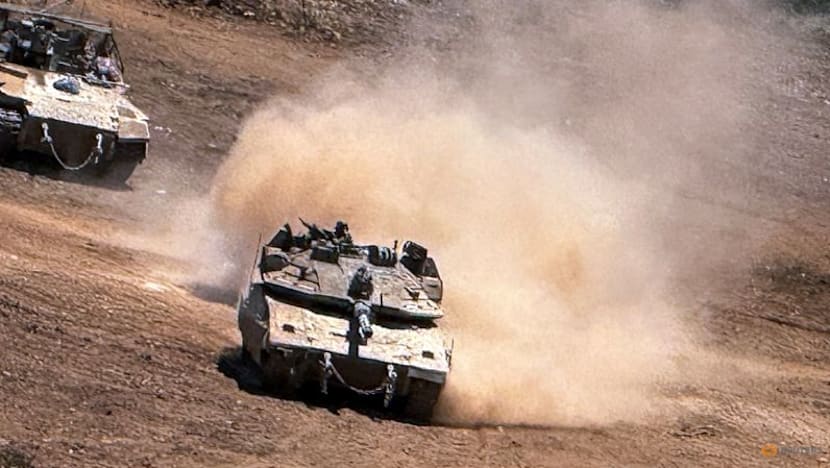
Israeli forces will maintain their presence in designated security zones within Lebanon, Syria, and Gaza "until further notice," according to Israel's defense minister, Israel Katz. The decision underscores Israel's commitment to securing its borders and protecting its citizens from perceived threats.
Katz stated that the Israeli Defense Forces (IDF) will remain in these zones to safeguard Israel's residents and communities from "jihadist terrorists." He explicitly declared, "We will not withdraw from the security zones," during a ceremony honoring fallen Israeli soldiers from the 2006 Lebanon war. This stance signals a firm position against immediate troop withdrawal from these areas.
The IDF will remain in the security zones in Lebanon, Syria and Gaza until further notice, in order to protect Israel's residents and communities from jihadist terrorists.
The minister also issued a stern warning to Iran, asserting that the Islamic republic would face "full force" retaliation if it initiated an attack against Israel in response to its operations in Lebanon. This warning highlights the broader regional tensions and Israel's concerns regarding Iranian influence and actions.
We will not withdraw from the security zones.
This announcement follows a US-sponsored framework agreement signed on Friday, intended to establish peace between Israel and Lebanon and facilitate the disarmament of Hezbollah, an Iran-backed militant group. However, Israeli officials, including Prime Minister Benjamin Netanyahu, have consistently ruled out withdrawing troops from southern Lebanon until Hezbollah is disarmed across the country.
The conflict in Lebanon, which began in early March after Hezbollah launched rockets into Israel, has resulted in significant casualties. Lebanon's health ministry reports nearly 4,300 deaths from Israeli attacks, while the Israeli military states it has lost 38 soldiers and one civilian contractor. Israel has also conducted operations in Syria, aiming to establish a demilitarized zone, and maintains a significant military presence in Gaza, where both Hamas and the Israeli military accuse each other of ceasefire violations.
the Islamic republic would be struck with 'full force' if it attacked Israel over its operations in Lebanon.
DistantNews Editorial
Originally published by CNA in English. Translated, summarized, and contextualized by our editorial team with added local perspective. Read our editorial standards.
More Stories


From Our Blog

What Gets Lost (and Found) When News Is Translated

The Critical Role of Diaspora Media in Global News

What Travellers Should Know About Countries with Restricted Press

A Digital Nomad's Guide to Following Local News

How the Same Story Looks Different in Different Countries
