


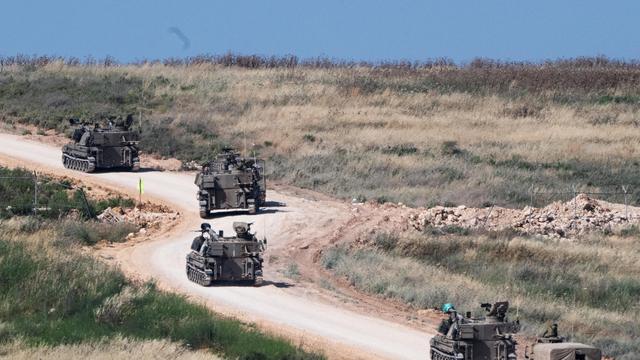
Israel expands ground operation in Lebanon, crosses Litani River
Translated from German and summarized by DistantNews. Read the original for the full story.
At a glance
News
Named sources
Ongoing story
- The Israeli army announced an expansion of its ground operation in Lebanon, aiming to strengthen a "forward defense line."
- Israeli forces have reportedly crossed the Litani River, about 30 kilometers north of the border.
- Lebanon's Prime Minister criticized the actions as a "dangerous escalation" and called for a ceasefire.
The Israeli army has announced an expansion of its ground operations in Lebanon, stating its forces are extending a "forward defense line" to prevent direct threats to northern Israel. Military officials confirmed that Israeli soldiers have crossed the Litani River, located approximately 30 kilometers north of the shared border. Prime Minister Benjamin Netanyahu had previously indicated that Israeli forces had crossed the river.
The army further reported initiating an operation several days ago in the areas of Beaufort Ridge and Wadi al-Saluki in southern Lebanon. The stated objective is to eliminate "direct threats" to Israeli towns, including Metula, and to bolster operational control in the region. The military also confirmed to Reuters that it has captured Beaufort Castle in southern Lebanon.
Lebanon's Prime Minister, Nawaf Salam, sharply criticized Israel's ongoing attacks, describing them as a "dangerous and unprecedented escalation." He urged for intensified political and diplomatic efforts to achieve a swift and genuine ceasefire. Salam accused Israel of employing a "scorched earth and collective punishment" strategy by destroying towns and forcing residents to flee, asserting this would bring neither security nor stability to Israel.
Despite the escalating conflict, Salam defended continued direct negotiations with Israel as the "least costly path" for Lebanon. A new round of talks is scheduled for June 2nd and 3rd in Washington. An official ceasefire between Israel and Hezbollah has been in place since April 17th, but sporadic attacks continue, with both sides accusing each other of violations.
About this summary
Originally published by Die Zeit in German. Translated, summarized, and contextualized automatically by DistantNews, with a note on how the source frames the story. Not individually reviewed before publishing. How this works.
More Stories



From Our Blog

What Gets Lost (and Found) When News Is Translated

How the Same Story Looks Different in Different Countries

The Critical Role of Diaspora Media in Global News

What Travellers Should Know About Countries with Restricted Press

A Digital Nomad's Guide to Following Local News
