


Israel, Lebanon agree to conditional ceasefire
Summarized and contextualized by DistantNews.
At a glance
News
Named sources
Ongoing story
- Israel and Lebanon have agreed to a conditional ceasefire following U.S.-led talks in Washington, contingent on Hezbollah halting all fire.
- The agreement includes the creation of "pilot zones" under exclusive Lebanese army control, excluding non-state actors.
- Hostilities continued despite the announcement, with Hezbollah and Israeli forces exchanging fire, and air raid alarms sounding in northern Israel.
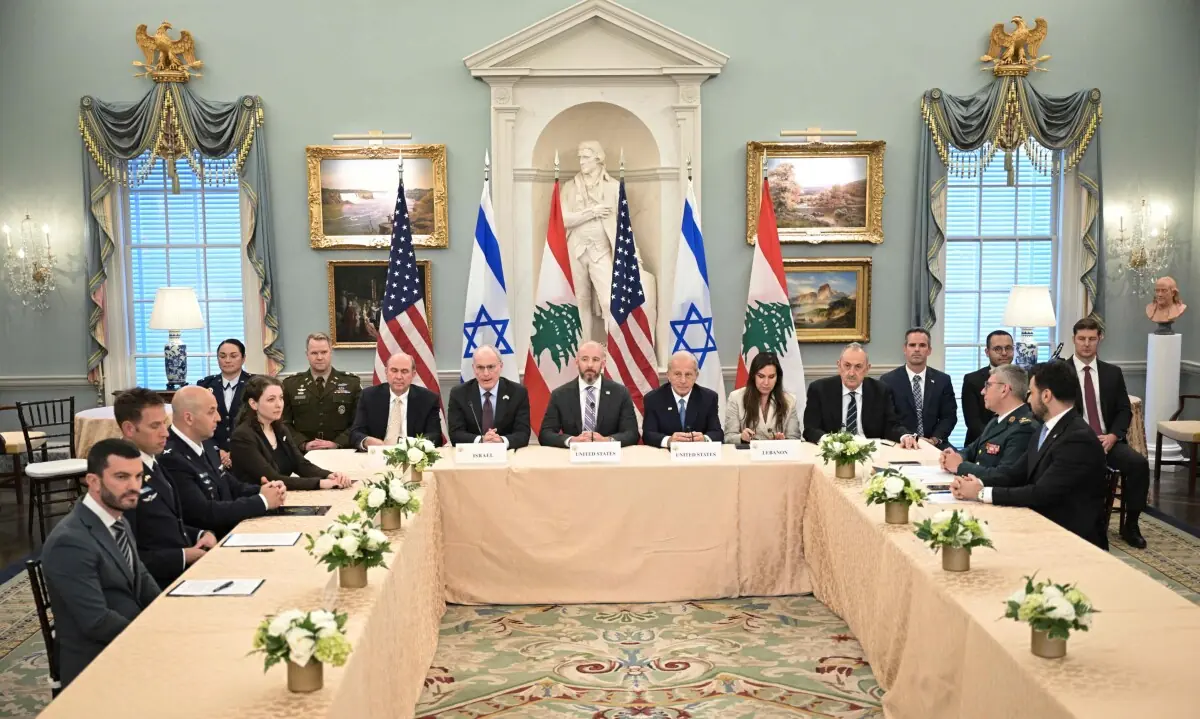
Israel and Lebanon have reached an agreement to implement a ceasefire, a development announced after U.S.-mediated talks in Washington. However, the truce is explicitly conditional on a "complete cessation" of fire by Hezbollah, according to a joint statement released Wednesday.
The two sides, which do not have formal diplomatic relations, also agreed to create “pilot zones” in which the Lebanese armed forces “will take exclusive control of the territory to the exclusion of all non-state actors”.
The agreement also stipulates the establishment of "pilot zones" where the Lebanese armed forces will exercise sole control, barring any non-state actors. This move aims to de-escalate tensions along the volatile border. The talks marked the fourth round of direct discussions between Lebanese and Israeli diplomats since fighting reignited on March 2.
Despite the diplomatic breakthrough, cross-border hostilities persisted. Earlier on Wednesday, Hezbollah claimed responsibility for targeting Israeli troops, while Israeli airstrikes reportedly killed at least ten people in southern Lebanon. Shortly after the ceasefire announcement, air raid sirens wailed in northern Israel due to a "suspicious aerial target," though no casualties were reported.
The ceasefire was “contingent on a complete cessation” of fire by Hezbollah as well as evacuation of the group’s operatives from southern Lebanon.
The joint statement indicated that both sides are scheduled to meet again the week of June 22 to pursue a comprehensive agreement. This fragile progress comes amidst ongoing violence, with Hezbollah officials previously stating they would not accept a partial ceasefire. The effectiveness of this new agreement hinges entirely on Hezbollah's adherence to the terms.
Senior Hezbollah official Mahmud Qomati had told AFP on Tuesday that the group would “not accept a partial ceasefire”.
DistantNews Editorial
Originally published by Dawn. Summarized and contextualized by our editorial team with added local perspective. Read our editorial standards.
More Stories


From Our Blog

What Gets Lost (and Found) When News Is Translated

The Critical Role of Diaspora Media in Global News

What Travellers Should Know About Countries with Restricted Press

A Digital Nomad's Guide to Following Local News

How the Same Story Looks Different in Different Countries
