

Israel's High Court Freezes Law Shielding Haredi Draft Dodgers From Arrest
Translated from English, summarized and contextualized by DistantNews.
At a glance
News
Named sources
Under investigation
- Israel's High Court of Justice has frozen a new law that banned the arrest of ultra-Orthodox draft dodgers for seven months.
- The court cited previous rulings and weighty arguments from petitioners against the law's validity.
- The IDF Chief of Staff called the law "inconceivable" and inconsistent with military needs, as thousands of Haredi men evade conscription.
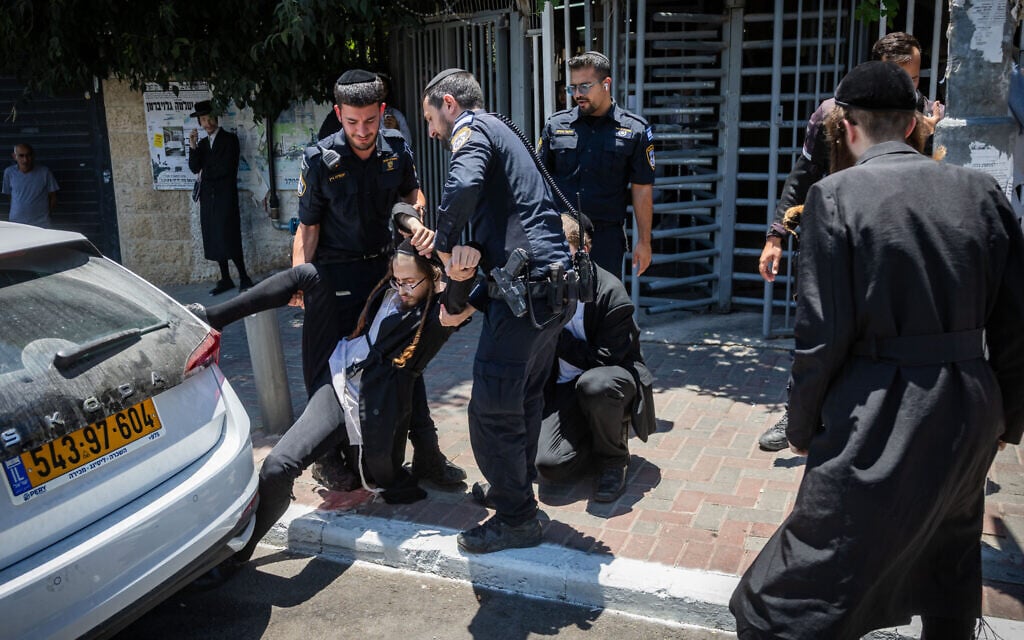
Israel's High Court of Justice delivered a dramatic intervention Wednesday, freezing a law passed just a day prior that prohibited the arrest of ultra-Orthodox draft dodgers for seven months. The court acted in response to petitions challenging the legislation, ordering an expedited hearing and issuing a temporary injunction against the law's implementation.
inconceivable
Justice Ofer Grosskopf stated the decision was based on the court's "longstanding rulings on the issue of drafting yeshiva students," the implications of freezing enforcement for specific population segments, and the "weighty arguments" presented by petitioners. A hearing before an expanded panel of judges will determine the law's future.
The law, intended to shield yeshiva students from arrest until November 30, effectively extends to February 2027 due to election-related legalities. However, it faced immediate backlash. IDF Chief of Staff Lt. Gen. Eyal Zamir deemed the law "inconceivable" and "clearly and unequivocally inconsistent with the IDF's needs," highlighting the urgent requirement for recruits amid ongoing conflicts.
clearly and unequivocally inconsistent with the IDF's needs
Approximately 72,000 ultra-Orthodox men aged 18 to 24 are eligible for military service but have ignored conscription orders. The IDF has stressed its need for 12,000 new recruits. Petitions against the law argued it was discriminatory, exempting Haredi students while continuing arrests for others.
providing mass exemptions from prosecution
Communications Minister Shlomo Karhi publicly urged the government and police to disregard the High Court's order, asserting it lacked legal validity. This stance appears to challenge the High Court's authority in judicial review.
this court’s longstanding rulings on the issue of drafting yeshiva students, the implications of freezing arrest, investigation and enforcement procedures with respect to only certain segments of the population, and the weighty arguments raised by the petitioners against its validity.
DistantNews Editorial
Originally published by Times of Israel in English. Translated, summarized, and contextualized by our editorial team with added local perspective. Read our editorial standards.
More Stories
From Our Blog

What Gets Lost (and Found) When News Is Translated

The Critical Role of Diaspora Media in Global News

What Travellers Should Know About Countries with Restricted Press

A Digital Nomad's Guide to Following Local News

How the Same Story Looks Different in Different Countries
