


Israel Seized More Land from Neighbors Since 2023 Than in Decades
Translated from English, summarized and contextualized by DistantNews.
At a glance
News
Named sources
Ongoing story
- Israel has expanded its militarily occupied territories in Gaza, Lebanon, and Syria by approximately 1,000 square kilometers since late 2023.
- These areas, termed "buffer zones," are intended to prevent future attacks but have displaced over 3 million people and led to the demolition of towns.
- The expansion is Israel's largest in decades, raising concerns about its permanence, particularly as Israel has never had clearly defined borders since its founding.
In the past two and a half years, Israel has significantly expanded its control over territories in Gaza, Lebanon, and Syria, marking its largest territorial growth in decades. The occupied areas now cover roughly 1,000 square kilometers (386 square miles), an expanse larger than many major cities, and Israel has indicated plans for indefinite occupation.
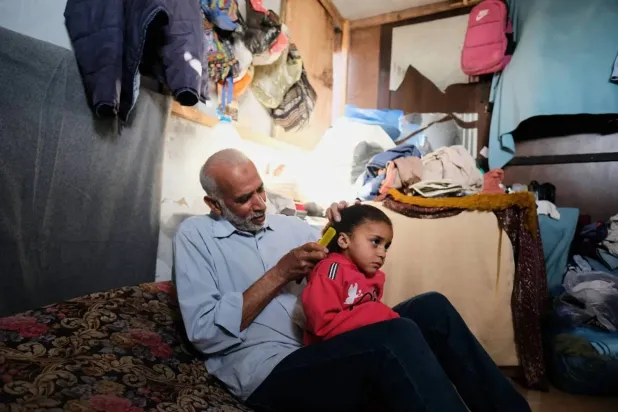
The land seizures began following Hamas's cross-border attack in 2023, which triggered conflicts on multiple fronts. Israel's military occupied large parts of Gaza during a broad invasion and subsequently took control of sections of Lebanon and Syria. Israel refers to these regions as "buffer zones," stating their necessity for preventing future attacks by militant groups. In Gaza and Lebanon, these seizures and evacuation orders have displaced over 3 million people, with troops demolishing towns and neighborhoods, creating vast depopulated areas.
While these "buffer zones" are not formal borders requiring bilateral agreement, there are widespread fears that these changes could become permanent. The situation has become a point of contention, with Iran making Israel's withdrawal from Lebanon a condition for ending its war with the US. Israel's borders have historically been fluid, shifting through wars, annexations, ceasefires, and peace agreements since its establishment in 1948.
Israel calls these areas “buffer zones” and says they are needed to prevent future attacks by militant groups.
In Lebanon, following a year of fighting with Hezbollah that ended in an October 2024 ceasefire, Israel launched a ground invasion after the truce collapsed in March. By April, Israel announced it would occupy an area up to 10 kilometers deep. Experts estimate Israel now holds 608 square kilometers in Lebanon, forcing about 1.2 million Lebanese to flee. Hezbollah and the Lebanese government have condemned Israel's presence and called for withdrawal.
Israel initially seized the Gaza Strip from Egypt in 1967. After unilaterally withdrawing troops and settlers in 2005, Hamas took control. The Oct. 7, 2023, attack on Israel initiated the current devastating war. Following a ceasefire in October 2025, Israeli troops withdrew to a "yellow line," controlling just over half the strip. The majority of Gaza's population has been displaced.
Hezbollah has condemned Israel’s presence inside Lebanon, and the Lebanese government has called for Israel to withdraw.
DistantNews Editorial
Originally published by Asharq Al-Awsat in English. Translated, summarized, and contextualized by our editorial team with added local perspective. Read our editorial standards.
More Stories


From Our Blog

What Gets Lost (and Found) When News Is Translated

The Critical Role of Diaspora Media in Global News

What Travellers Should Know About Countries with Restricted Press

A Digital Nomad's Guide to Following Local News

How the Same Story Looks Different in Different Countries
