


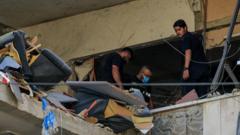
Israel strikes Beirut suburb days after U.S.-brokered truce
Translated from English, summarized and contextualized by DistantNews.
At a glance
News
From a news agency
Ongoing story
- Israel struck a Hezbollah stronghold in southern Beirut, killing two people and injuring at least 17, days after a U.S.-brokered truce.
- The strike targeted "terrorist headquarters" in response to Hezbollah firing at Israeli territory, according to Prime Minister Benjamin Netanyahu.
- The attack risks destabilizing peace efforts, particularly concerning Iran's involvement and Lebanon's broader conflict with Israel.
Israel launched air strikes on a southern Beirut suburb on Sunday, hitting apartment buildings in a Hezbollah stronghold and killing at least two people while injuring 17. This marks the first attack on the Lebanese capital since a U.S.-brokered truce was established last week, raising concerns about escalating tensions.
Israel had struck "terrorist headquarters in the Dahieh district of Beirut, in response to Hezbollah's firing at Israeli territory".
Prime Minister Benjamin Netanyahu stated that Israel targeted "terrorist headquarters in the Dahieh district of Beirut" in retaliation for Hezbollah's rocket fire into Israeli territory. Hezbollah has not yet commented on the strikes or the alleged rocket launches. The Israeli military reported intercepting two projectiles crossing from Lebanon into Israel.
"Hezbollah terrorist infrastructure" was being targeted- and suggested further strikes were coming. "To be continued,"
These strikes occurred despite previous Israeli efforts to limit attacks on Beirut under U.S. pressure, as Washington sought to avoid jeopardizing broader peace deal negotiations with Iran. The attack threatens to destabilize these efforts, particularly given Iran's insistence on a complete ceasefire in Lebanon. Ebrahim Rezaie, a spokesperson for Iran's parliamentary foreign policy committee, promised a "decisive and painful response" to the Beirut attack.
"a decisive and painful response"
The situation remains volatile, with a ceasefire that has been in place since April 17 reportedly violated repeatedly by both sides. While Israel has intensified air strikes in southern Lebanon, Sunday's attack is the third on the capital since the ceasefire began, with previous strikes targeting Hezbollah commanders. Lebanon's Parliament Speaker Nabih Berri, aligned with Hezbollah, had previously rejected the U.S.-brokered deal, calling it "a trap."
"a trap"
DistantNews Editorial
Originally published by BBC News in English. Translated, summarized, and contextualized by our editorial team with added local perspective. Read our editorial standards.
More Stories


From Our Blog

What Gets Lost (and Found) When News Is Translated

The Critical Role of Diaspora Media in Global News

What Travellers Should Know About Countries with Restricted Press

A Digital Nomad's Guide to Following Local News

How the Same Story Looks Different in Different Countries
