

Israel Strikes: Does Turkey Understand the Message?
Translated from Romanian, summarized and contextualized by DistantNews.
At a glance
Analysis
Sources not specified
Context piece
- An Israeli airstrike on Abu al-Duhur in Syria tests the strength of a new defense pact between Turkey, Saudi Arabia, and Pakistan.
- The strike occurred days after the three nations signed a collective defense pact, raising questions about the value of these new alliances under pressure.
- Israel claimed Damascus was preparing to change the status quo by allowing Turkish forces near Aleppo, but Syrian officials stated only a technical team was present.
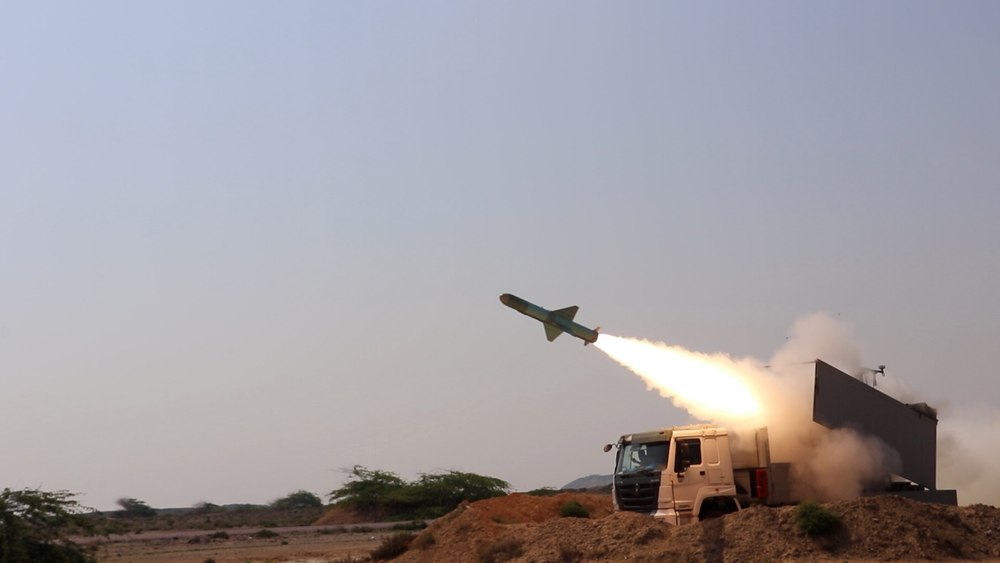
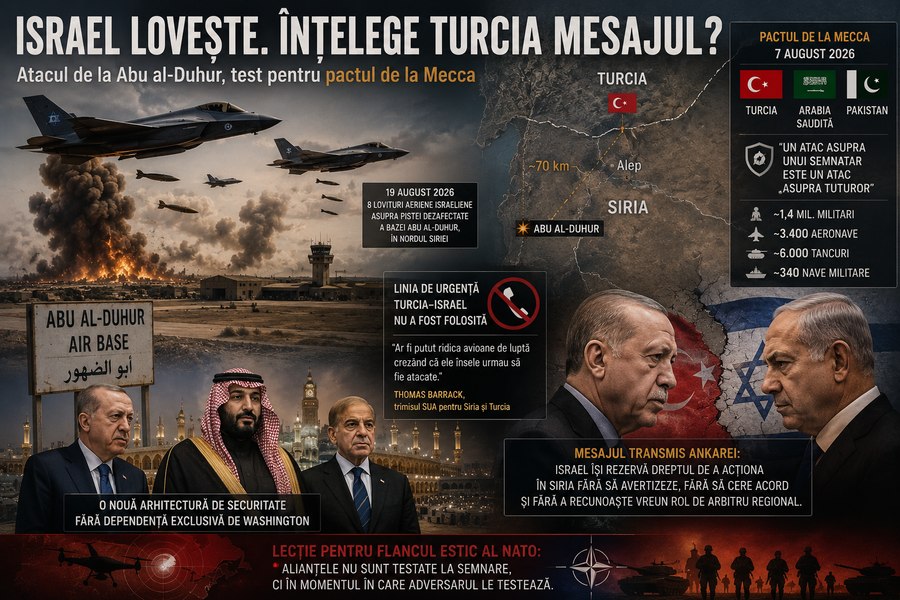
An Israeli airstrike on Abu al-Duhur, Syria, is testing the real-world value of a new defense pact signed by Turkey, Saudi Arabia, and Pakistan. The attack, which involved eight airstrikes on an abandoned airstrip near the Turkish border, occurred just days after the three nations signed a collective defense agreement in Mecca on August 7. This pact, presented as an ambitious attempt to reshape Middle Eastern security, combines Turkey's second-largest NATO army, Saudi Arabia's financial influence, and Pakistan's nuclear capability.
The timing of the strike suggests Israel may be probing the strength of this new alliance and President Erdogan's commitment to his regional ambitions. By hitting a location where Turkey had a presence, Israel's action could be interpreted as a direct challenge to the newly formed pact. The question arises: does this new alliance hold weight when tested, and how far is Erdogan willing to go to defend it?
The Abu al-Duhur attack is not just another Israeli strike in Syria. Coming days after the defense pact signed in Mecca by Turkey, Saudi Arabia, and Pakistan, it looks like a brutal test of a question that is beginning to dominate the Middle East: how much are the new alliances worth when someone decides to test them?
Israel's official explanation for the strike was that Damascus was preparing to alter the status quo by allowing Turkish forces to deploy near Aleppo. However, this justification has been met with skepticism. Syrian officials, cited by Middle East Eye, reported that no Turkish military unit was present at Abu al-Duhur. Instead, a technical team was reportedly there to repair the airstrip and control tower, and had departed two days prior to the bombing. Turkey has been assisting the Syrian army of interim President Ahmed al-Sharaa in rebuilding damaged military infrastructure, with Abu al-Duhur being part of this effort.
Even if Ankara had later decided to deploy troops, the base is located approximately 70 kilometers from Turkish territory, making it unlikely to represent a decisive shift in the regional military balance as suggested by Israeli justifications. More significantly, the article notes the absence of a direct emergency line between Turkey and Israel, which was established precisely to prevent accidental encounters between their aircraft in Syrian airspace.
At Abu al-Duhur, there was no Turkish military unit. There was only a technical team sent to repair the runway and control tower, and it had left two days before the bombing.
DistantNews Editorial
Originally published by Adevărul in Romanian. Translated, summarized, and contextualized by our editorial team with added local perspective. Read our editorial standards.
More Stories

From Our Blog

What Gets Lost (and Found) When News Is Translated

The Critical Role of Diaspora Media in Global News

What Travellers Should Know About Countries with Restricted Press

A Digital Nomad's Guide to Following Local News

How the Same Story Looks Different in Different Countries
