


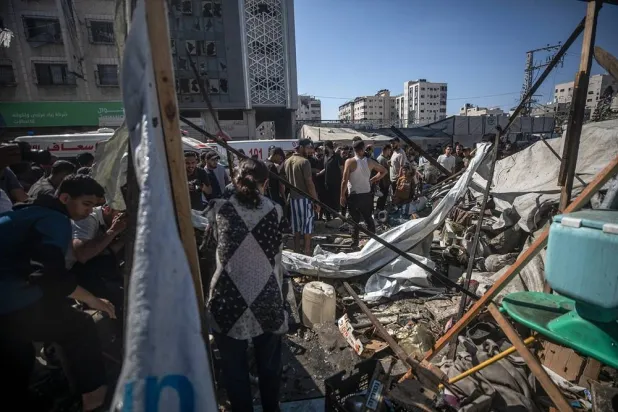
Israeli Drone Strike Kills Palestinian Siblings in a Gaza Tent Camp
Summarized and contextualized by DistantNews.
At a glance
News
Named sources
Context piece
- Lebanon and Israel signed a US-sponsored agreement to end hostilities, but its implementation hinges on Hezbollah and Iran.
- Key challenges include Israel's demand for Hezbollah's disarmament before withdrawal and the return of displaced civilians to occupied areas.
- Hezbollah has denounced the agreement as a "grave blunder" and "legitimizing" occupation, warning of potential internal strife.
Lebanon and Israel have signed a framework agreement aimed at ending hostilities, brokered by the United States. However, experts express skepticism about its full implementation, citing dependence on Hezbollah and its backer, Iran, and the lack of firm guarantees for Israeli withdrawal.
as long as Hezbollah has not disarmed
Lebanon took the unprecedented step of direct negotiations with Israel, a move Hezbollah has branded a "sin." The agreement officially mentions Israeli "redeployment" from southern Lebanon, but Israeli Prime Minister Benjamin Netanyahu immediately stated troops would remain in the "security zone" as long as Hezbollah is not disarmed. This conditionality raises concerns about continued insecurity for residents in the south and delays in reconstruction.
no guarantee that Israel will fully withdraw from occupied areas or significantly restrict its military operations in southern Lebanon
Imad Salamey, head of the Political and International Studies Department at the Lebanese American University, noted the agreement's shortcomings, particularly the absence of concrete Israeli commitments for a full withdrawal or significant restriction of military operations. The plan for displaced civilians to return to occupied areas is also unclear, with only "pilot zones" mentioned where the Lebanese military would take control after Israeli redeployment, contingent on confirmation of disarmament.
a grave blunder" that is "legitimizing" Israeli occupation
Hezbollah has vehemently opposed the deal. Group leader Naim Qassem called it a "grave blunder" that legitimizes Israeli occupation, urging the government to retract it. Hezbollah lawmaker Hassan Fadlallah suggested implementing the agreement would require a civil war within Lebanon, with American support. Protests against the deal have occurred in Beirut, and Hezbollah allies have warned against internal strife.
unless they go, with American support, to civil war
DistantNews Editorial
Originally published by Asharq Al-Awsat. Summarized and contextualized by our editorial team with added local perspective. Read our editorial standards.
More Stories


From Our Blog

What Gets Lost (and Found) When News Is Translated

The Critical Role of Diaspora Media in Global News

What Travellers Should Know About Countries with Restricted Press

A Digital Nomad's Guide to Following Local News

How the Same Story Looks Different in Different Countries
