


Israeli startup uses AI to decode brain signals for diagnosing disorders
Translated from English, summarized and contextualized by DistantNews.
At a glance
News
Named sources
Context piece
- An Israeli startup, Hemispheric, has developed an AI model called Descartes to decode brain activity and diagnose neurological and psychological conditions.
- The AI interprets the brain's electrical signals, similar to how large language models process text, aiming to provide quantitative, non-invasive measurements of brain function.
- Hemispheric trained its AI on over 250,000 hours of EEG data from 100,000 volunteers, addressing the lack of data for training deep learning models on brain activity.
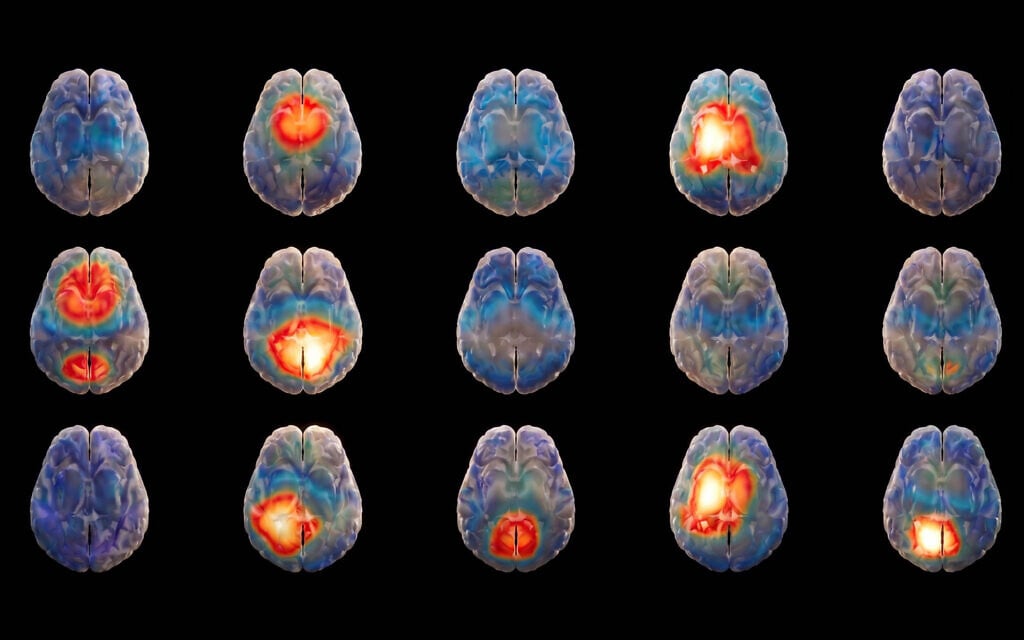
The human brain, our most complex organ, remains largely a mystery when it comes to diagnosing disorders like depression and PTSD, often relying on subjective questionnaires and trial-and-error treatments. An Israeli startup, Hemispheric, is aiming to change this with its AI model, Descartes.
The problem that we are coming to solve is really paramount to humanity, which is that our brain is the most complicated organ in our body, the largest disease burden, but we have no quantitative, non-invasive measurement of its function, of its health, and as a neuroscientist, that really bothered me.
Co-founded by Gidi Littwin, a former Apple FaceID system co-inventor, and computational neuroscientist Hagai Lalazar, Hemispheric has emerged from stealth mode to introduce Descartes. This AI model is designed to interpret the electrical activity of the human brain, which the founders liken to decoding a complex language. The goal is to enable quantitative, non-invasive diagnosis of neurological and psychological conditions, moving beyond the current reliance on subjective patient reports and basic physical tests.
"The problem that we are coming to solve is really paramount to humanity," said Lalazar, CTO of Hemispheric. "Our brain is the most complicated organ in our body, the largest disease burden, but we have no quantitative, non-invasive measurement of its function, of its health." He highlighted the inadequacy of current psychiatric and neurological assessments, noting that "with all the advancements we haven’t gotten to the accuracy needed to improve people’s lives."
When you visit psychiatrists, they still ask you how you feel, and neurologists still ask you to touch your nose with a finger, so with all the advancements we haven’t gotten to the accuracy needed to improve people’s lives.
To overcome the significant challenge of insufficient brain data for AI training, Hemispheric established the world's largest lab network for non-invasive brain activity data collection. Over seven years, they gathered more than 250,000 hours of electroencephalogram (EEG) data from 100,000 paid volunteers across Asia, Israel, and Boston. This extensive dataset, combined with 6 billion parameters, trained the Descartes AI platform, enabling it to decipher the brain's electrical signals with unprecedented detail.
In recent years, large language models have been trained on massive amounts of data to power applications like ChatGPT, but there is no available brain data to train deep learning models to decode brain activity.
DistantNews Editorial
Originally published by Times of Israel in English. Translated, summarized, and contextualized by our editorial team with added local perspective. Read our editorial standards.
More Stories


From Our Blog

What Gets Lost (and Found) When News Is Translated

The Critical Role of Diaspora Media in Global News

What Travellers Should Know About Countries with Restricted Press

A Digital Nomad's Guide to Following Local News

How the Same Story Looks Different in Different Countries
