


Israelis lash out at Netanyahu over U.S.-Iran peace deal fears
Translated from English, summarized and contextualized by DistantNews.
At a glance
News
From a news agency
Context piece
- Israelis across the political spectrum reacted angrily to a preliminary U.S.-Iran deal, viewing it as a disaster for Israel.
- Prime Minister Benjamin Netanyahu vowed to prevent Iran from obtaining nuclear weapons, but critics accused him of misjudging Trump and leading Israel into isolation.
- The deal's potential impact on Israel's operations in Lebanon and Netanyahu's precarious political position were highlighted.
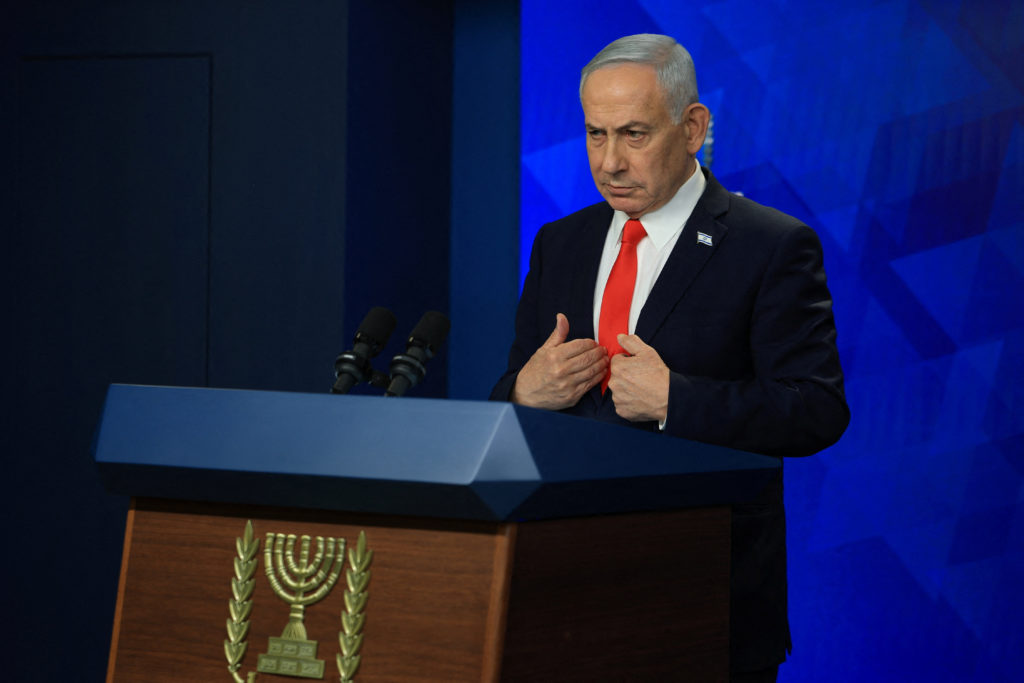
Israelis from across the political spectrum reacted with anger Monday to news of a preliminary deal between the U.S. and Iran, labeling it a disaster for their country and directing their fury at Prime Minister Benjamin Netanyahu.
Netanyahu stated at a news conference that he would continue to fight against Iran obtaining nuclear weapons, asserting, "As long as I am the prime minister of Israel, it will not happen." However, other Israeli officials, rivals, and commentators sharply criticized the preliminary agreement. They saw it as an informal referendum on Netanyahu's leadership ahead of upcoming elections and a sign of his growing isolation domestically, regionally, and internationally.
As long as I am the prime minister of Israel, it will not happen.
Critics argued that Netanyahu's approach led President Donald Trump into conflict with Iran while overpromising achievable outcomes. They suggested Trump might now be withdrawing Israel from the conflict before it felt prepared. Commentators pointed to Netanyahu misjudging Trump's willingness for a prolonged conflict, being outmaneuvered by Iran, and becoming increasingly sidelined by other regional powers.
Israel is paying the price of Netanyahu's hubris and blindness, and the price of the manipulations that he tried to pull on Trump. Iran emerged stronger; Israel emerged weaker. That is Netanyahu's strategic responsibility. He failed.
Former Prime Minister Ehud Barak told Israel's public broadcaster that "Israel is paying the price of Netanyahu's hubris and blindness." He added, "Iran emerged stronger; Israel emerged weaker. That is Netanyahu's strategic responsibility. He failed." Yair Lapid, a challenger in the upcoming elections, described the deal as "one of the most shocking failures in Israel's foreign and security policy ... entirely registered in Netanyahu's name." He insisted, "It can be fixed, it must be fixed," and declared, "Netanyahu can no longer fix it, we will do it."
The deal, which could extend the ceasefire between the U.S. and Iran and reopen the Strait of Hormuz, also raises concerns about Israel's operations in Lebanon. Iran has linked any de-escalation of the U.S.-Iran front to a cessation of Israeli hostilities in Lebanon. However, Defense Minister Israel Katz vowed to maintain troops in Lebanon. As negotiations progressed, Trump reportedly grew furious over Israeli strikes in Beirut, fearing they could jeopardize an agreement, ultimately deciding to end the conflict even if it limited Israel's options.
It can be fixed, it must be fixed. Netanyahu can no longer fix it, we will do it.
DistantNews Editorial
Originally published by PBS NewsHour in English. Translated, summarized, and contextualized by our editorial team with added local perspective. Read our editorial standards.
More Stories


From Our Blog

How the Same Story Looks Different in Different Countries

What Gets Lost (and Found) When News Is Translated

The Critical Role of Diaspora Media in Global News

What Travellers Should Know About Countries with Restricted Press

A Digital Nomad's Guide to Following Local News
