



Issues in new army formations
Translated from English, summarized and contextualized by DistantNews.
At a glance
Analysis
Sources not specified
Context piece
- Nigeria's armed forces and police require adequate tools to combat insecurity, despite recent efforts to enhance the military.
- The Nigerian Army's creation of four new divisions and recruitment of 28,000 soldiers has drawn mixed reactions due to concerns about funding and equipping existing divisions.
- The article calls for increased investment in equipping both new and old military establishments, as well as extending focus to the Navy and Police, particularly along key riverine borders.
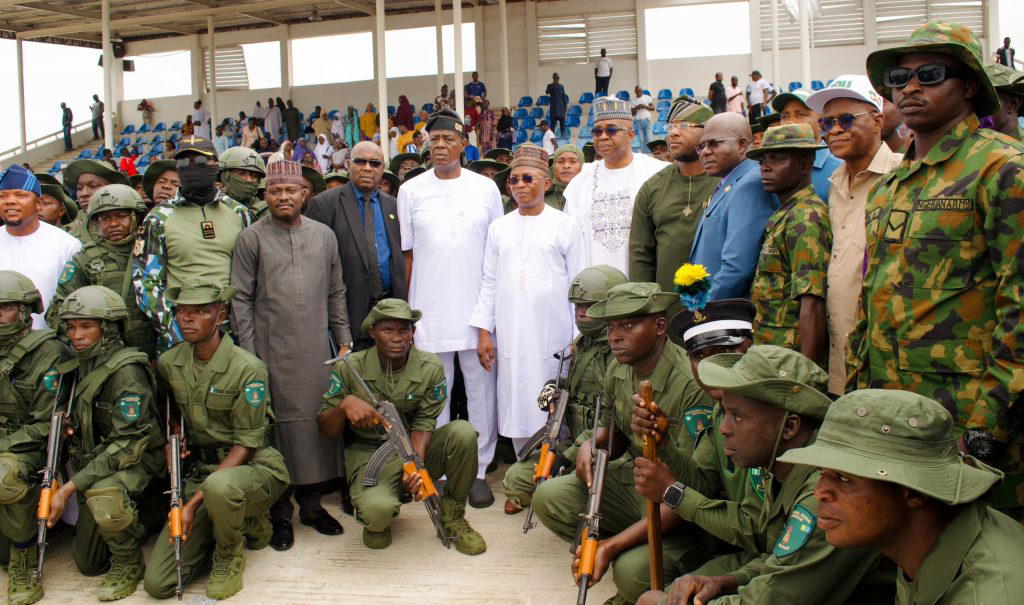
Nigeria's armed forces and police urgently need adequate resources to effectively secure the nation, a necessity highlighted by recent measures to bolster the military's capacity against widespread insecurity. The Nigerian Army's announcement of four new divisions and approval for recruiting 28,000 new soldiers are intended to enhance its combat capabilities across the country.
The armed forces and the police must be provided with tools to secure the nation.
However, these developments have sparked reservations regarding the government's ability to fund such an expansion. Critics point to the current state of existing army divisions, which are reportedly poorly equipped and operating below capacity. The argument is that resources allocated for new divisions could be better utilized to improve the manpower, weaponry, ammunition, and fighting vehicles of current formations.
The argument therefore is that the resources to be expended on the newly established divisions could have been directed at raising the combat efficiency of the existing divisions in terms of manpower, weapons, arms and ammunition as well as fighting vehicles.
While the motive behind creating new divisions, to spread military presence and respond faster to attacks in ungoverned spaces, is acknowledged, achieving this objective requires massive government investment. Equipping both new and old units is crucial. Furthermore, the recruitment of new soldiers brings additional demands, including provisions for kitting, equipment, accommodation, and logistics for training and deployment. The welfare of military personnel is also paramount; well-motivated soldiers perform better under pressure.
Well- motivated soldiers are focused even under pressure.
The article stresses that the government's focus should extend beyond the Army to include other services, particularly the Navy and Police. It specifically calls for the Nigerian Navy to establish outposts and patrol the Rivers Niger and Benue from their entry points to Lokoja. This is vital to prevent bandits from exploiting these waterways to infiltrate southern states. President Bola Tinubu's administration, which promised to make security a top priority and reform the security doctrine and architecture, must urgently address these critical resource gaps.
To effectively tackle this menace, we shall reform both our security doctrine and its architecture.
DistantNews Editorial
Originally published by ThisDay in English. Translated, summarized, and contextualized by our editorial team with added local perspective. Read our editorial standards.
More Stories


From Our Blog

How the Same Story Looks Different in Different Countries

What Gets Lost (and Found) When News Is Translated

The Critical Role of Diaspora Media in Global News

What Travellers Should Know About Countries with Restricted Press

A Digital Nomad's Guide to Following Local News
