


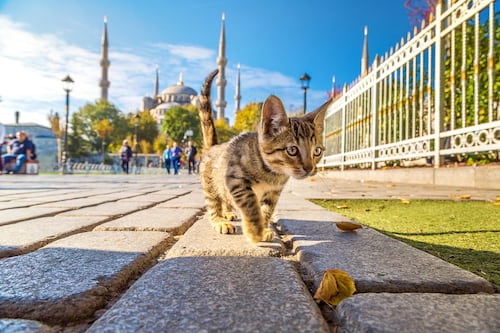
Istanbul's cats: A beloved part of the city's soul
Translated from Spanish, summarized and contextualized by DistantNews.
At a glance
In-depth
Sources not specified
Context piece
- Istanbul's stray cats are an integral part of the city's identity, coexisting peacefully with residents and tourists.
- These cats are cared for by the community, with food and shelter provided in public spaces and businesses.
- Their presence is rooted in cultural and religious respect within Islamic tradition and historical roles protecting against pests.
Cats roam freely through Istanbul, finding rest spots near mosques, cafes, and parks, seemingly aware of the city's rhythms. They are not viewed as strays but as neighbors and friends, a common sight across the city's diverse neighborhoods, from the historic Sultanahmet to the colorful streets of Balat.
The community's care for these felines is evident everywhere. Cafes, restaurants, and shops often provide bowls of food and water, while wooden shelters offer refuge from the elements. This widespread compassion stems from a deeply ingrained cultural and religious respect for cats within Islamic tradition, with stories linking the Prophet Muhammad to a fondness for them.
Historically, cats played a vital role in the Ottoman Empire, protecting homes, markets, and ships from pests, thus safeguarding food and goods. Over time, this utilitarian relationship evolved into companionship, with cats becoming an intrinsic part of Istanbul's urban fabric. Estimates suggest between 150,000 and 300,000 stray cats inhabit the city, a number that fluctuates but consistently reflects their significant presence.
Beyond community care, many cats receive veterinary attention, highlighting a comprehensive approach to their well-being. This harmonious coexistence underscores a unique urban ecosystem where animals and humans share space with mutual respect and affection.
DistantNews Editorial
Originally published by El Universal in Spanish. Translated, summarized, and contextualized by our editorial team with added local perspective. Read our editorial standards.
More Stories


From Our Blog

What Press Freedom Means for the News You Read

What Gets Lost (and Found) When News Is Translated

The Critical Role of Diaspora Media in Global News

What Travellers Should Know About Countries with Restricted Press

A Digital Nomad's Guide to Following Local News
