


Jakarta Overhauls Waste Management, Bantargebang to Accept Only Residue
Translated from Indonesian, summarized and contextualized by DistantNews.
At a glance
News
Named sources
New plan
- Jakarta will implement a new waste management system starting August 1, 2026, shifting from "collect-transport-dispose" to "sort-transport-process."
- Only residual waste will be sent to the Bantargebang landfill, aiming to reduce its burden and eventually eliminate open dumping by 2029.
- The provincial government is enhancing waste processing facilities at the local level and encouraging public and commercial entities to manage their waste independently.
Jakarta is set to revolutionize its waste management system, transitioning to a "sort-transport-process" model from the current "collect-transport-dispose" approach. Beginning August 1, 2026, waste collected in the capital will be sorted and processed at its source before any residual material is sent to the Bantargebang landfill.
This strategic shift, driven by Governor Pramono Anung, aims to significantly reduce the load on the Bantargebang facility and progressively eliminate open dumping practices, with a target of achieving zero open dumping by 2029. The provincial government is accelerating the transformation by strengthening waste processing capabilities within local communities.
After the issuance of Governor Instruction Number 5 of 2026, a fundamental change occurred. If it used to be collect-transport-dispose, now it is sort-transport-process. Starting August 1, 2026, waste sent to TPST Bantargebang will be directed as only residue. This policy is a concrete step to stop open dumping practices gradually towards the target of zero open dumping by 2029.
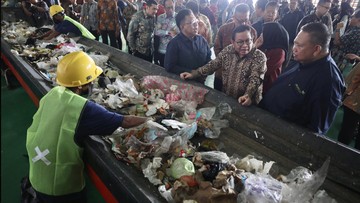
One key initiative involves optimizing existing waste processing facilities, such as the Reduce, Reuse, Recycle (TPS 3R) Menteng Atas in Setiabudi. This facility, a collaboration between the DKI Jakarta Provincial Government and private companies PT Morego Green Indonesia and PT Metro Klina Intranusa, operates through a joint venture model. With a current processing capacity of 25 tons per day and potential for expansion to 132 tons, it serves a densely populated economic hub.
Governor Anung emphasized that successful waste management transformation hinges on collaboration. Residents are urged to adopt waste sorting habits at home, while commercial establishments like hotels, restaurants, and cafes are mandated to manage their waste independently. As a transitional measure before waste-to-energy and Refuse-Derived Fuel (RDF) facilities become fully operational, the province is maximizing the use of its 29 TPS 3R sites, which are currently operating at approximately 21% capacity. The Menteng Atas model, incorporating micro-RDF technology and professional management, is intended to serve as a blueprint for optimizing other TPS 3R facilities across Jakarta.
At TPS 3R Menteng Atas, we are partnering with the private sector through a creative financing scheme. The processing capacity will be gradually increased with the support of micro RDF technology, professional personnel, and optimal management. This partnership model will be a pilot project for optimizing other TPS 3Rs in Jakarta.
DistantNews Editorial
Originally published by CNN Indonesia in Indonesian. Translated, summarized, and contextualized by our editorial team with added local perspective. Read our editorial standards.
More Stories


From Our Blog

What Gets Lost (and Found) When News Is Translated

The Critical Role of Diaspora Media in Global News

What Travellers Should Know About Countries with Restricted Press

A Digital Nomad's Guide to Following Local News

How the Same Story Looks Different in Different Countries
