


Jakarta's stray cats: A population boom and a sterilization challenge
Translated from English, summarized and contextualized by DistantNews.
At a glance
News
Named sources
Context piece
- Jakarta's stray cat population, estimated at up to 1.5 million, receives care from residents and NGOs amidst challenges of overpopulation and urban hazards.
- Efforts are underway to control the stray cat population through sterilization programs, with NGOs like Let's Adopt Indonesia playing a key role.
- While appreciated for pest control, stray cats also cause issues like odor and property damage, highlighting the need for comprehensive management strategies.
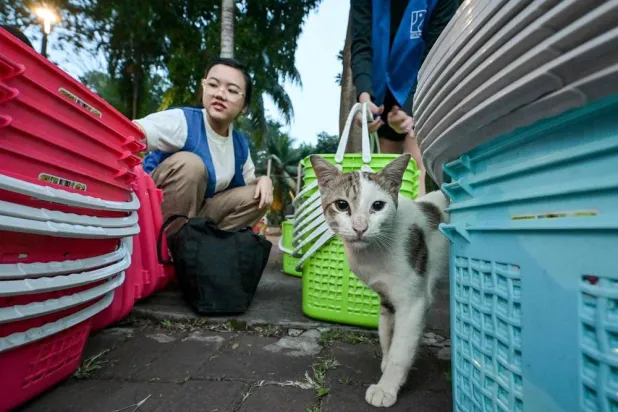
In Jakarta, a city of millions, stray cats are a common sight, often cared for by residents like Saiful Faizin, a food vendor who sees them as companions that "neutralize negative auras and cheer you up." These cats, numbering as many as 1.5 million, navigate the bustling Indonesian capital, relying on the kindness of people for sustenance and aid.
Cats are there to neutralize negative auras and to cheer you up.
However, the sheer volume of strays presents significant challenges. Hilwa Tasya Sholehah, another vendor, notes that "there are too many cats here... so they end up dying." The animals face dangers from traffic and depend on limited resources. While some residents appreciate their role in controlling rats, others complain about the nuisures they bring, such as unpleasant odors, noise, and damage to property.
There are too many cats here... so they end up dying... (in) incidents involving motorbikes.
Organizations like Let's Adopt Indonesia are working to manage the burgeoning population through sterilization. "Some people don't realize that giving food for the cats without spaying or neutering them can cause another problem, which is overpopulation," explains Carolina Fajar of the NGO. Volunteers actively round up cats for spaying and neutering, aiming to curb exponential growth. Last year, the group sterilized over 2,200 cats, funded by private donations and international foundations.
Some people don't realize that giving food for the cats without spaying or neutering them can cause another problem, which is overpopulation.
The Jakarta municipality is also stepping up efforts, budgeting for sterilization programs. However, officials acknowledge that current funding falls far short of what's needed to sterilize the required 70 percent of the stray population. A city census is underway to establish a more accurate count, as estimates currently vary wildly, from over 300,000 to several times that number. The municipality faces a significant hurdle in providing enough shelters, veterinarians, and staff to effectively manage the city's feline inhabitants.
They keep mating, they keep having babies, and the population is increasing... exponentially.
DistantNews Editorial
Originally published by Asharq Al-Awsat in English. Translated, summarized, and contextualized by our editorial team with added local perspective. Read our editorial standards.
More Stories


From Our Blog

What Gets Lost (and Found) When News Is Translated

The Critical Role of Diaspora Media in Global News

What Travellers Should Know About Countries with Restricted Press

A Digital Nomad's Guide to Following Local News

How the Same Story Looks Different in Different Countries
