


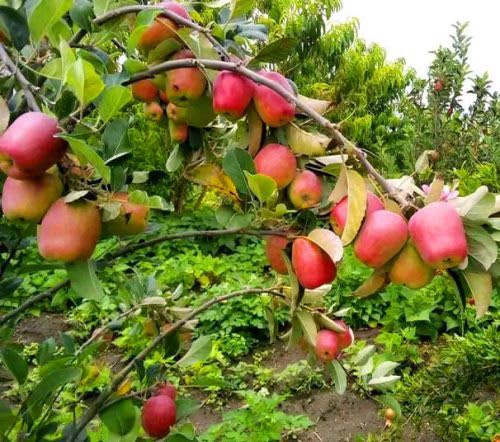
Jamaica plants 100 Kenyan apple trees in bid to cut imports
Translated from English, summarized and contextualized by DistantNews.
At a glance
News
Named sources
New plan
- Jamaica imported 1.4 million kilograms of apples last year, costing over J$260 million.
- The country has imported 100 Wambugu apple trees from Kenya to support local production and farmer profitability.
- These trees are expected to yield up to 500 apples each within five years, potentially supplying a portion of the domestic market.
Jamaica is taking steps to reduce its reliance on imported apples by planting 100 Wambugu apple trees from Kenya. The Caribbean nation imported the trees, which are known for their resilience in tropical climates, as part of a broader program to boost import substitution and diversify farmers' income.
These demonstration plots will allow us to evaluate performance while encouraging wider adoption among farmers.
Agriculture Minister Floyd Green announced the initiative at the Denbigh Agricultural Industrial and Food Show. He explained that demonstration plots at agro parks will help assess the trees' performance and encourage wider farmer adoption. "A single acre can accommodate as many as 500 trees," Green stated, adding that each tree could produce up to 500 apples within five years, with annual yields potentially reaching 30 to 40 tonnes per acre.
A single acre can accommodate as many as 500 trees.
The Wambugu apple, a crisp red variety similar to American apples, was developed by Kenyan farmer Peter Wambugu. His daughter, Catherine, previously conducted training sessions and distributed seedlings to Jamaican farmers. The project, spearheaded by the Agro-Investment Corporation (AIC), aims to make the Wambugu apple a viable local crop.
Within approximately five years, each tree can produce up to 500 apples and, with proper care and management, yields can reach between 30 and 40 tonnes per acre annually.
Last year, Jamaica imported over 1.4 million kilograms of apples, costing more than J$260 million. "Just imagine what could happen if even a portion of that market could be supplied by Jamaican farmers," Green remarked, highlighting the Wambugu apple's potential to capture a share of this market. He stressed that introducing a new crop requires significant effort beyond planting, including research, training, monitoring, and strong partnerships, with the AIC committed to supporting farmers throughout the process.
Just imagine what could happen if even a portion of that market could be supplied by Jamaican farmers.
DistantNews Editorial
Originally published by Jamaica Observer in English. Translated, summarized, and contextualized by our editorial team with added local perspective. Read our editorial standards.
More Stories



From Our Blog

What Gets Lost (and Found) When News Is Translated

The Critical Role of Diaspora Media in Global News

What Travellers Should Know About Countries with Restricted Press

A Digital Nomad's Guide to Following Local News

How the Same Story Looks Different in Different Countries
