

Jamaican civil society groups boost human rights engagement after UN workshop
Translated from English, summarized and contextualized by DistantNews.
At a glance
News
Named sources
Outcome reported
- Jamaican civil society organizations (CSOs) are now better equipped to engage with international human rights processes after a UN-supported workshop.
- The training, hosted by the Council of Voluntary Social Services (CVSS) and UN agencies, focused on practical skills for participating in UN human rights reviews and submitting independent reports.
- Participants learned about key mechanisms like the Universal Periodic Review (UPR), Treaty Body Reporting, and special procedures to amplify community voices on issues such as gender-based violence and environmental justice.
Jamaican civil society organizations have significantly enhanced their capacity to engage with global human rights mechanisms following a comprehensive workshop. The United Nations-supported event aimed to strengthen their understanding and practical application of international human rights processes.
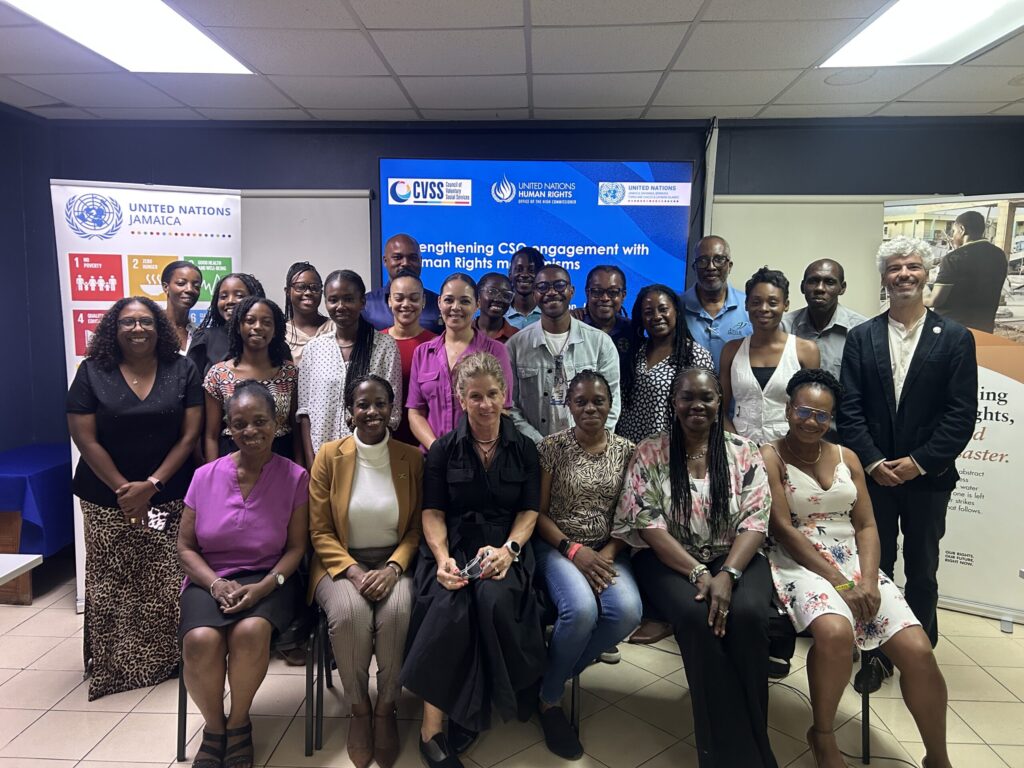
Representatives from 18 civil society organizations gathered at the Council of Voluntary Social Services (CVSS) National Volunteer Centre for the training. Jointly hosted by CVSS, the UN Resident Coordinator Office (UN RCO) Jamaica, and the Office of the United Nations High Commissioner for Human Rights (OHCHR), the workshop provided practical tools for contributing to UN human rights reviews, submitting independent reports, and raising concerns affecting vulnerable communities.
Nancy Pinchas, executive director of the CVSS, noted that while CSOs are often at the forefront of addressing critical issues like gender-based violence, disability rights, and social inclusion, many lack the specific technical knowledge for effective international engagement. The workshop directly addressed this gap, equipping participants to better amplify the voices of the communities they serve.
The training delved into three key UN human rights mechanisms: the Universal Periodic Review (UPR), where UN Member States' human rights records are examined; Treaty Body Reporting, which includes preparing shadow reports offering independent assessments; and special procedures, allowing engagement with UN Special Rapporteurs on thematic issues. Michelle Brathwaite, regional representative for the OHCHR Caricom Office, emphasized that empowering civil society is crucial for strengthening human rights frameworks.
Civil society organisations are uniquely positioned to document the lived experiences of communities and identify emerging human rights challenges. However, their impact is even greater when they are equipped to engage with international human rights mechanisms that can influence policy and drive accountability. This workshop is about building that capacity and ensuring that community voices help shape both national and global conversations on human rights.
DistantNews Editorial
Originally published by Jamaica Observer in English. Translated, summarized, and contextualized by our editorial team with added local perspective. Read our editorial standards.
More Stories


From Our Blog

What Gets Lost (and Found) When News Is Translated

The Critical Role of Diaspora Media in Global News

What Travellers Should Know About Countries with Restricted Press

A Digital Nomad's Guide to Following Local News

How the Same Story Looks Different in Different Countries
