


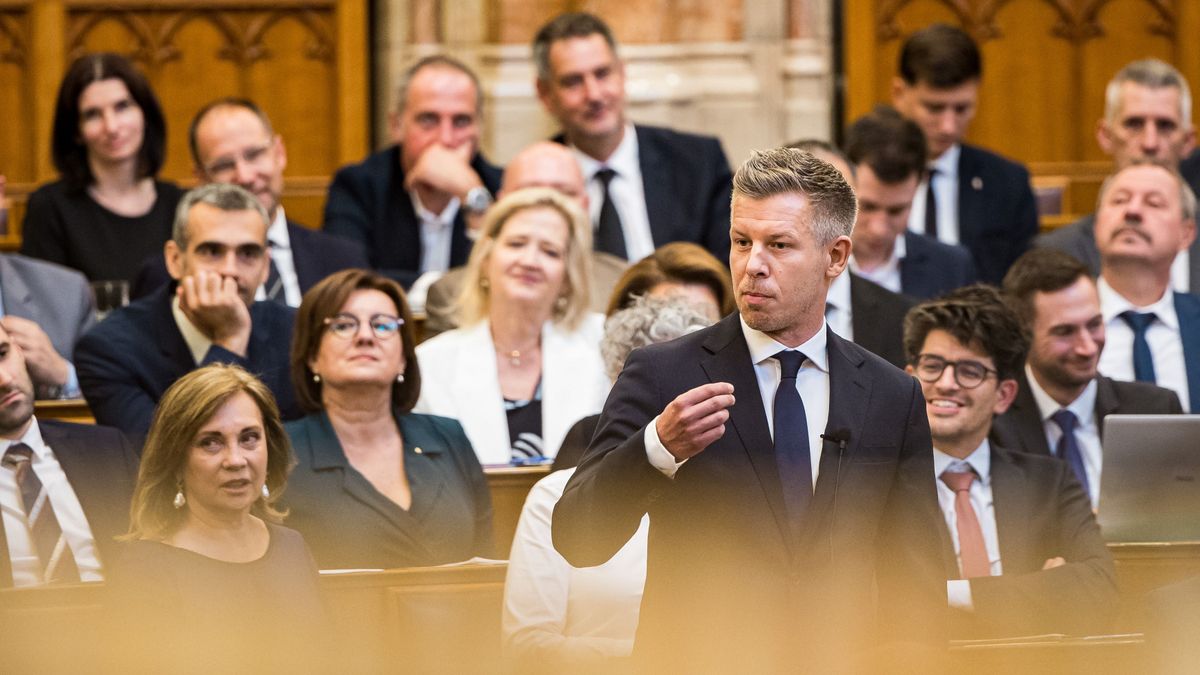

János Bóka challenges the Tisza government: Will EU funds have to be repaid?
Translated from Hungarian and summarized by DistantNews. Read the original for the full story.
At a glance
News
Named sources
Context piece
- Fidesz parliamentary group leader János Bóka says a legal procedure in Brussels could affect funds a future Tisza government seeks to obtain.
- He accuses the Tisza party of supporting an accelerated path for Ukraine to join the European Union despite its public position.
- Bóka also criticizes Tisza's proposed pension minimum, saying its current 120,000-forint plan falls short of an earlier 160,000-forint promise.
János Bóka says an ongoing legal procedure in Brussels could later affect funding that a Tisza government hopes to secure. He presented the situation as an uncomfortable one for the European Union, linking it to broader disputes over the bloc's policies and Hungary's access to funds.
The Fidesz parliamentary group leader also focused on Ukraine's possible European Union membership. In his view, the Hungarian government's claim that it does not support an accelerated accession process conflicts with the repeated opening of negotiating chapters, which he said gives the appearance of a fast-track procedure.
Bóka said the Hungarian government had previously made a mistake by agreeing to open certain clusters while Ukraine had not met expected commitments concerning the rights of ethnic Hungarians in Transcarpathia. He predicted that a similar scenario could unfold in the coming months: a high-profile political agreement would be reached, Péter Magyar would describe it as a historic breakthrough, and Ukraine's commitments might later again go unfulfilled.
He said Magyar's current communication increasingly resembled earlier government messaging and suggested that Magyar himself now appeared to acknowledge that the promised breakthrough had not occurred. Bóka therefore described Magyar's statements as having a "short shelf life."
Bóka also said Ukrainian membership in 2027 was unrealistic under the current rules, although proposals in Brussels could fundamentally change the accession model. One such idea, he said, would allow Ukraine to join first and meet membership conditions later. He linked the debate to the next seven-year EU budget, arguing that traditional policies important to Hungary, including agricultural and development support, could lose weight as some funds were redirected toward Ukraine.
On pensions, Bóka welcomed higher payments for recipients of the lowest benefits but criticized the Tisza plan for falling below its earlier pledge. He said Tisza had previously promised 160,000 forints, compared with the 120,000-forint minimum now included in its plans. He also said the dispute concerned the underlying philosophy of the pension system, arguing that a pension is not social assistance.
short shelf life
About this summary
Originally published by Magyar Nemzet in Hungarian. Translated, summarized, and contextualized automatically by DistantNews, with a note on how the source frames the story. Not individually reviewed before publishing. How this works.
More Stories


From Our Blog

Countries Without a Free Press: The 2026 List and What It Means for Readers

What Press Freedom Means for the News You Read

News in Translation: What Gets Lost, and How We Keep the Framing

Diaspora Media: How Communities Follow News From Home

Traveling Where the Press Is Not Free: How to Read the News There
