


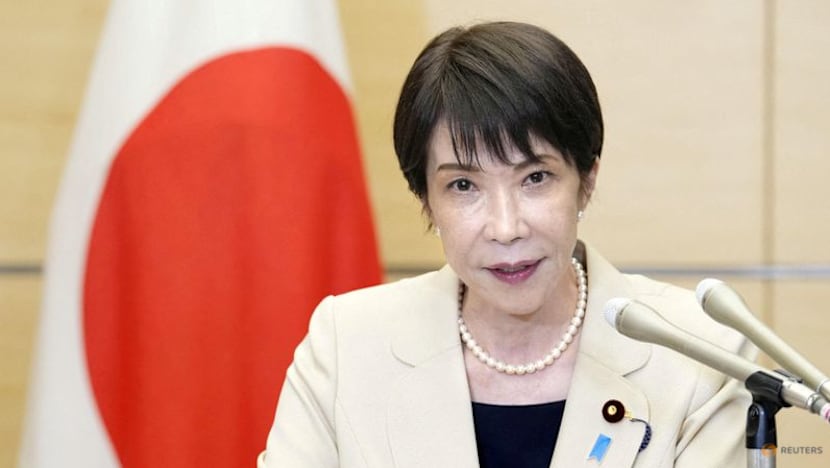
Japan PM Takaichi's approval rating slides as inflation bites
Summarized and contextualized by DistantNews.
At a glance
News
From a news agency
Context piece
- Japanese Prime Minister Sanae Takaichi's approval rating has fallen to its lowest point since she took office, with rising living costs impacting her popularity.
- The administration's handling of inflation and its economic policies, including fiscal and monetary measures, have led to market pressures like a weakening yen and rising bond yields.
- A potential cabinet reshuffle is expected in August or September, as Takaichi faces challenges in addressing public concerns over the rising cost of living.
Prime Minister Sanae Takaichi's administration in Japan is experiencing a significant dip in public approval, reaching its lowest level since she assumed office last year. A July poll reported by the Yomiuri newspaper shows a sharp decline in support, with only 57 percent approving of her government, down from 69 percent in June. This marks the first time her approval rating has fallen below 60 percent.
The slump in popularity is largely attributed to the rising cost of living, which is directly impacting citizens' daily lives. The percentage of respondents who disapprove of the administration's efforts to combat inflation surged to 71 percent, a notable increase from 56 percent in the previous month. This sentiment is echoed in other recent media polls, indicating a widespread public concern.
Her approval ratings remain high compared to past administrations so it's not as if Takaichi's political grounding is shaking.
Takaichi's economic policies, characterized by an expansionary fiscal and monetary approach, have coincided with market pressures, including a sharp depreciation of the yen to four-decade lows and a rise in bond yields. These economic challenges have complicated the government's decision-making process, particularly regarding a pledge to cut the 8 percent food sales tax, intended to alleviate the burden of rising costs.
Amidst these challenges, Kyodo news agency reported that a cabinet reshuffle might be on the horizon in August or September. Kenji Yamamoto, chief market economist at Daiwa Securities, noted that while Takaichi's political standing remains relatively strong compared to past administrations, the political capital gained from her lower house election victory is gradually diminishing. The focus will now shift to the direction of her reflationist policies, which will likely be signaled through any upcoming cabinet changes.
But it's also true the enormous political capital she gained from the lower house election victory is gradually diminishing.
DistantNews Editorial
Originally published by CNA. Summarized and contextualized by our editorial team with added local perspective. Read our editorial standards.
More Stories



From Our Blog

What Gets Lost (and Found) When News Is Translated

The Critical Role of Diaspora Media in Global News

What Travellers Should Know About Countries with Restricted Press

A Digital Nomad's Guide to Following Local News

How the Same Story Looks Different in Different Countries
