


Japan's Landmass Shifted Eastward by 2011 Quake, Study Reveals
Translated from Romanian, summarized and contextualized by DistantNews.
At a glance
News
Sources not specified
Outcome reported
- A magnitude 9.0 earthquake in 2011 off the coast of Japan not only caused a devastating tsunami and nuclear crisis but also shifted the country's geological position.
- Researchers discovered that the entire Japanese archipelago moved approximately 5-6 millimeters eastward due to a rare seismic phenomenon involving deep Earth waves.
- This unprecedented eastward shift, affecting a 3,000-kilometer stretch, was caused by secondary seismic waves that traveled to Earth's core and reflected back, reactivating distant tectonic faults.
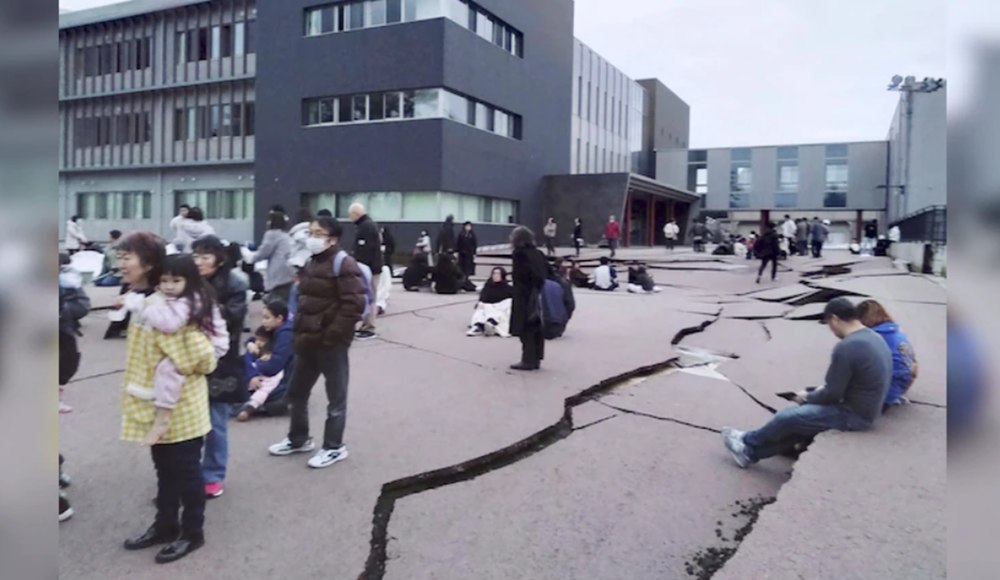
The catastrophic magnitude 9.0 earthquake that struck off Japan's coast on March 11, 2011, is now understood to have had a profound geological impact beyond the immediate devastation. While the earthquake triggered a massive tsunami and the Fukushima nuclear disaster, resulting in over 18,000 casualties and hundreds of billions of dollars in damages, scientific instruments later revealed a more subtle yet extraordinary effect: the entire Japanese archipelago was shifted eastward by several millimeters.
This geological shift, described by researchers as "extraordinary" and only recently fully understood, was detected by GPS instruments and geodetic networks. Approximately 15 minutes after the main earthquake, nearly all of Japan moved uniformly eastward by about 5 to 6 millimeters. This movement, though small, spanned an immense area of roughly 3,000 kilometers, from Hokkaido to Kyushu, marking the most extensive displacement of its kind ever observed.
Scientists have characterized this phenomenon as a type of "delayed motion" of the Earth's crust. It was not caused by the initial seismic waves but by secondary waves that traveled deep into the planet, reached the Earth's core, and then reflected back to the surface. These returning waves, identified as ScS waves, are capable of triggering a secondary reaction in tectonic faults that were already under stress, leading to the widespread, simultaneous movement of the landmass.
Geophysicist Sunyoung Park, who led the research, highlighted the unique aspect of this event: the near-simultaneous movement of almost the entire country. This behavior had not been documented on such a large scale before. GPS data analysis confirmed that the movement was not a measurement error but a genuine response of the Earth's crust to these deep-reflected seismic waves, demonstrating their power to reactivate faults far from the earthquake's epicenter.
what made this case special was the fact that almost the entire Japan moved 'almost simultaneously,' a behavior that had not been documented before on such a scale.
DistantNews Editorial
Originally published by Adevărul in Romanian. Translated, summarized, and contextualized by our editorial team with added local perspective. Read our editorial standards.
More Stories



From Our Blog

What Gets Lost (and Found) When News Is Translated

The Critical Role of Diaspora Media in Global News

What Travellers Should Know About Countries with Restricted Press

A Digital Nomad's Guide to Following Local News

How the Same Story Looks Different in Different Countries
