


Japan, US Discuss Indo-Pacific Stability and Hormuz Passage in Manila Meeting
Translated from English, summarized and contextualized by DistantNews.
At a glance
News
Official statement
Context piece
- Japan and the US discussed Indo-Pacific security and de-escalating tensions surrounding Iran during a bilateral meeting in Manila.
- Both nations emphasized the critical need to ensure free and safe navigation through the Strait of Hormuz.
- The US accused Iran of not honoring previous agreements and warned of consequences if commitments are not kept, while reaffirming commitment to diplomacy.
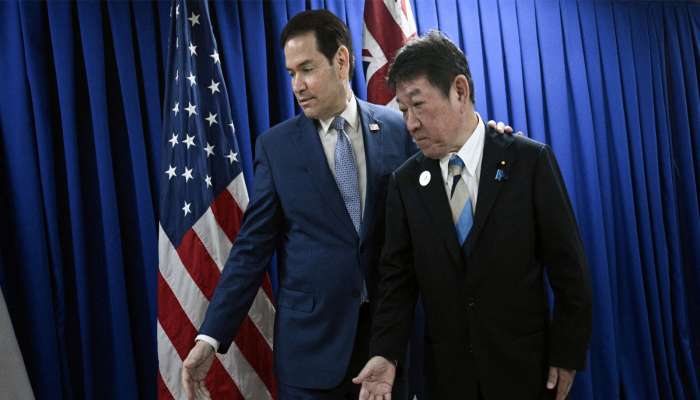
Japanese Foreign Minister Motegi Toshimitsu and US Secretary of State Marco Rubio met in Manila on the sidelines of ASEAN Foreign Ministers' meetings to coordinate strategies on Middle Eastern tensions and Indo-Pacific security.
Minister MOTEGI and Secretary Rubio exchanged views on the situation surrounding Iran. Minister MOTEGI emphasaized the importance of de-escalating the situation as soon as possible and ensuring free and safe navigation through the Strait of Hormuz without additional costs.
Minister Motegi stressed the urgency of de-escalating tensions with Iran and highlighted the importance of safeguarding free and safe navigation through the Strait of Hormuz, a vital route for global energy supplies. The Ministry of Foreign Affairs of Japan stated that both ministers exchanged views on the situation surrounding Iran and confirmed the need for de-escalation and unimpeded passage through the strait.
They also exchanged views on issues related to the Indo-Pacific. They confirmed that they would maintain close communication in responding to developments in the international situations surrounding Iran and the Indo-Pacific.
Discussions also covered broader security and strategic cooperation across the Indo-Pacific region. The two diplomats reaffirmed their commitment to maintaining close communication and coordinating responses to international developments in both the Middle East and the Indo-Pacific.
The United States remains open and willing to engage in positive, constructive negotiations and talks so long as the commitments that are made are kept. And when those commitments are not kept, which is what's happened in this particular case, then there will be consequences.
Secretary Rubio, meanwhile, criticized Iran for failing to uphold commitments made in recent negotiations with Washington. He stated that Tehran was "not serious about talks" and warned that allowing Iran to control the Strait of Hormuz would set a "very dangerous precedent" for international trade and freedom of navigation. While reaffirming the US commitment to diplomacy and a negotiated resolution, Rubio cautioned that consequences would follow if agreements were not honored, particularly after the collapse of a recent memorandum of understanding aimed at ending hostilities.
allowing it to control the Strait of Hormuz would set a "very dangerous precedent" for international trade and freedom of navigation.
DistantNews Editorial
Originally published by Times of Oman in English. Translated, summarized, and contextualized by our editorial team with added local perspective. Read our editorial standards.
More Stories


From Our Blog

What Gets Lost (and Found) When News Is Translated

The Critical Role of Diaspora Media in Global News

What Travellers Should Know About Countries with Restricted Press

A Digital Nomad's Guide to Following Local News

How the Same Story Looks Different in Different Countries
