


Japanese beer imports hit decade high in South Korea, surpassing boycott levels
Translated from Korean, summarized and contextualized by DistantNews.
At a glance
News
Official statement
Context piece
- Japanese beer imports in the first half of the year reached their highest point in a decade, surpassing pre-boycott levels.
- The surge is attributed to fading consumer resistance to Japanese products, a weaker yen, and improved bilateral relations.
- Increased travel to Japan also indicates a normalization of sentiment towards Japanese goods.
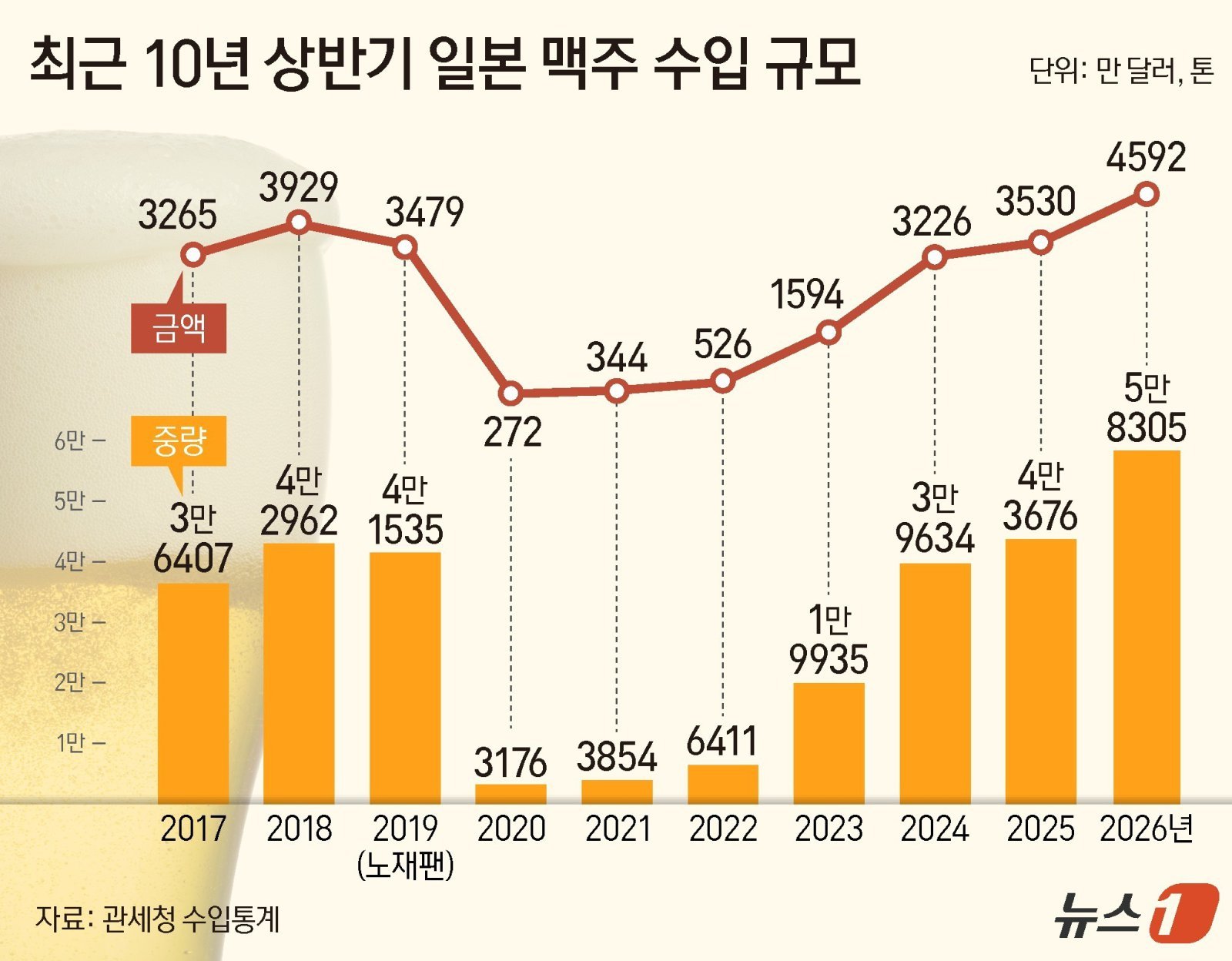
Japanese beer imports have hit a decade-high in the first half of the year, exceeding levels seen before the 2019 "No Japan" boycott. This resurgence signals a significant shift in consumer sentiment and market dynamics.
The latest trade data reveals that imports reached $45.92 million in the first half of 2024, a 16.9% increase from the previous high in 2018. Import volume also set a record, with 58,305 tons, surpassing 2018 and 2019 figures. The "No Japan" movement, sparked by trade disputes, had severely impacted Japanese beer imports, causing a 92.2% drop in value and a 92.3% decrease in volume between 2019 and 2020.
There was a time when handling Japanese beer was avoided, but now it's mostly normalized.
Industry analysts attribute the comeback to several factors. Consumer resistance to Japanese products has largely dissipated, with shoppers now prioritizing product quality and personal preference over political issues. The weakening yen and improving diplomatic ties between South Korea and Japan have also played a role. This shift is further evidenced by the record 5.67 million South Korean tourists visiting Japan in the first half of the year, suggesting a broader normalization of attitudes toward Japanese goods and travel.
Major importers are actively reintroducing Japanese brands like Asahi, Kirin, Sapporo, and Suntory, launching new and limited editions to meet growing demand. "There was a time when handling Japanese beer was avoided, but now it's mostly normalized," noted an industry insider. "More consumers are experiencing the products through travel, and with competitive pricing, demand for Japanese beer is steadily increasing."
More consumers are experiencing the products through travel, and with competitive pricing, demand for Japanese beer is steadily increasing.
DistantNews Editorial
Originally published by Dong-A Ilbo in Korean. Translated, summarized, and contextualized by our editorial team with added local perspective. Read our editorial standards.
More Stories


From Our Blog

What Gets Lost (and Found) When News Is Translated

The Critical Role of Diaspora Media in Global News

What Travellers Should Know About Countries with Restricted Press

A Digital Nomad's Guide to Following Local News

How the Same Story Looks Different in Different Countries
