


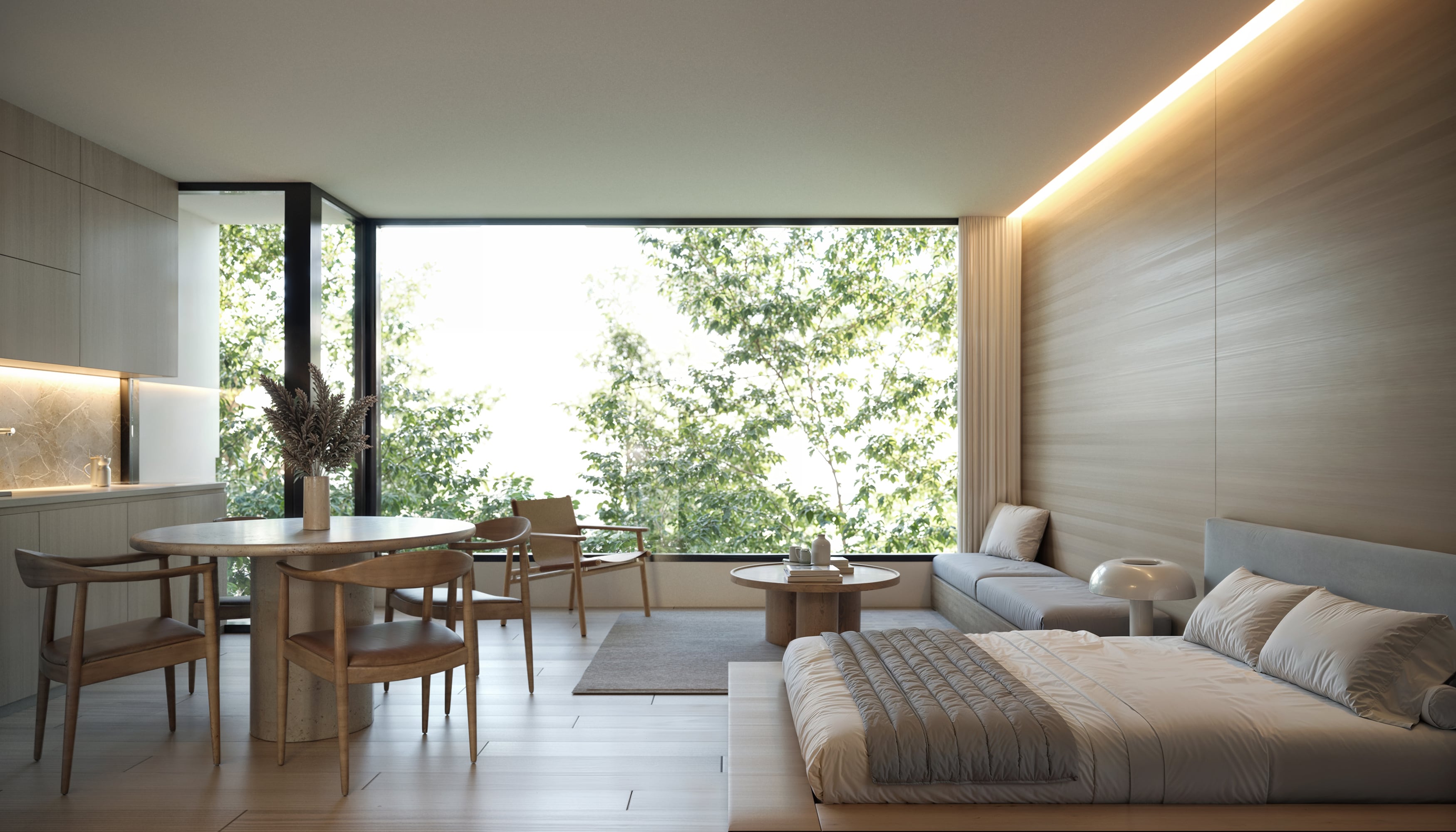
Japanese 'Ma' Philosophy Transforms Small Homes into Seemingly Larger Spaces
Translated from Spanish, summarized and contextualized by DistantNews.
At a glance
In-depth
Sources not specified
Context piece
- Japanese design philosophy emphasizes "Ma," valuing empty space as an essential, present element.
- This concept helps small, cluttered homes feel larger by reducing visual noise and allowing spaces to breathe.
- Key techniques include using low furniture, flexible dividers, neutral colors, and maximizing natural light.
A centuries-old Japanese design philosophy, known as "Ma," is transforming small living spaces worldwide by redefining the role of empty space. Far from being a mere absence, "Ma" considers empty areas as an integral and active part of an environment, promoting a sense of calm and spaciousness.
This approach is particularly beneficial for smaller homes that often feel overwhelmed by excessive objects, leading to visual clutter and discomfort. "Instead of filling every corner, we let the environment breathe," explains interior designer Flor Fasci. "We also use low furniture, flexible divisions, and cleaner visual circulation to create the sensation that a space is larger than it is."
Fasci notes that the perception of spaciousness isn't solely determined by square footage but by the visibility of objects, the continuity between areas, natural light, appropriately sized furniture, and hidden storage solutions. These elements collectively alter how a home feels and functions.
Instead of filling every corner, we let the environment breathe. We also use low furniture, flexible divisions, and cleaner visual circulation to create the sensation that a space is larger than it is.
The Japanese design strategy is built on two core concepts: "Ma," which elevates the importance of void, and "Okuyuki," which relates to the perception of depth, creating an illusion that a space extends further. Implementing these ideas involves practical choices that visually enlarge any room without costly renovations.
Key techniques include opting for low-profile furniture that avoids obstructing sightlines and light flow. "Gradual revelation," another principle, discourages revealing the entire space at once, using elements like screens or sliding doors to create a sense of discovery and depth. A neutral color palette, clear walls, and unobstructed windows that welcome natural light further enhance the feeling of openness, visually connecting interiors with the outdoors. Multifunctionality is also central, encouraging furniture and layouts that serve multiple purposes.
The sensation of spaciousness does not depend so much on the square meters but on how many visible objects there are, the visual continuity between environments, the entry of light, the use of proportionate furniture, and hidden storage spaces.
DistantNews Editorial
Originally published by La Nación in Spanish. Translated, summarized, and contextualized by our editorial team with added local perspective. Read our editorial standards.
More Stories



From Our Blog

What Gets Lost (and Found) When News Is Translated

The Critical Role of Diaspora Media in Global News

What Travellers Should Know About Countries with Restricted Press

A Digital Nomad's Guide to Following Local News

How the Same Story Looks Different in Different Countries
