


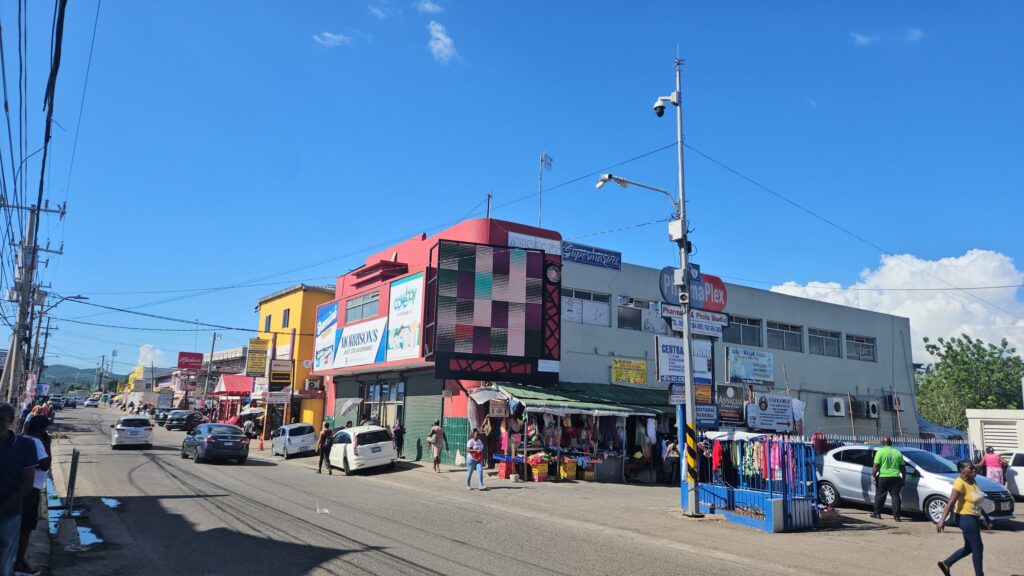
JCF urges businesses to join JamaicaEye network to boost crime fighting
Summarized and contextualized by DistantNews.
At a glance
News
Named sources
Context piece
- The Jamaica Constabulary Force (JCF) urges businesses and organizations to connect their surveillance systems to the JamaicaEye public camera network.
- The JCF describes JamaicaEye as a valuable tool for crime prevention and solving serious offenses, citing recent successes where its footage aided investigations.
- Expanding the network is seen as a shared responsibility to enhance investigative capabilities, improve public safety, and deter criminal activity.
The Jamaica Constabulary Force (JCF) is actively encouraging businesses, institutions, and community organizations to integrate their surveillance systems into the JamaicaEye public camera network. Officials describe the initiative as an increasingly vital tool for both preventing crime and successfully prosecuting serious offenses. This appeal follows several recent investigations where footage from JamaicaEye cameras, combined with forensic evidence and traditional detective work, proved critical in identifying suspects and building strong criminal cases.
Assistant Commissioner of Police Wayne Josephs, who heads the Criminal Investigation Branch (CIB), emphasized in the weekly Force Orders that broadening the JamaicaEye network would significantly bolster the force's investigative capacity and enhance overall public safety. "Every additional camera connected to the network strengthens investigative capability, enhances situational awareness, deters criminal activity and increases the likelihood of identifying offenders," Josephs stated.
Every additional camera connected to the network strengthens investigative capability, enhances situational awareness, deters criminal activity and increases the likelihood of identifying offenders.
Recent successes have underscored the effectiveness of merging surveillance technology with forensic science and intelligence-led policing. The JCF highlighted a double murder investigation in Negril, Westmoreland, where detectives utilized JamaicaEye footage to corroborate forensic ballistic evidence. This evidence linked two fatal shootings, and the surveillance footage, along with witness statements, ultimately strengthened the case, leading to murder charges against a suspect. The JCF views this case as a prime example of how surveillance technology can complement conventional policing methods by assisting investigators in reconstructing the events surrounding a crime.
ACP Josephs noted the force's growing reliance on technology to support investigations, alongside scientific techniques like DNA profiling, fingerprint analysis, digital forensics, facial recognition, and ballistics. However, he stressed that technology serves as a support tool for detectives, not a replacement. "Technology cannot interview witnesses, interpret behaviour, manage crime scenes or exercise investigative judgement. Those responsibilities remain firmly with professional detectives whose experience, integrity and commitment continue to be the defining factors in solving crime," he asserted. The JCF considers the expansion of the JamaicaEye network a collaborative effort involving law enforcement, the private sector, and communities.
Technology cannot interview witnesses, interpret behaviour, manage crime scenes or exercise investigative judgement. Those responsibilities remain firmly with professional detectives whose experience, integrity and commitment continue to be the defining factors in solving crime.
DistantNews Editorial
Originally published by Jamaica Observer. Summarized and contextualized by our editorial team with added local perspective. Read our editorial standards.
More Stories



From Our Blog

What Gets Lost (and Found) When News Is Translated

The Critical Role of Diaspora Media in Global News

What Travellers Should Know About Countries with Restricted Press

A Digital Nomad's Guide to Following Local News

How the Same Story Looks Different in Different Countries
