


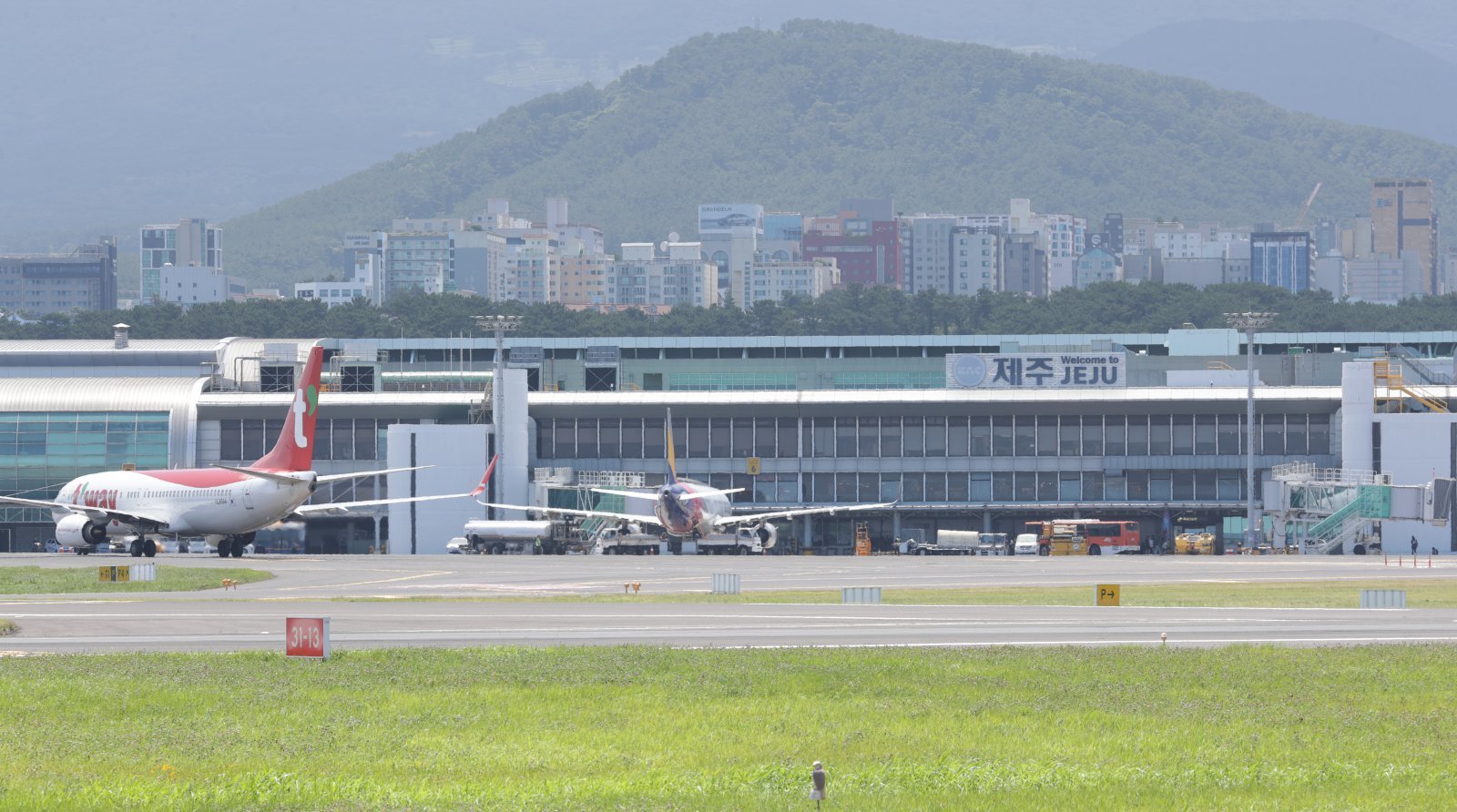
Jeju Airport Faces Seat Shortage; Council Urges Slot Expansion
Translated from Korean, summarized and contextualized by DistantNews.
At a glance
News
Sources not specified
Context piece
- A Jeju Provincial Council member called for expanding airport slots to address a shortage of flights.
- The airport's capacity is 40 landings per hour, but slots remain at 35, limiting supply.
- Reduced domestic flights and increased fuel surcharges have made tickets difficult to obtain for residents.
A member of the Jeju Provincial Council has called for an expansion of airport slots to alleviate a growing shortage of flight seats to and from the popular tourist island. The issue has made it difficult for residents to secure tickets even for essential travel.
Jeju International Airport has the capacity for 40 aircraft movements per hour, but the number of allocated slots has remained unchanged at 35 per hour for the past seven years.
Council member Kim Bong-hyun stated during a committee meeting that Jeju International Airport has the capacity for 40 aircraft movements per hour. However, the number of allocated slots has remained unchanged at 35 per hour for the past seven years, creating a bottleneck.
Kim explained that this year's summer domestic flight capacity has decreased by approximately 210,000 seats compared to last year. He cited factors such as rising fuel surcharges and changes in aircraft allocation following the merger of Korean Air and Asiana Airlines as reasons for the reduced supply. This has led to an average domestic load factor of 95.7% in April.
Residents are finding it difficult to even book flights for essential travel like hospital visits or business trips.
"Residents are finding it difficult to even book flights for essential travel like hospital visits or business trips," Kim said. He urged the provincial government to prioritize normalizing the airport slots, noting that a single additional slot per hour could create about 1.1 million extra seats annually, generating over 1 trillion won in economic effects.
A single additional slot per hour could create about 1.1 million extra seats annually, generating over 1 trillion won in economic effects.
Kim also emphasized the need for a system to continuously monitor air traffic supply. This system should ensure that efforts to expand flight numbers, deploy larger aircraft, and operate slots flexibly during peak seasons translate into actual seat increases, involving ongoing management of the Ministry of Land, Infrastructure and Transport and airlines.
There is a need for a system to continuously monitor air traffic supply and ensure that efforts to expand flight numbers... translate into actual seat increases.
DistantNews Editorial
Originally published by Dong-A Ilbo in Korean. Translated, summarized, and contextualized by our editorial team with added local perspective. Read our editorial standards.
More Stories


From Our Blog

What Gets Lost (and Found) When News Is Translated

The Critical Role of Diaspora Media in Global News

What Travellers Should Know About Countries with Restricted Press

A Digital Nomad's Guide to Following Local News

How the Same Story Looks Different in Different Countries
