


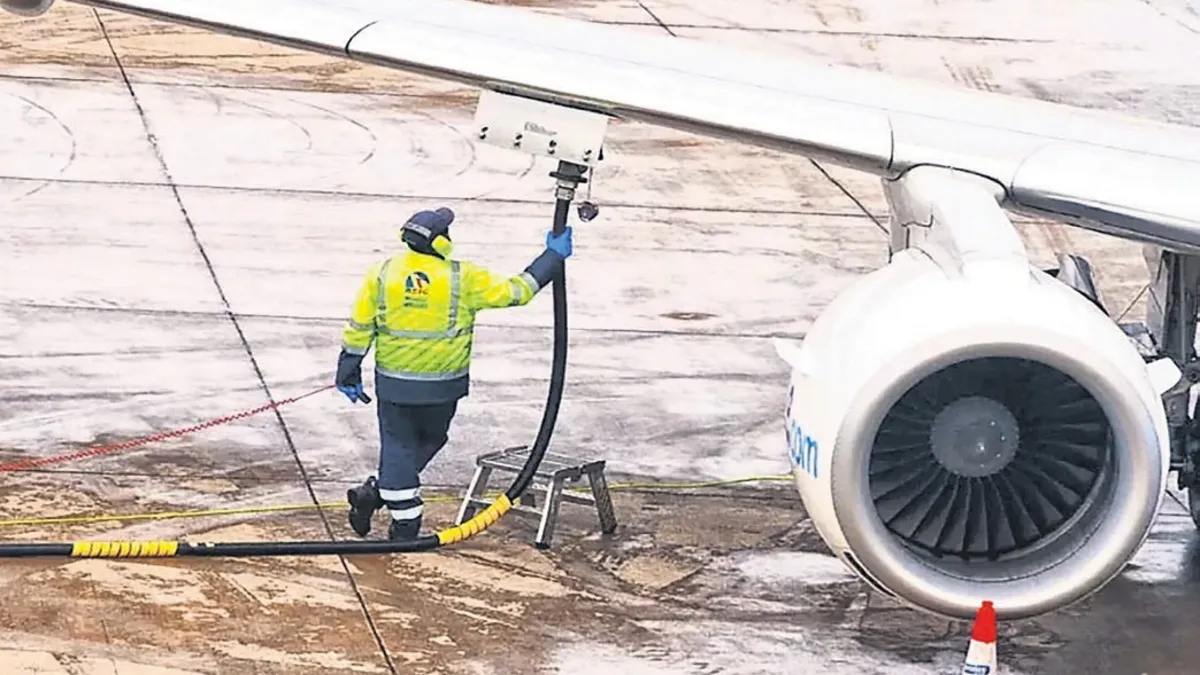
Jet Fuel Surcharge Hits Airlines Globally
Translated from Turkish, summarized and contextualized by DistantNews.
TLDR
- Global airlines are increasing ticket prices and reducing flights due to a surge in jet fuel costs, driven by the US-Israel conflict's impact on Iran.
- Jet fuel prices have dramatically risen from $85-$90 per barrel to $150-$200 per barrel in recent weeks.
- Several airlines, including AirAsia X, Air Canada, and Air France-KLM, have announced flight cuts or fare increases, while Turkish Airlines (THY) is relatively less affected due to strong domestic refining infrastructure.
The global aviation industry is facing significant turbulence as soaring jet fuel prices, directly linked to the escalating US-Israel conflict and its implications for Iran, force airlines worldwide to re-evaluate their operations. The cost of jet fuel has seen a dramatic spike, climbing from a range of $85 to $90 per barrel to a staggering $150 to $200 per barrel in just the past few weeks.
This sharp increase in operational costs has compelled airlines to take drastic measures. Many carriers have begun adding surcharges to ticket prices, effectively passing the burden onto passengers. In addition to fare hikes, numerous airlines have also opted to reduce their flight schedules. For instance, Malaysia's AirAsia X has cut 10% of its flights, while Air Canada plans to reduce four of its daily flights to New York. Air France-KLM is preparing to increase long-haul ticket prices to offset rising fuel expenses, with cabin surcharges set to rise by $59 per round trip. KLM, the Dutch arm of the group, announced the cancellation of 160 flights within Europe for the upcoming month.
Other airlines are following suit with similar adjustments. Air New Zealand has suspended some planned flights for May and June. Canadian carrier Air Transat will reduce its planned capacity by 6% until October. India's Akasa Air has introduced a fuel surcharge ranging from 199 to 1,300 Indian Rupees ($2 to $14) on domestic and international flights. Alaska Air has revised its profit forecast downwards and is scaling back capacity in certain markets. American Airlines is increasing its baggage fees, and South Korea's Asiana Airlines will operate 22 fewer flights between April and July due to rising fuel costs.
China Eastern Airlines has raised its fuel surcharge for domestic flights, implementing charges of $9 for flights under 800 kilometers and 120 yuan for flights exceeding that distance. Delta Airlines is also introducing additional baggage fees to mitigate increased jet fuel expenses. Hong Kong-based Greater Bay Airlines and Hong Kong Airlines have both increased their fuel surcharges on most routes starting April 1 and March 12, respectively. India's Indigo has implemented fuel charges across domestic and international routes, including specific amounts for flights to the Middle East and Europe. Lufthansa has removed 20,000 short-haul flights from its schedule until October, and Scandinavian airline SAS plans to cancel 1,000 flights. Southwest Airlines in the US has raised its checked baggage fees by $10 for both first and second bags. Thai Airways will increase fares by 10% to 15% to cover rising fuel costs.
Notably, Turkish Airlines (THY), Turkey's national flag carrier, appears to be in a more comfortable position compared to many international airlines. Thanks to the country's robust domestic refining infrastructure, THY's reliance on external jet fuel sources is significantly reduced. However, SunExpress, a joint venture between THY and Lufthansa, plans to implement a temporary fuel surcharge of 10 euros per passenger on routes between Turkey and Europe starting May 1.
DistantNews Editorial
Originally published by Sabah in Turkish. Translated, summarized, and contextualized by our editorial team with added local perspective. Read our editorial standards.
More Stories


From Our Blog

What Gets Lost (and Found) When News Is Translated

The Critical Role of Diaspora Media in Global News

What Travellers Should Know About Countries with Restricted Press

A Digital Nomad's Guide to Following Local News

How the Same Story Looks Different in Different Countries
