


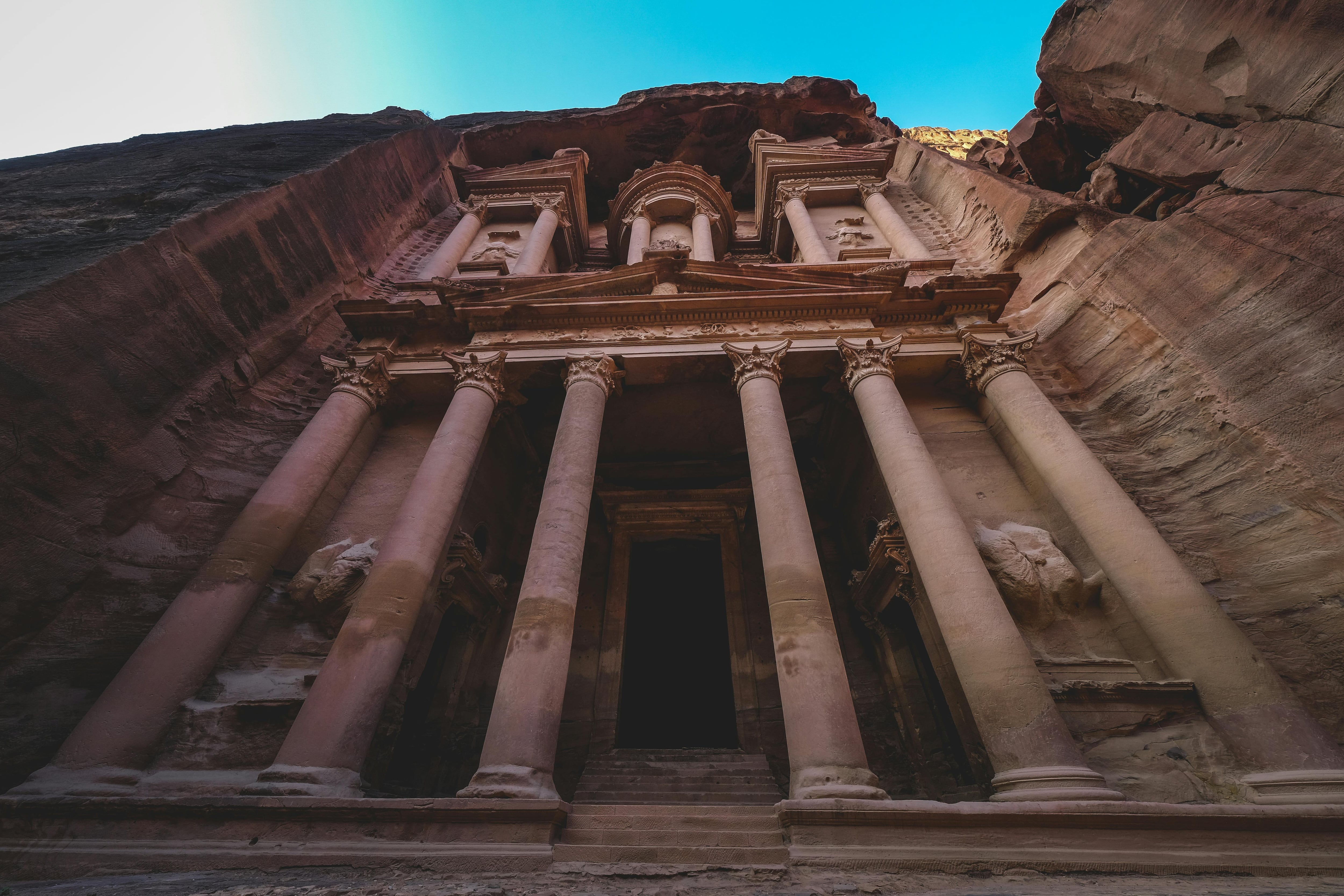
Jordan: A Nation of Ancient History and Modern Aspirations Debuts at the World Cup
Translated from Spanish, summarized and contextualized by DistantNews.
At a glance
News
Named sources
Context piece
- Jordan, situated in the Middle East, is participating in its first-ever World Cup.
- The country's borders are surrounded by nations experiencing conflict, making Jordan a strategic exception.
- Its modern history began after World War I, shaped by British and French colonial interests following the collapse of the Ottoman Empire.
Nestled in the heart of the Middle East, Jordan is making history as it competes in its first-ever World Cup. Located strategically between Israel, Syria, Iraq, and Saudi Arabia, the Hashemite Kingdom of Jordan, with its 12 million inhabitants, stands as a rare exception in a region frequently marked by wars and crises. Its journey to this historic sporting moment is deeply intertwined with the complex geopolitical landscape of the region. Jordan's formation traces back to the aftermath of World War I and the dissolution of the Ottoman Empire. Initially part of the Ottoman domain, the area was sparsely populated and largely organized around Bedouin tribes. The Arab Revolt of 1916, led by Hussein of Mecca with British support, promised an independent Arab state. However, the post-war division of the Middle East by European powers, notably through the Sykes-Picot Agreement, reshaped these aspirations. Great Britain and France carved up territories, with Jordan falling under British mandate. Ignacio Rullansky, a specialist in Middle Eastern affairs, notes that Jordan's borders, like those of its neighbors, were largely a product of European diplomatic decisions aimed at establishing spheres of influence. Under British patronage, Jordan developed a parliamentary monarchy, with Abdullah I consolidating state institutions and relations with local tribes. Following decades of British oversight, Jordan officially gained independence on May 25, 1946, with Abdullah I becoming its first king. The Hashemite monarchy, tracing its lineage to the Prophet Muhammad, continues to rule today, with King Abdullah II, son of Abdullah I, serving as the current head of state and commander-in-chief of the armed forces, guiding the nation's policies.
The territorial delimitation of Jordan, like its neighbors, is the result of diplomatic decisions by European powers to exercise tutelage over states that responded to their interests.
DistantNews Editorial
Originally published by La Nación in Spanish. Translated, summarized, and contextualized by our editorial team with added local perspective. Read our editorial standards.
More Stories



From Our Blog

What Gets Lost (and Found) When News Is Translated

The Critical Role of Diaspora Media in Global News

What Travellers Should Know About Countries with Restricted Press

A Digital Nomad's Guide to Following Local News

How the Same Story Looks Different in Different Countries
