


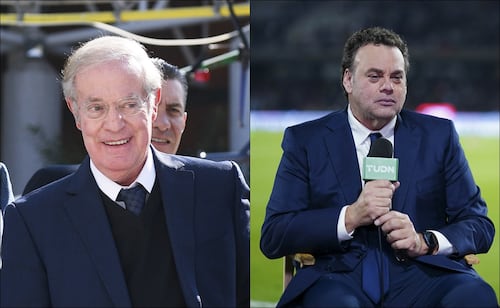
José Ramón Fernández Doubts Faitelson's Apology, Cites Disloyalty
Translated from Spanish, summarized and contextualized by DistantNews.
At a glance
News
Named sources
Context piece
- Veteran sports journalist José Ramón Fernández does not believe David Faitelson's public apology was sincere.
- Fernández suspects the apology was prompted by Televisa, where Faitelson now works, to mitigate potential professional repercussions.
- He cited Faitelson's past criticisms of him after joining Televisa as evidence of disloyalty, which he considers a grave offense.
Veteran sports journalist José Ramón Fernández has publicly stated that he does not believe David Faitelson's apology was genuine, despite it being offered nearly three years after Faitelson left ESPN for Televisa.
I don't believe it, I didn't feel it was sincere.
Fernández, a prominent figure at ESPN, expressed his skepticism during an interview, suggesting that Faitelson's apology might have been a strategic move influenced by his new employer. "I don't believe it, I didn't feel it was sincere," Fernández stated, implying that Televisa and its legal counsel may have advised Faitelson to seek forgiveness, possibly to avoid professional complications. He questioned the sincerity, asking, "When someone tells you that you were my father, the creator of what I am, why do you speak ill of one? You already left... goodbye."
When someone tells you that you were my father, the creator of what I am, why do you speak ill of one? You already left... goodbye.
Fernández considers Faitelson's actions a profound betrayal, particularly Faitelson's subsequent criticisms of him after joining Televisa. He recalled a "toxic" period following Faitelson's departure, during which Faitelson allegedly maintained contact with Televisa and appeared on their programs. "A prime example of disloyalty... what Faitelson did; he left, he wanted to go to Televisa, and we went through a very toxic year," Fernández recounted. He was particularly hurt that Faitelson "went through all the entertainment programs and attacked me with everything" after moving to the rival network.
A prime example of disloyalty... what Faitelson did; he left, he wanted to go to Televisa, and we went through a very toxic year.
Fernández emphasized that loyalty was a core value he demanded from those he worked with. "What I asked of the people who worked with me was great loyalty, that they worked profoundly, that they loved the company and were loyal, whoever the boss was, that they were loyal to what they did. I punished disloyalty heavily; I couldn't stand it," he explained. For Fernández, Faitelson's perceived disloyalty represents a significant breach of trust that is difficult to forgive.
What I asked of the people who worked with me was great loyalty... I punished disloyalty heavily; I couldn't stand it.
DistantNews Editorial
Originally published by El Universal in Spanish. Translated, summarized, and contextualized by our editorial team with added local perspective. Read our editorial standards.
More Stories

From Our Blog

What Press Freedom Means for the News You Read

What Gets Lost (and Found) When News Is Translated

The Critical Role of Diaspora Media in Global News

What Travellers Should Know About Countries with Restricted Press

A Digital Nomad's Guide to Following Local News
