


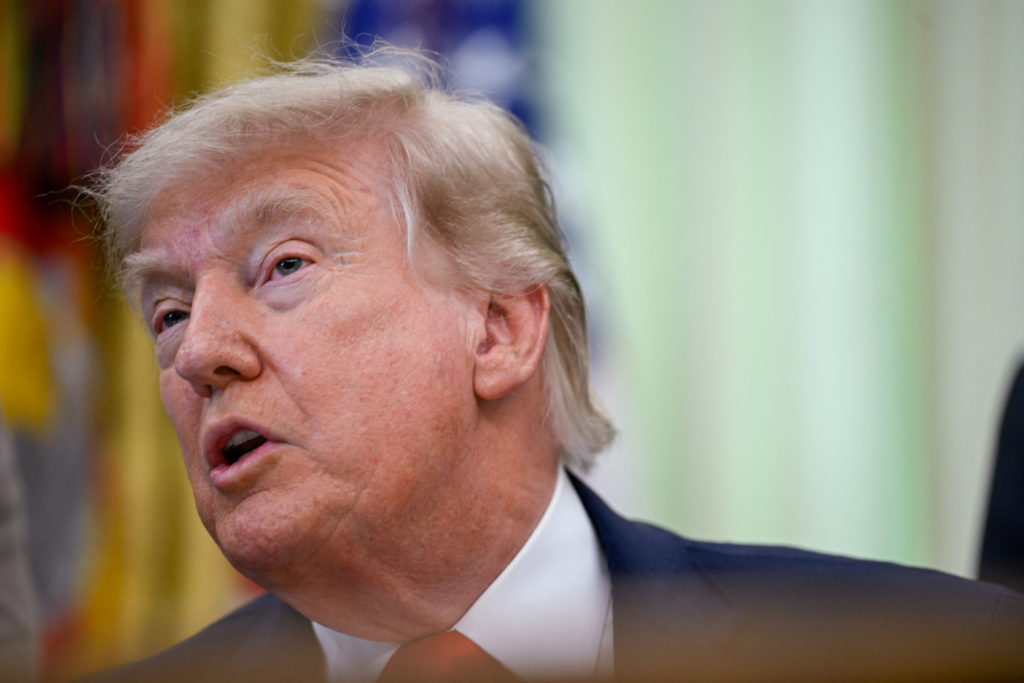
Judge strikes down Trump's $100,000 H-1B visa fee
Translated from English, summarized and contextualized by DistantNews.
At a glance
News
Named sources
Outcome reported
- A federal judge struck down President Trump's $100,000 H-1B visa fee, ruling the administration exceeded its authority.
- The fee, intended to protect American workers, was criticized for potentially harming companies reliant on skilled foreign labor.
- H-1B visas allow U.S. companies to hire foreign workers with specialized skills, with annual limits and a lottery system for distribution.
A federal judge has invalidated President Donald Trump's imposition of a $100,000 fee on H-1B work visas, ruling that the administration overstepped its legal authority by enacting the charge without congressional approval. The fee, introduced last year, was justified by Trump as a measure to safeguard American jobs from being taken by lower-paid foreign workers.
The H-1B visa program, established by the 1990 Immigration Act, is designed to enable U.S. companies to recruit individuals with specialized skills that are scarce domestically. These visas are temporary, typically lasting three years with a possible three-year extension, and are not intended for permanent residency, though some visa holders may later transition to different immigration statuses.
Critics argued that the steep fee would negatively impact numerous tech companies, universities, and other organizations that depend on the H-1B program to fill critical roles. Many of these entities rely on foreign talent for specialized positions, particularly in fields like computer science, which accounts for a significant portion of H-1B visas issued. The program has an annual cap of 65,000 visas, with an additional 20,000 for those with master's degrees or higher, distributed via a lottery.
The Trump administration had asserted that the H-1B program incentivized companies to exploit lower labor costs by replacing American workers with foreign nationals. The White House stated that companies might close their IT departments and outsource jobs to lower-paid workers abroad. The fee increase, announced with little notice, took effect rapidly, drawing immediate opposition from several states and various industry groups.
This legal challenge underscores the ongoing debate surrounding the H-1B visa program, balancing the needs of businesses for skilled labor against concerns about its impact on the domestic workforce. The court's decision represents a significant rebuke to the Trump administration's efforts to restrict the program through increased fees.
To take advantage of artificially low labor costs incentivized by the program, companies close their IT divisions, fire their American staff, and outsource IT jobs to lower-paid foreign workers.
DistantNews Editorial
Originally published by PBS NewsHour in English. Translated, summarized, and contextualized by our editorial team with added local perspective. Read our editorial standards.
More Stories


From Our Blog

How the Same Story Looks Different in Different Countries

What Gets Lost (and Found) When News Is Translated

The Critical Role of Diaspora Media in Global News

What Travellers Should Know About Countries with Restricted Press

A Digital Nomad's Guide to Following Local News
