


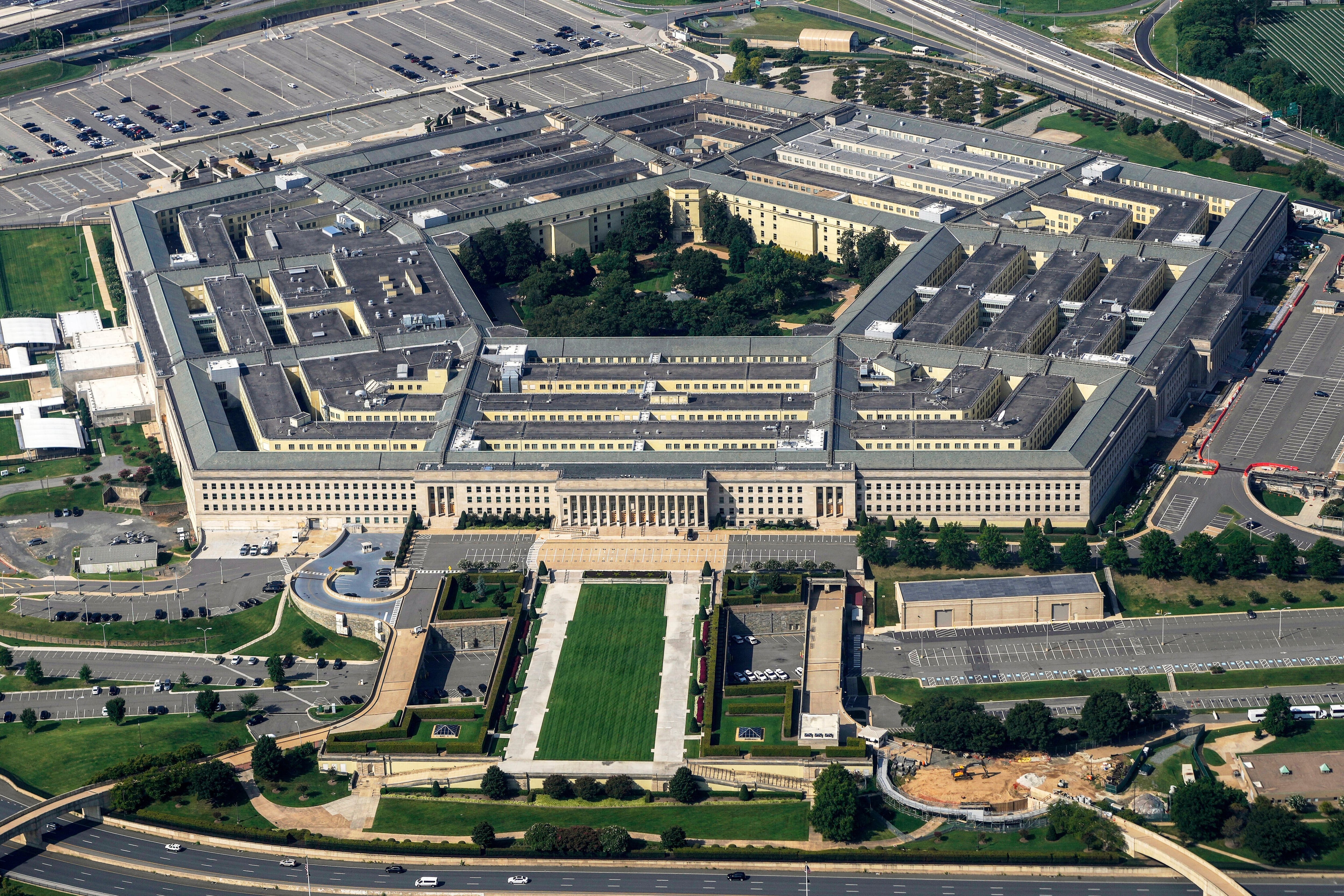
Judge temporarily suspends mandatory Pentagon escorts for New York Times journalists
Translated from Spanish, summarized and contextualized by DistantNews.
At a glance
News
Named sources
In the courts
- A federal judge has temporarily suspended the Pentagon's requirement for mandatory escorts for New York Times journalists within the building.
- The judge ruled that the policy likely violates the First Amendment's protection of press freedom.
- The Pentagon plans to appeal the decision, arguing it removes reasonable security measures and could expose sensitive information.
A federal judge has issued a preliminary injunction temporarily halting the Department of Defense's mandate that New York Times journalists be accompanied by an official escort during coverage within the Pentagon. The ruling represents a setback for the Trump administration's efforts to restrict media access.
U.S. District Judge Paul L. Friedman of the District of Columbia issued the order, stating that the policy likely violates the First Amendment, which safeguards freedom of the press. The court's decision came as the newspaper's lawsuit against the Pentagon's restrictions proceeds. The order does not specify whether journalists from other organizations are also exempt from the escort requirement.
The decision of today, well-founded, reaffirms the rights of the press, protected by the First Amendment, to cover the Pentagon without restrictions designed to prevent the public from knowing what the Army does.
The New York Times sued the Department of Defense for the second time in five months in May. These legal challenges have fueled growing tensions between U.S. media outlets and the Republican administration, playing out in both public discourse and courtrooms. The Times welcomed Friedman's ruling, with spokesperson Charlie Stadtlander stating, "Today's well-reasoned decision reaffirms the First Amendment rights of the press to cover the Pentagon without restrictions designed to prevent the public from knowing what the military is doing."
Pentagon spokesperson Sean Parnell expressed strong disagreement with the ruling, writing on X that the department "strongly disagrees" with Friedman's decision. He argued that the ruling "eliminates reasonable security measures and will make it easier for sensitive and classified information to reach our adversaries." The Pentagon is expected to appeal the decision, continuing the legal battle over media access to sensitive government facilities.
This ruling eliminates reasonable security measures and will make it easier for sensitive and classified information to reach our adversaries.
DistantNews Editorial
Originally published by La Nación in Spanish. Translated, summarized, and contextualized by our editorial team with added local perspective. Read our editorial standards.
More Stories


From Our Blog

What Gets Lost (and Found) When News Is Translated

The Critical Role of Diaspora Media in Global News

What Travellers Should Know About Countries with Restricted Press

A Digital Nomad's Guide to Following Local News

How the Same Story Looks Different in Different Countries
