


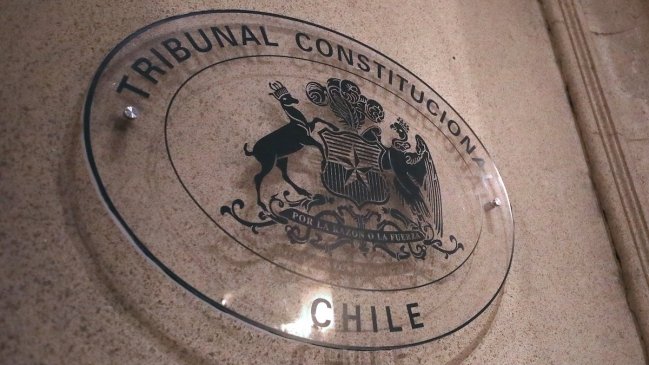
 Image: ATON (referencial)
Judges challenge removal process before Constitutional Court
Translated from Spanish and summarized by DistantNews. Read the original for the full story.
At a glance
News
Named sources
In the courts
- A group of judges filed a petition with the Constitutional Court to challenge their removal process initiated by the Supreme Court for traveling abroad on medical leave.
- The judges question the use of specific articles in the Supreme Court's regulations to establish disciplinary responsibility.
- The president of the Supreme Court acknowledged the judges' right to challenge the articles, while a former Transparency Council president dismissed international pressure as
A group of judges has taken their fight to the Constitutional Court, seeking to overturn a removal process initiated by the Supreme Court. The judges are accused of traveling abroad while on medical leave, a move that triggered disciplinary proceedings in June.
It is a right that each of them has to invoke before the TC that a certain article being applied is contrary to the Political Constitution.
The petition was filed just before the Supreme Court was set to begin hearings on the removal of 56 judges. The magistrates are challenging the application of articles 40 and 41 of the Supreme Court's regulations, which they argue are being used to establish disciplinary responsibility unfairly.
Gloria Ana Chevesich, president of the Supreme Court, acknowledged the judges' right to seek a constitutional review. "It is a right that each of them has to invoke before the TC that a certain article being applied is contrary to the Political Constitution," she stated.
reject all retroactive and general disciplinary measures.
However, the process has drawn international attention. UN Special Rapporteur Margaret Satterthwaite called for the rejection of "all retroactive and general disciplinary measures." Francisco Leturia, former president of the Council for Transparency, dismissed such external pressure as "interested." He noted that while the Supreme Court often faces pressure, professional judges should resist it. Leturia also pointed out deficiencies in the Supreme Court's procedures and the Ethics Committee's functionality, suggesting they should be corrected for due process.
The Supreme Court always receives pressure: from the media, from officials of international organizations like in this case. But one assumes that, being professional judges, they should resist and be immune to that type of pressure.
The judges' challenge highlights a tension between the Supreme Court's disciplinary authority and the magistrates' rights, with external bodies weighing in on the fairness of the proceedings.
Beyond that the pressure from this United Nations official is probably interested, that does not prevent seeing that many of the Supreme Court's procedures, the very functionality of the Supreme Court's Ethics Committee, has many deficiencies from the point of view of due process, and it would be good if they were corrected.
About this summary
Originally published by Cooperativa in Spanish. Translated, summarized, and contextualized automatically by DistantNews, with a note on how the source frames the story. Not individually reviewed before publishing. How this works.
More Stories



From Our Blog

What Gets Lost (and Found) When News Is Translated

The Critical Role of Diaspora Media in Global News

What Travellers Should Know About Countries with Restricted Press

A Digital Nomad's Guide to Following Local News

How the Same Story Looks Different in Different Countries
