


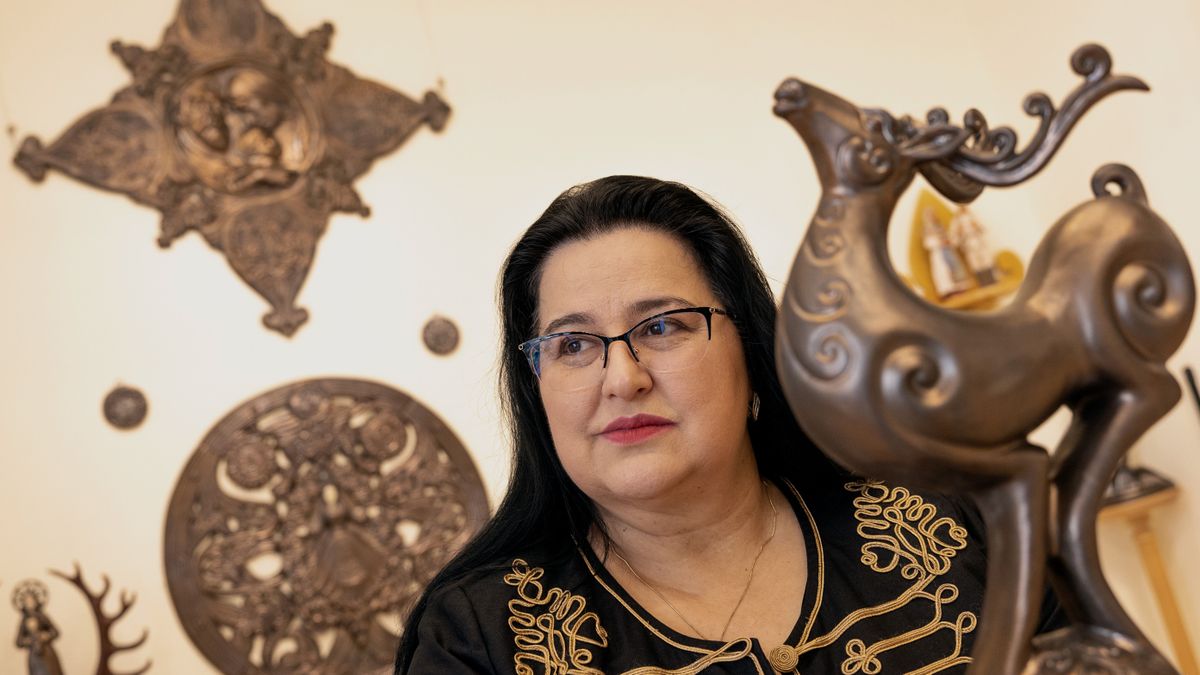
Judit Józsa's 'Guard Fire' Exhibition Tempered Like Samurai Swords
Translated from Hungarian, summarized and contextualized by DistantNews.
At a glance
In-depth
Named sources
Context piece
- Ceramic artist Judit Józsa's exhibition "Őrtűz" (Guard Fire) showcases her unique "folded" technique, inspired by Japanese samurai swords.
- Józsa's work emphasizes peace and draws from her Székely heritage, exploring Hungarian history and cultural roots.
- The artist believes preserving national identity through art is crucial, especially for those who have experienced historical suppression.
Ceramic sculptor and art historian Judit Józsa's life's work is being celebrated in her exhibition "Őrtűz" (Guard Fire), where her unique creations are described as being "tempered in fire" much like Japanese samurai swords. Józsa, who hails from Korond, employs a distinctive self-developed "folded" technique in her art, which she states is a manifestation of her Székely heritage and a means of preserving cultural memory.
A technika igen különleges: saját fejlesztésű hajtogatásos eljárással dolgozik. A szamurájkardok elnyűhetetlen, hajtogatott pengéje készül így.
The artist explained that her technique, born from childhood play with clay sheets, mirrors the layered construction of samurai sword blades. Unlike metal, however, ceramics are unforgiving; air trapped between layers can cause sculptures to explode during firing. Józsa emphasizes the meticulous nature of her craft, where each fold must allow air to escape, acknowledging that while she does her best, divine blessing is also necessary for success.
Az agyag, a kerámia nem bocsátja meg a hibákat: ha két réteg között levegő marad, a szobor az égetés során szétrobban. Minden egyes hajtást úgy kell kidolgozni, hogy a levegőnek legyen menekülési útja. Az ember megtesz minden tőle telhetőt, de végül mindig kell hozzá a Jóisten áldása is.
"Őrtűz" (Guard Fire) is a title deeply connected to Józsa's Székely ancestors and their enduring legacy. She feels a profound need for such "guard fires" in contemporary society – individuals who safeguard the spiritual heritage that has sustained the Hungarian nation. Having grown up during the Ceaușescu regime, where Hungarian history was learned privately, Józsa found this upbringing provided her with resilience. She later moved to Hungary, the "motherland," to pursue her artistic ambitions, gaining access to archives and building a body of work she had only dreamed of in Transylvania.
Székely őseim sugallták ezt a címet, az ő örökségüket élem és viszem tovább. Úgy érzem, hogy ma különösen nagy szükség van őrtüzekre. Olyan emberekre, akik őrzik azt a szellemi örökséget, amely megtartotta ezt a nemzetet.
Józsa's art serves as a vehicle for national service, a role for which she expresses gratitude. She views Hungarian folk art not as a relic of the past but as a living tradition. "We can be great cosmopolitans, but what kind of cosmopolitan is one who does not know their own roots?" she questions, likening rootless individuals to leaves blown by the wind. Her historical pieces underscore the belief that a nation endures as long as it remembers and honors its predecessors, with her ceramic works telling this story through clay. Her series "Magyar nagyasszonyok" (Great Hungarian Women) aimed to highlight extraordinary women from Hungarian history.
Művészetemmel a nemzetemet szolgálhatom, hálás vagyok ezért a Jóistennek. A magyar népművészet számomra nem múlt idő. Lehetünk nagyszerű világpolgárok, de milyen világpolgár az, aki nem ismeri a saját gyökereit? A gyökér nélküli ember olyan, mint a falevél: amerre fújja a szél, arra sodródik.
DistantNews Editorial
Originally published by Magyar Nemzet in Hungarian. Translated, summarized, and contextualized by our editorial team with added local perspective. Read our editorial standards.
More Stories


From Our Blog

Countries Without a Free Press: What You Need to Know

What Press Freedom Means for the News You Read

What Gets Lost (and Found) When News Is Translated

The Critical Role of Diaspora Media in Global News

What Travellers Should Know About Countries with Restricted Press
