


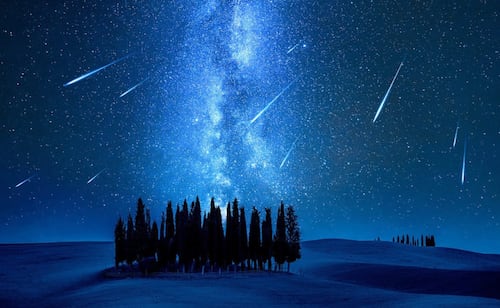
June Bootids Meteor Shower 2026: A Guide to Viewing the Irregular Phenomenon
Translated from Spanish, summarized and contextualized by DistantNews.
At a glance
In-depth
Documents & data
Context piece
- The June Bootids meteor shower, known for its irregular behavior, is active from June 22 to July 2, 2026.
- Unlike predictable meteor showers, the Bootids can range from quiet periods to intense storms, with historical outbursts recorded in 1916, 1921, 1998, and 2004.
- The meteors originate from the debris of comet 7P/Pons-Winnecke and appear to radiate from the Boötes constellation; optimal viewing requires dark skies away from light pollution.
Stargazers can anticipate the June Bootids meteor shower, an astronomical event renowned for its unpredictable nature. Active from June 22 to July 2, 2026, this celestial display offers a unique spectacle characterized by its erratic behavior.
Unlike many other meteor showers that maintain a consistent and predictable rate of activity, the Bootids are famous for surprising scientists. They can transition from periods of near inactivity to memorable meteor storms, offering a thrilling, albeit uncertain, viewing experience. Observers might witness unusually slow and bright streaks of light, ideal for naked-eye observation.
The origin of the June Bootids lies in the dusty remnants of the periodic comet 7P/Pons-Winnecke, which orbits the sun roughly every 6.3 years. Earth passes through the debris clouds left behind by this comet along its orbital path. While typical years see a low rate of one or two meteors per hour, historical data shows significant outbursts.
Past events in 1916, 1921, 1998, and 2004 saw rates surge to as high as 100 meteors per hour, making the shower a potentially spectacular, though rare, event. To best view the meteors, observers should look towards the constellation Boötes, the celestial hunter, which serves as the radiant point. Finding Boötes can be aided by locating the Big Dipper and following the curve of its handle towards Arcturus, the brightest star in that region.
This year's observation may present challenges due to moonlight interference during certain phases of the shower's activity. Experts recommend seeking locations far from urban light pollution, such as rural areas, to maximize the viewing experience and catch any unexpected bursts of activity from this enigmatic meteor shower.
DistantNews Editorial
Originally published by El Universal in Spanish. Translated, summarized, and contextualized by our editorial team with added local perspective. Read our editorial standards.
More Stories



From Our Blog

What Press Freedom Means for the News You Read

What Gets Lost (and Found) When News Is Translated

The Critical Role of Diaspora Media in Global News

What Travellers Should Know About Countries with Restricted Press

A Digital Nomad's Guide to Following Local News
